
Southold Town Board evaluates housing program tied to state grants - North Fork Sun
‘Back to the Bays’ annual report
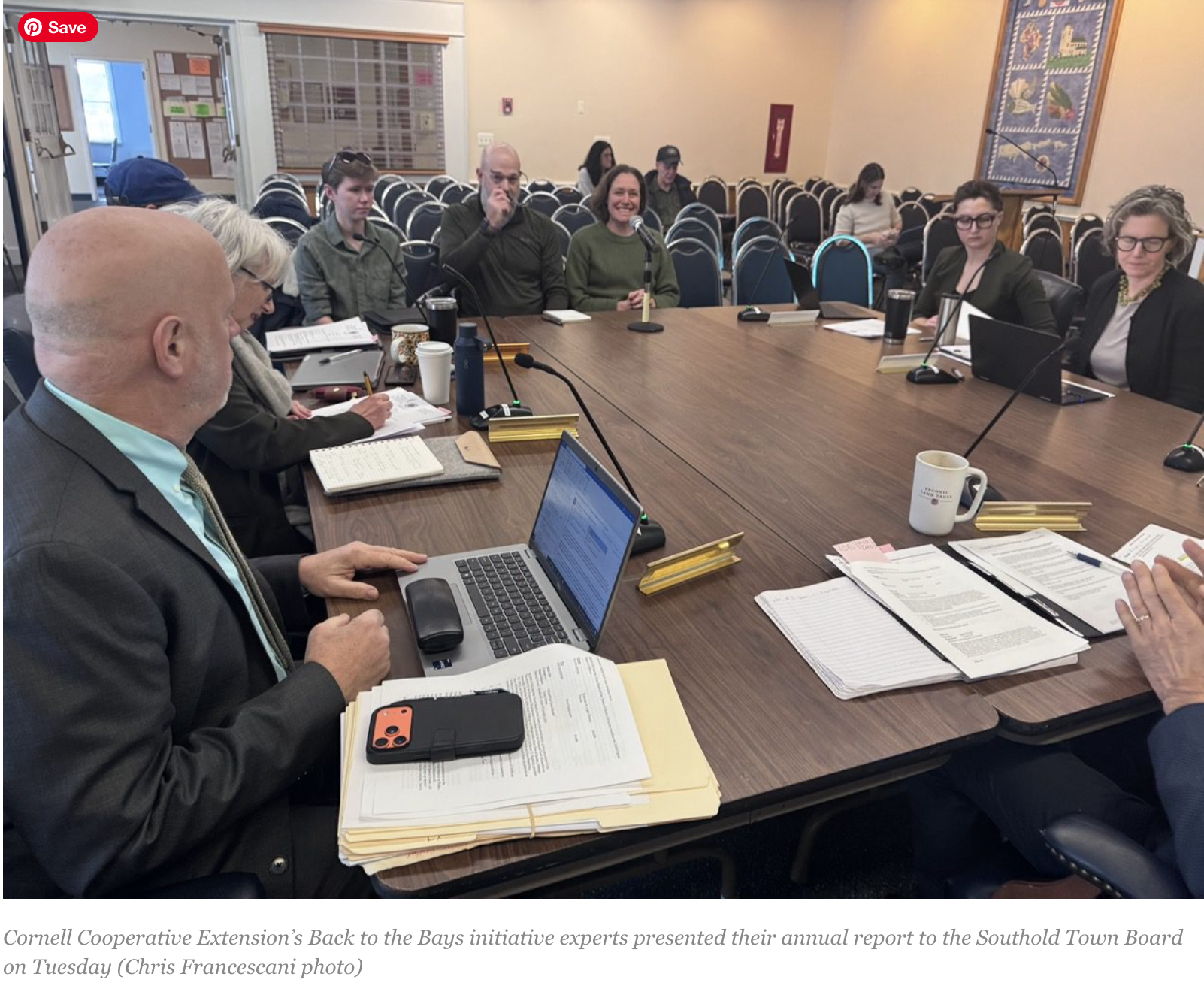
Aquaculture experts from the Cornell Cooperative Extension Marine Program’s Back to the Bays initiative delivered an annual report outlining a busy 2025 season of shellfish seeding and long-term restoration planning aimed at improving local water quality and sustaining the East End’s shellfishing traditions.
The presentation focused on oyster, clam and scallop production supported through the town’s partnership with Cornell Cooperative Extension and the Southold Marine Center.
Kate Rossi-Snook, Back to the Bays’ aquaculture specialist and Mike Patricio, CCE’s shellfish aquaculture manager, told board members that the program planted more than 60,000 oysters in Gull Pond last year, 60,000 clams and 20,000 bay scallops in Dam Pond and 130,000 clams in Cedar Beach Creek. The work was designed to boost shellfish numbers and explore future oyster reef restoration sites that could enhance habitat and water filtration.
Cornell Cooperative Extension’s Back to the Bays initiative experts presented their annual report to the Southold Town Board on Tuesday (Chris Francescani photo)
Board members questioned how the town measures the success of those plantings, particularly survival rates. Rossi-Snook said funding limitations make comprehensive monitoring difficult, but Back to the Bays is exploring “citizen science” approaches, including potential clam survey kits for shellfishers, to gather broader data without revealing sensitive harvesting locations.
Town Councilman Brian Mealy praised the initiative’s educational outreach, pointing to its work with young people and community groups.
Rossi-Snook cited Back to the Bays’ collaboration with the North Fork Polar Bears, who have participated in paddle-out shellfish plantings tied to local fundraisers. Looking ahead to 2026, she said Back to the Bays hopes to streamline its relationship with the town through a multi-year contract, similar to arrangements in other East End communities, so the program can focus less on annual paperwork and more on restoration and research.