
North Fork Polar Bears and Back to the Bays seed 130,000 clams in Cedar Beach Creek - North Fork Sun
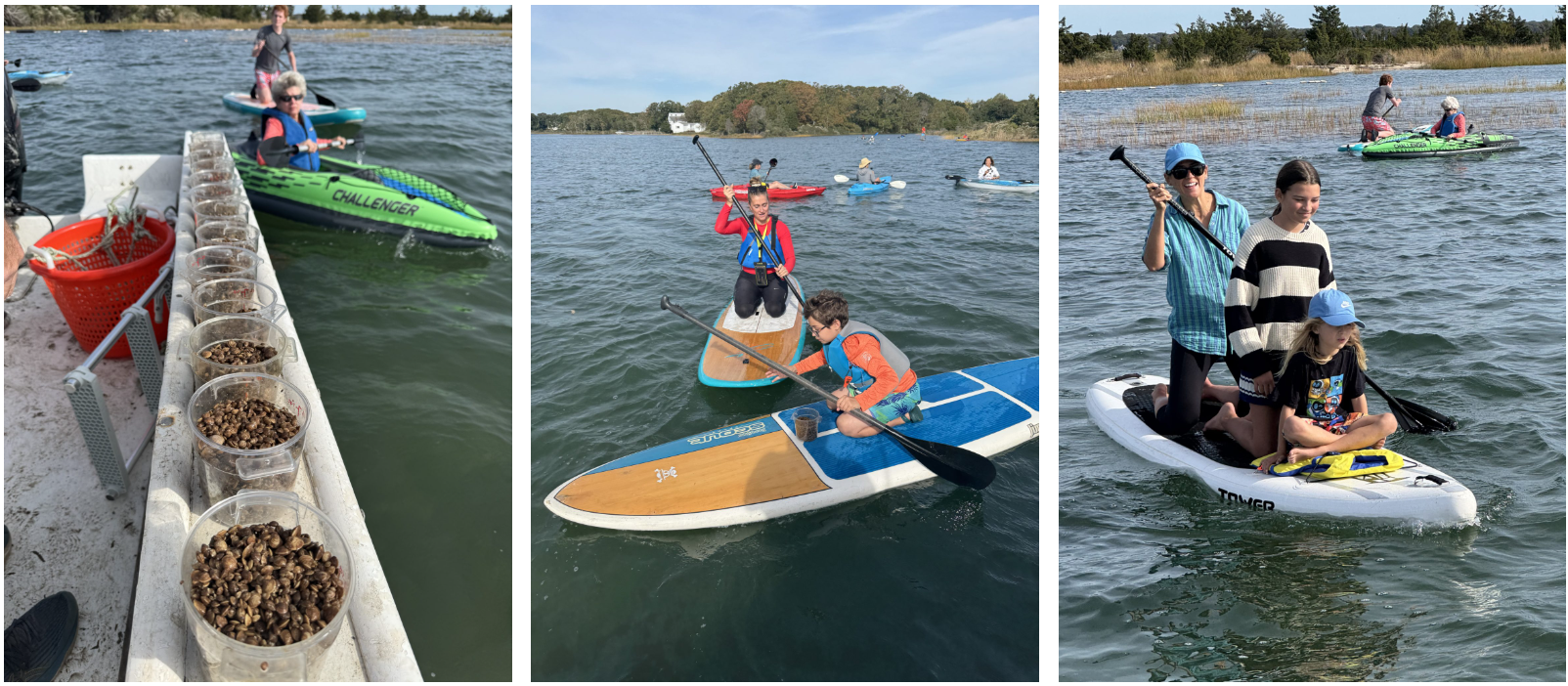
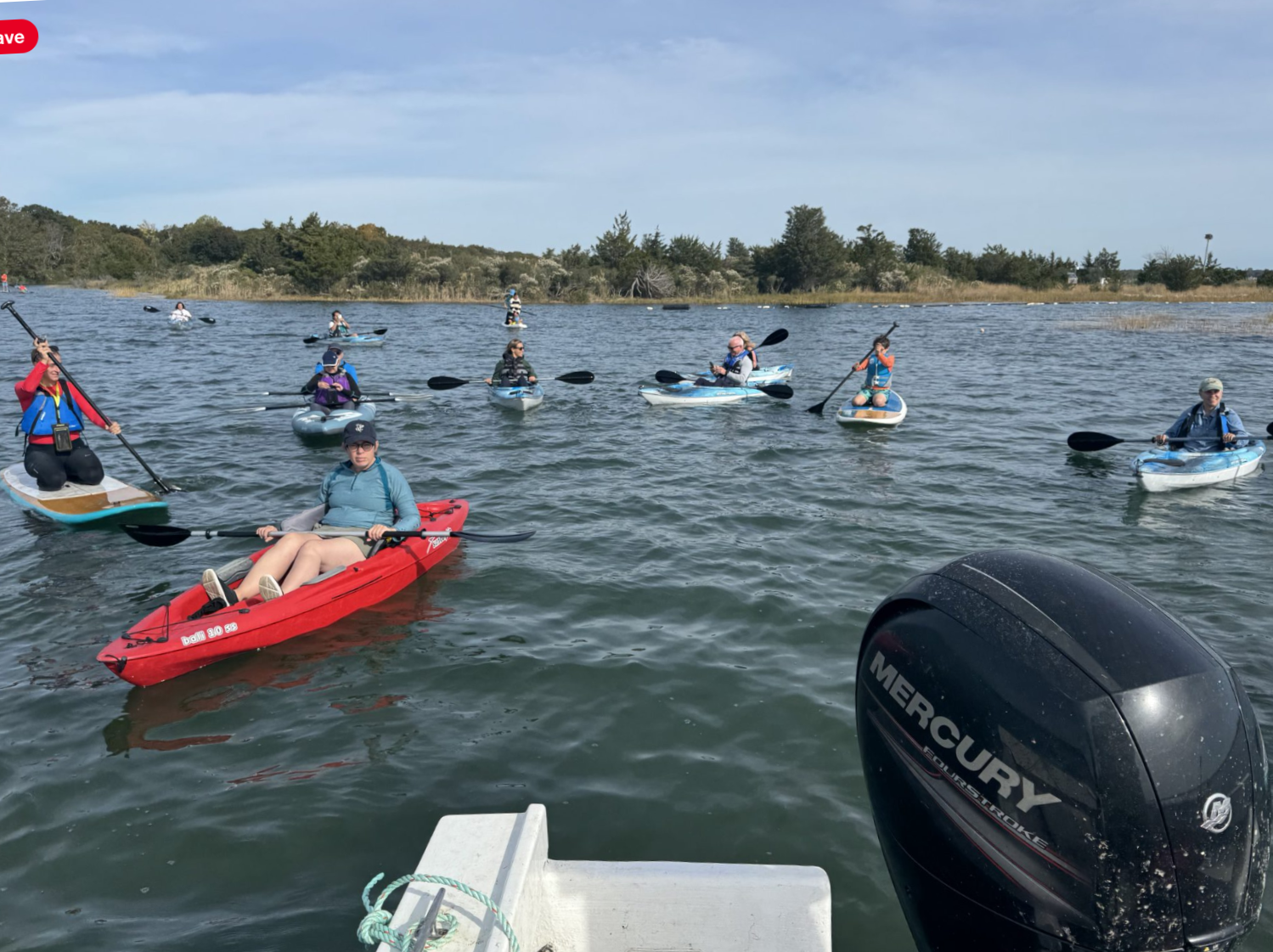
Last Sunday morning, a coalition of North Fork Polar Bears and the team of aquaculture experts at the Cornell Cooperative Extension Marine Program’s ‘Back to the Bays’ initiative planted about 130,000 baby clams — and a couple dozen humans — in the waters off Cedar Beach in Southold.
First, the volunteers paddled out into Cedar Beach Creek on kayaks and paddleboards to spread fistfuls of juvenile Mercenaria mercenaria — baby hard clams no bigger than a fingernail — across a restoration zone marked by Cornell’s marine scientists. From a small workboat on the creek, Cornell researchers handed out clear pitchers filled with thousands of the tiny shellfish.
By the time the planting was done, the bay bottom was seeded with a new generation of filter feeders that could live for decades. Then, in a now-familiar ritual of celebration and purpose, the Polar Bears stripped down to bathing suits and waded into the water at Cedar Beach for their first cold plunge of the coming winter season.
Living laboratories
The event capped two years of collaboration between the North Fork Polar Bears, a community cold-plunge group that has evolved into a grassroots conservation force, and Back to the Bays, Cornell Cooperative Extension’s community marine stewardship program.
The Cedar Beach Creek planting was part of a growing network of restoration sites across the East End, living laboratories where scientists and residents work together to restore shellfish populations, rebuild eelgrass beds and improve water quality.
The Suffolk County Marine Environmental Learning Center in Southold serves as the program’s headquarters, housing Cornell’s hatchery, laboratories and marine research fleet. Each year, hatchery staff coax mature broodstock clams to spawn under controlled conditions, nurturing millions of larvae through the early veliger phase, before transferring them to nurseries.
Once the juveniles are large enough to survive, they’re moved into floating upweller systems — “FLUPSYs,” as the team calls them — where natural plankton feeds them until they’re ready for release.
By Sunday, the clams were about the size of a pinky nail — the culmination of months of work by aquaculture specialists including stewardship site manager Kate Rossi-Snook, hatchery manager Mike Patricio, marine program director Kimberly Barbour, marine meadows program director Kimberly Manzo and others leading the Back to the Bays program.
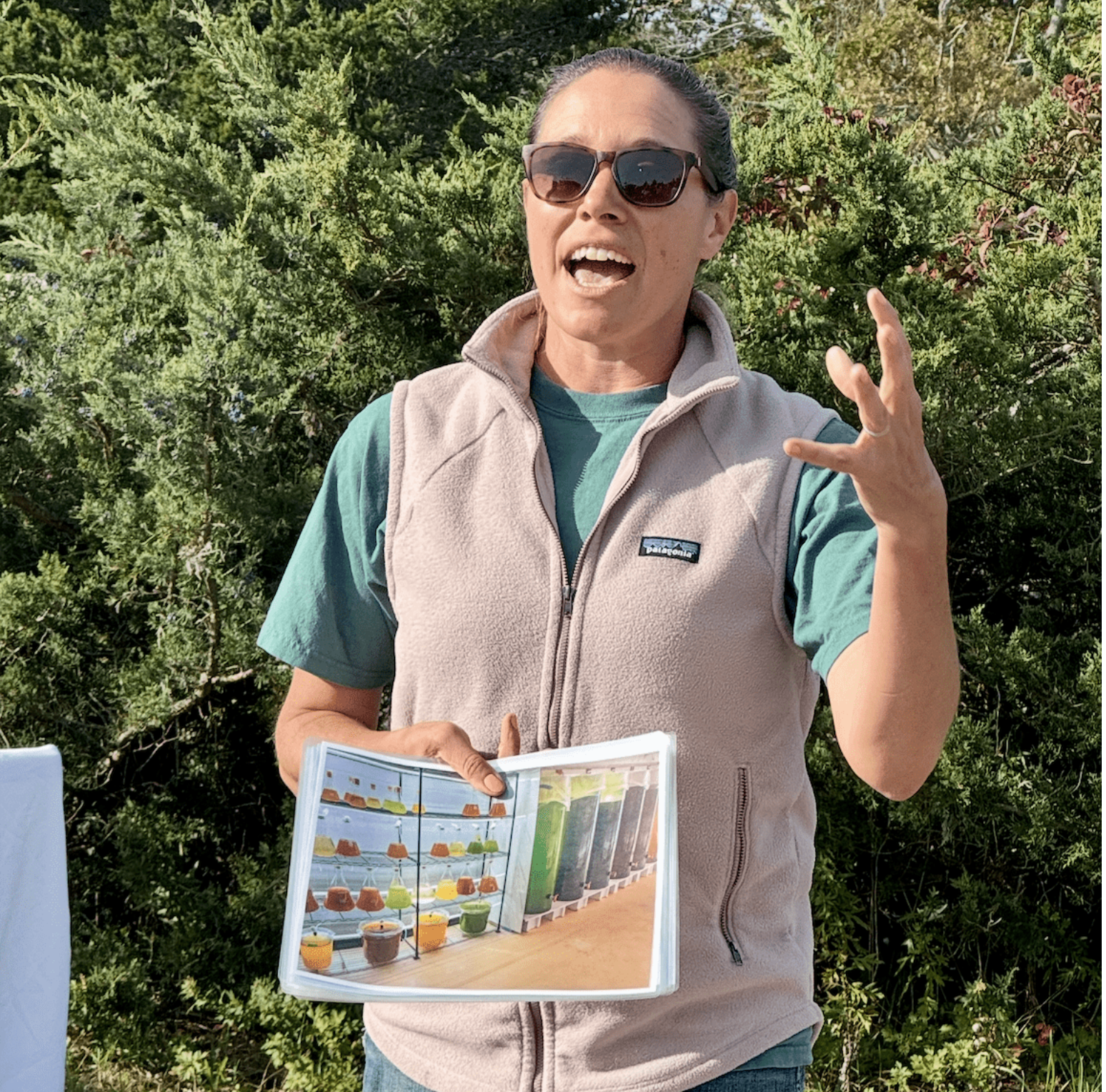
Back to the Bays aquaculture manager Kate Rossi-Snook leading a class on Sunday at the Suffolk County Marine Environmental Learning Center in Southold (Chris Francescani photo)
Each volunteer received cupfuls to scatter across the creek bed — an act that seemed small but carries long-term weight. Rossi-Snook said the species can take three to five years to reach market size and live 40 to 60 years.
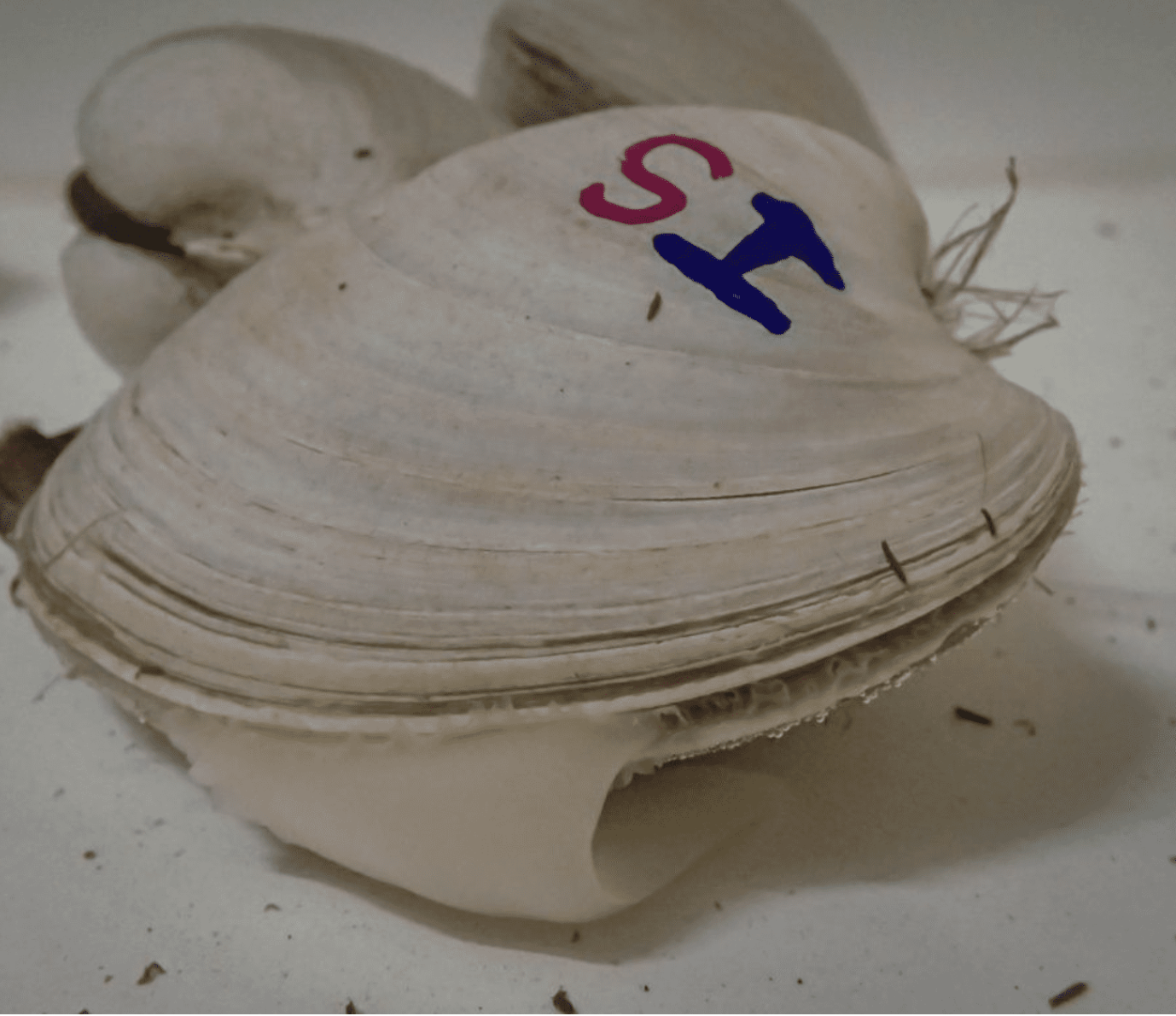
To track success, the team selected clams with a rare genetic marker known as a notata, identifiable by faint rust-colored zigzags on their shells. (Some marine scientists call them “Charlie Brown clams” because the zigzags match the cartoon character’s signature shirt.) The markings occur naturally in only about 1% of wild clams, so they’re easy to spot in future surveys.
While coastal restoration work is difficult to measure in the short term, its impacts grow clearer over time. Results of a 2024 eelgrass abundance survey indicate a total of 2,041 acres of eelgrass in eastern Long Island Sound – a 39 percent increase from 2017, according to the Long Island Sound Partnership. If Sunday’s restoration works as planned, researchers hope to find bounties of Charlie Brown clams in the same creek for years to come.
‘A working partnership’
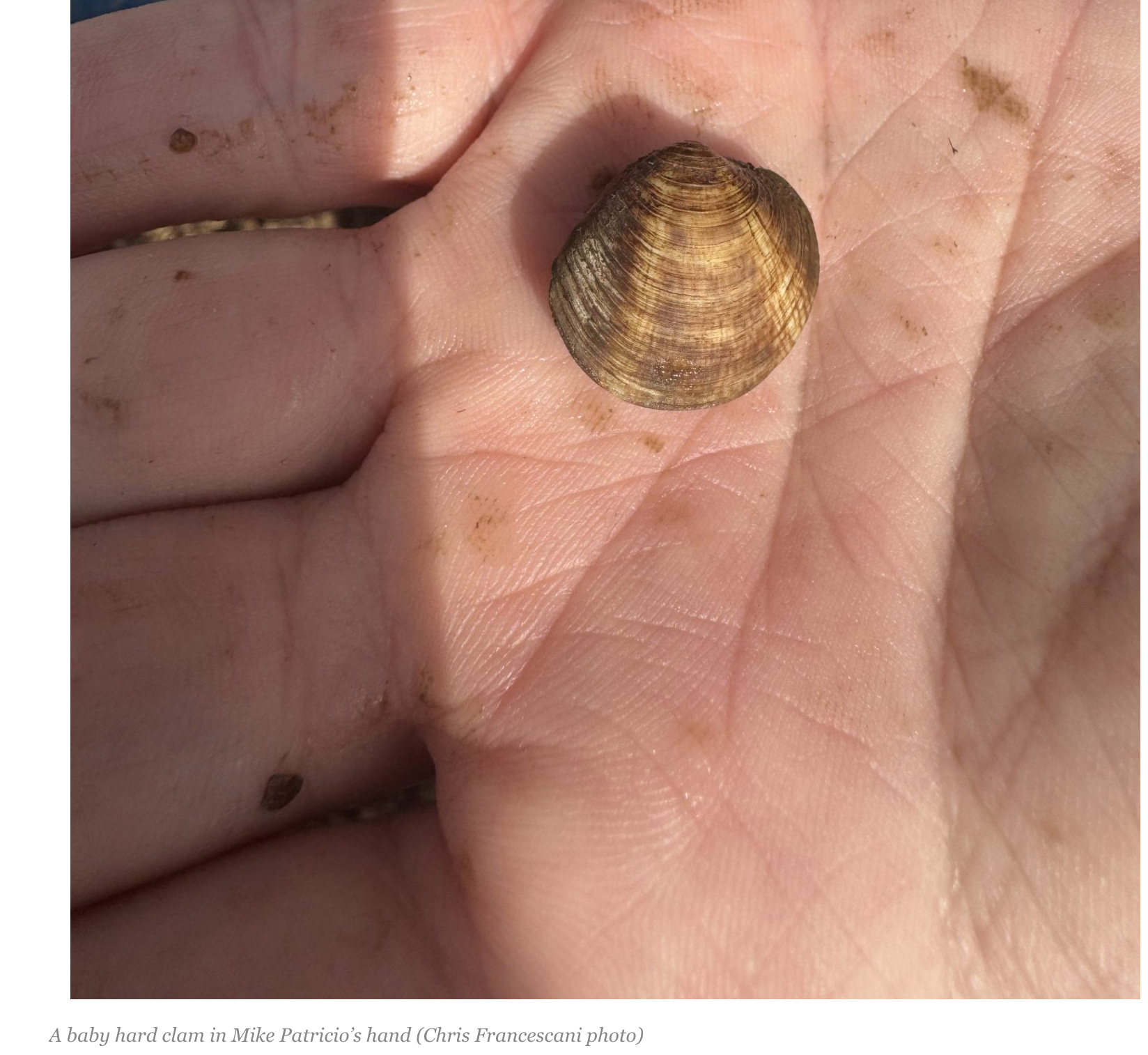
A baby hard clam in Mike Patricio’s hand (Chris Francescani photo)
The North Fork Polar Bears began as a loose collection of winter swimmers seeking camaraderie, adrenaline and mental clarity in chilly North Fork waters. But after their first fundraiser for C.A.S.T. North Fork in 2022, founders Patricia Garcia-Gómez and Dafydd Snowdon-Jones (pictured in the main image above) began rethinking the group’s mission.
“Community is a very important anchor,” Garcia-Gómez said. “But we realized that mental wellness and taking care of the waters that we swim in are also really important to us.”
In 2023, they began looking for a local environmental partner — interviewing several organizations before choosing Cornell’s Back to the Bays initiative.
“We talked to four or five groups,” Snowdon-Jones recalled. “Many were Cornell-affiliated, but Kim Barbour’s team stood out. It felt like a partnership, not a donation.”
Back to the Bays offered exactly that: a way for the Polar Bears to fund and join in hands-on restoration projects. “They proposed that we might do a stewardship site on the North Fork,” Garcia-Gómez said. “We got super excited that we could make an impact and our work would be visible. It was a hands-on and really enthusiastic relationship. And I think all those things together made them really special.”
Together, the two groups designed a plan to establish the North Fork’s first Back to the Bays stewardship site at Cedar Beach Creek. The approval process was complex, Garcia-Gómez said. Because ownership of the bay bottom shifts from town to state waters just offshore, new marine projects require overlapping permissions. “It was really hard to find a place where we could actually get the permit and work,” she said. “Cedar Beach was one of those places.”
Since forming the partnership, the Polar Bears have joined Cornell’s marine program in a series of restoration projects. Their first joint project was an eelgrass-planting workshop. “We made the little eelgrass tortillas,” Garcia-Gómez said with a laugh. “It was messy and perfect. After that came the oyster spat-on-shell planting and then the seahorse hotels.”
Seahorses, she said, are “kind of magical creatures, so they stir up a lot of enthusiasm.”
The “hotels,” recycled lobster and oyster cages anchored to the bay floor, are built to shelter the native lined seahorse, a fragile species. “They mate for life and cling to eelgrass with their tails,” she explained. “But when they get separated, they get discombobulated and they need a home to come back to.”
Snowdon-Jones said each collaborative project has deepened the group’s understanding of local ecology. As Rossi-Snook said on Sunday, every clam, eelgrass bed and oyster reef plays a role in cleaning and stabilizing the Peconic Estuary. One oyster can filter 50 gallons of water a day.
“Eelgrass helps clams by settling plankton and particulates near the sediment where they feed,” she told volunteers. “It’s all connected.”
That symbiotic connection between restoration and community engagement has become the hallmark of the budding partnership.
“It was more than just giving them the money,” Garcia-Gómez said. “We wanted to get in the water with them.”
‘Mental well-being’
What began as a cold plunge club has evolved into a small but growing movement centered around winter Sunday mornings in Orient. The Polar Bears’ WhatsApp group counts around 140 members, with another 80 receiving updates by email.
Each Sunday plunge draws a courageous mix of longtime residents and newcomers, many well into middle age. But there’s a new generation on the horizon. In January, a group of Mattituck High School students created their own fundraising team for the annual Polar Bear Plunge to benefit C.A.S.T. and Back to the Bays.
It was so cold that local firefighters had to break up the ice at Veterans Beach before the plunge. The team of teens braced themselves, took a collective deep breath and ran hand-in-hand into the bay. Now the tradition belongs to them, too.
“It’s such a boost for mental well-being, and it gives kids a connection to nature,” Garcia-Gómez said. “We want to do more outreach with high schools — maybe even stir up some friendly competition between all the schools.”
Education is now central to the group’s plans, Snowdon-Jones said. The goal is to help young people “understand our local waters, so they can pass it on.”
For the Polar Bears, the collaboration with Cornell is key to the future of the club. “Our waters are kind of already a mess,” Garcia-Gómez said. “It’s more than just a feel-good project. Our waters really need to be restored.” Snowdon-Jones said it’s “an act of responsibility.”
Their method, though, remains grounded in enthusiasm. The cold-plunge club started a few years ago and has grown and evolved steadily ever since.
“We were doing something that we loved,” Garcia-Gómez said. “People caught on. They saw how much we enjoyed it, and then they enjoyed it, and then their friends did too. Soon, all these people love their environment so much they want to take care of it.”
By the end of Sunday’s event, the last of the volunteers had paddled back to shore, rinsed off their boards and headed down the beach for the Polar Bear plunge. Out in the creek, beneath the silt and eelgrass, tens of thousands of baby clams were settling into the sediment to start the decades-long work of cleaning the water.
Looking ahead, Garcia-Gómez and Snowdon-Jones said that they’re working on another project — a larger marine collaboration still under wraps — that could broaden the club’s stewardship efforts. For now, the North Fork Polar Bears’ focus remains on plunging, planting, learning and teaching.