
Tiana Bayside Marine Camps ~ Summer 2026
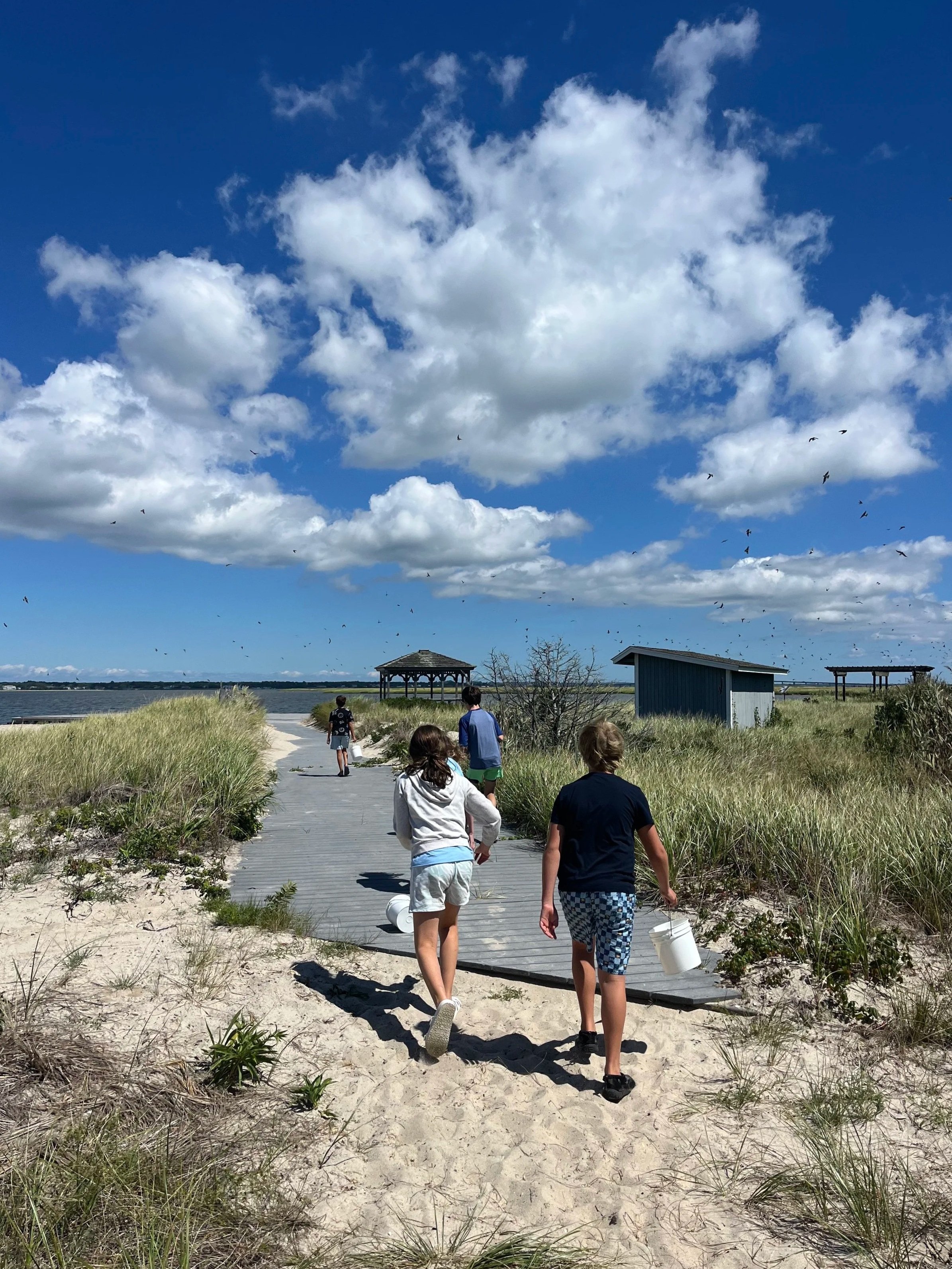
Heading to Tiana Bay to explore!
We completed six successful weeks of marine camp at our Tiana Bayside Facility in Hampton Bays this summer! Whether campers joined us for ArtSEA, Bayside Adventures, or our Seahorse Art + Science Program, they had a blast exploring, creating, and learning together.
Located on Dune Road in Hampton Bays, CCE Marine’s Tiana Bayside Facility gives campers the chance to explore both the bay and the ocean ecosystems, and offers opportunities to take part in the array of habitat and shellfish restoration work being conducted on site.
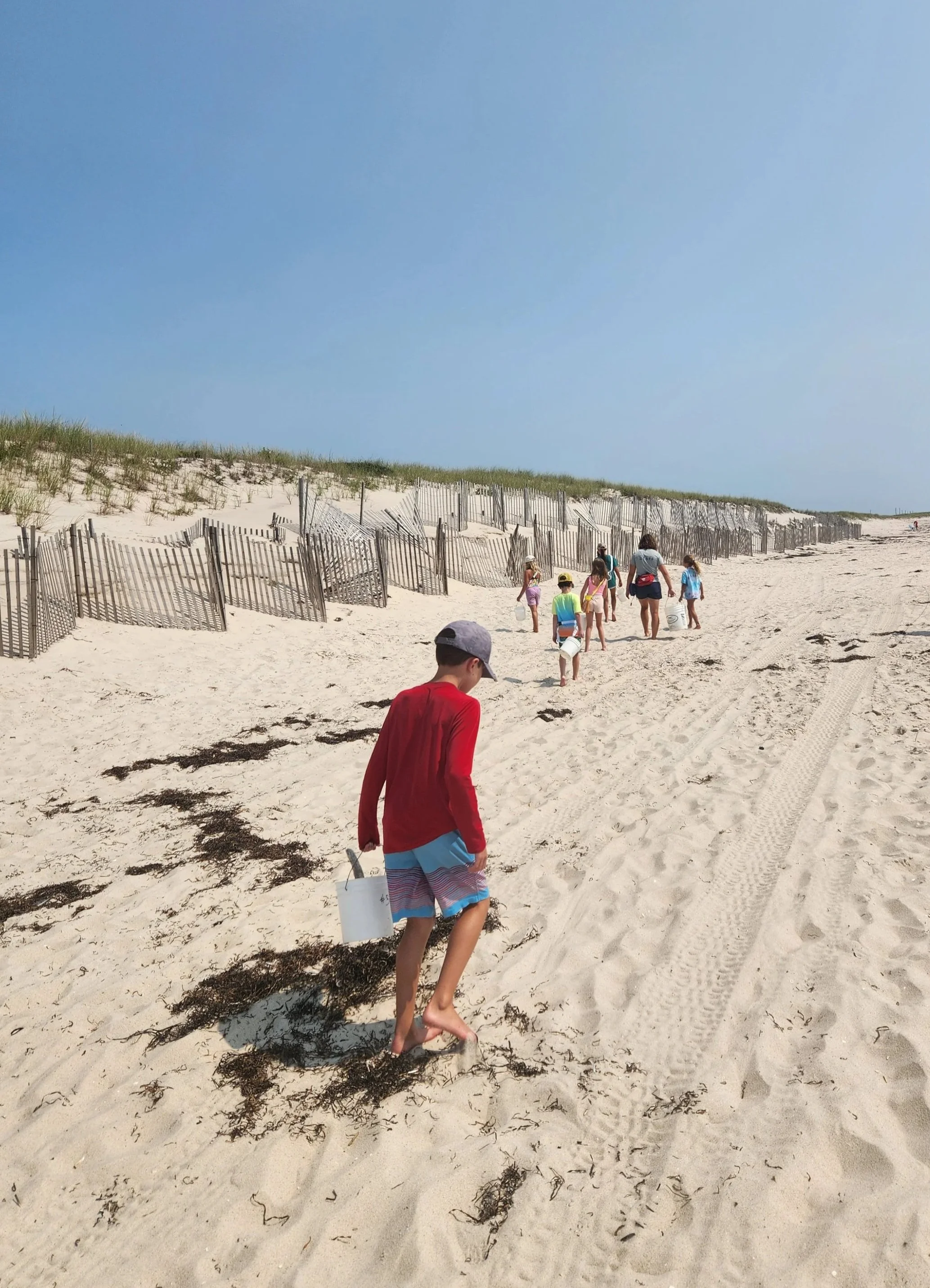
Exploring the Atlantic ocean beach and dunes, a short walk across from our Tiana Bayside Facility.
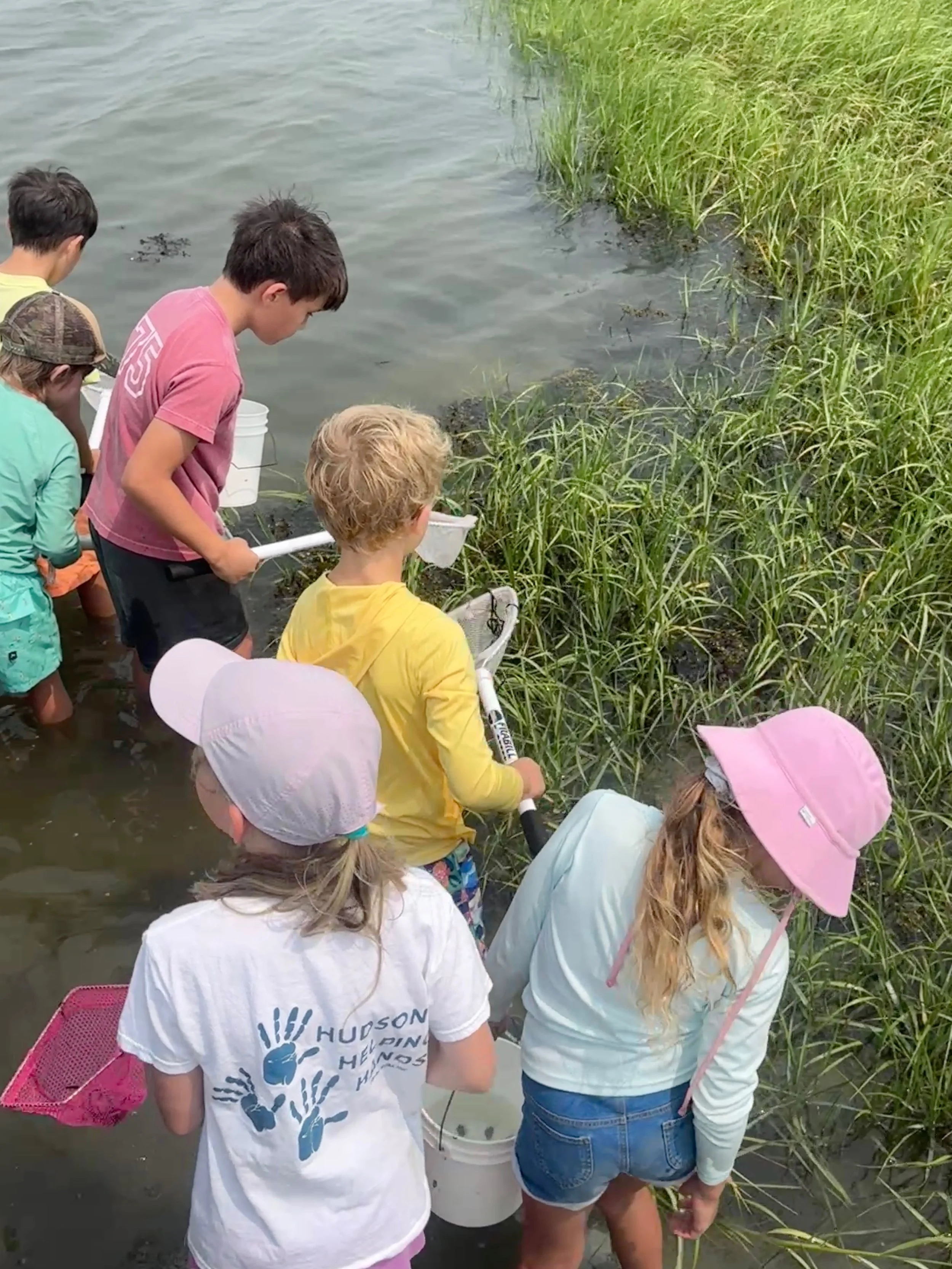
Looking for marine critters that shelter in the salt marsh grasses
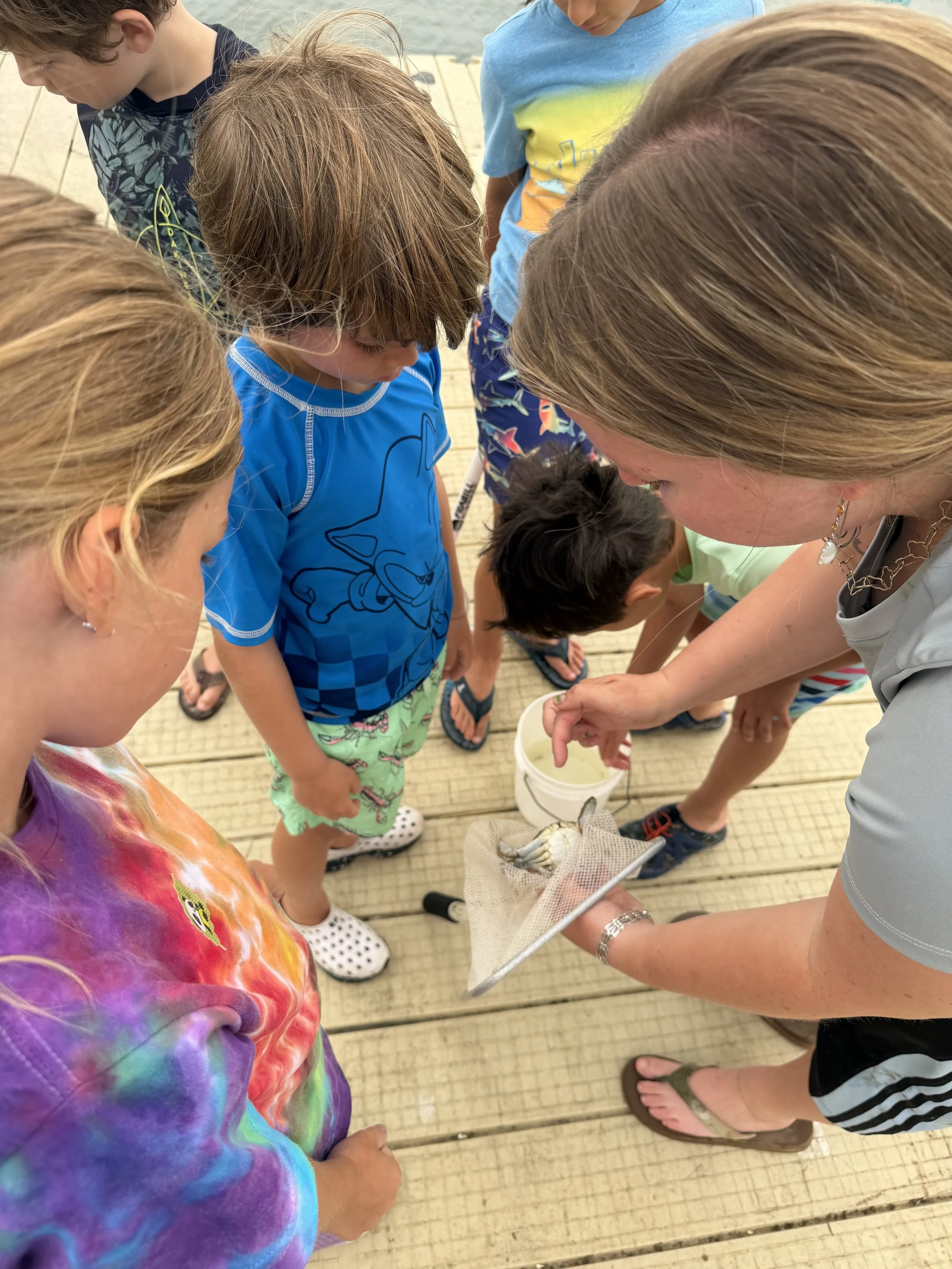
Learning to identify and safely handle pinchy crabs!
Bayside Adventures
Marine biologist and educator Caly Stewart brought her expertise to Bayside Adventures, where campers learned about an amazing range of local wildlife, from tiny, crawling amphipods to the largest of marine mammals. Rather than looking at species in isolation, we explored how they are connected within our ecosystems. We did this through art and science activities! From completing art projects demonstrating the relationships between horseshoe crabs and shorebirds to observing how creatures interact with one another in our tanks, campers used their creativity and curiosity to explore the natural world around them.
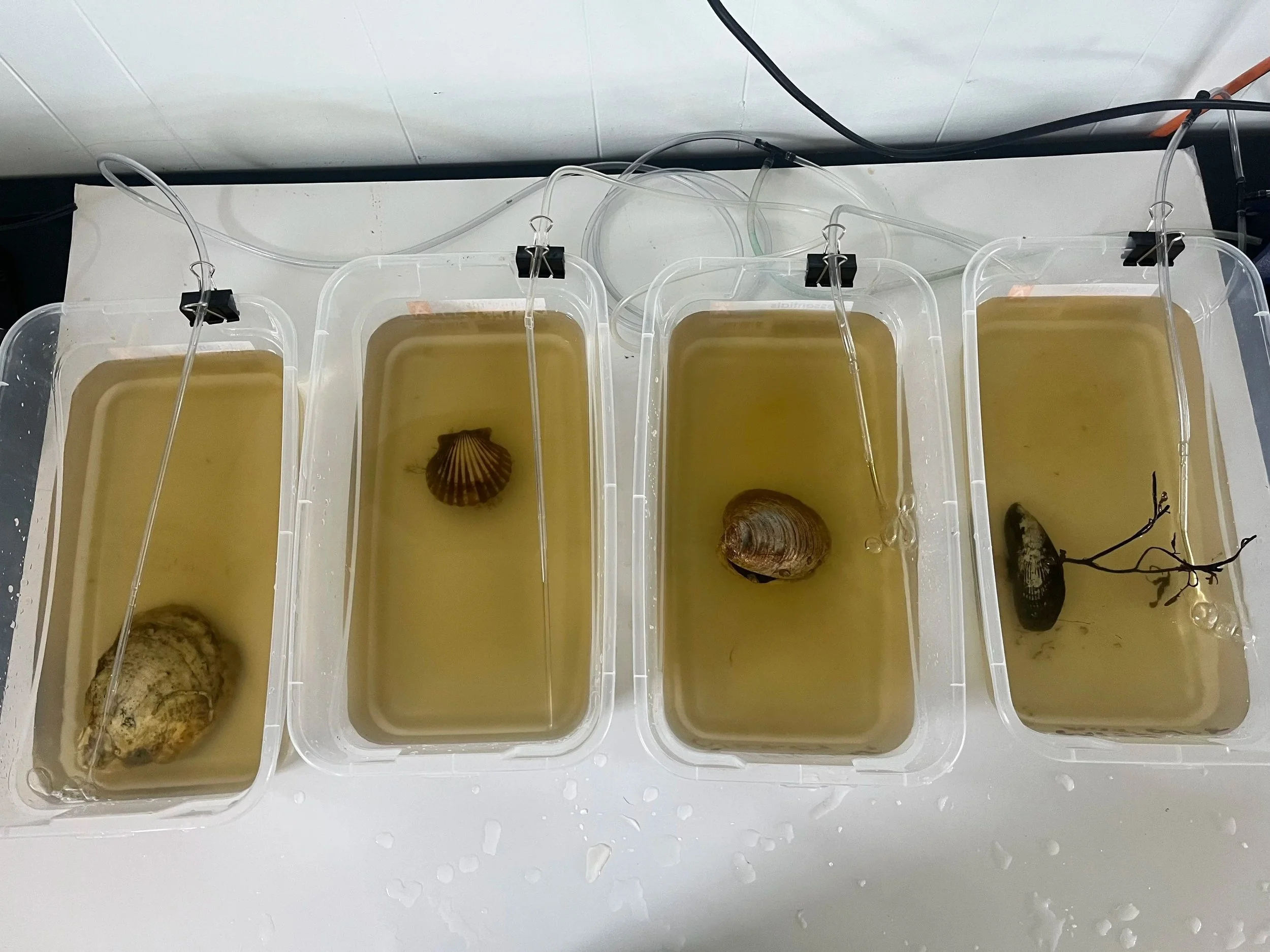
Campers in Bayside Adventures helped set up a science experiment comparing the water-filtering abilities of different bivalves. Each camper came up with their own hypothesis for which species would most effectively filter the water and why.
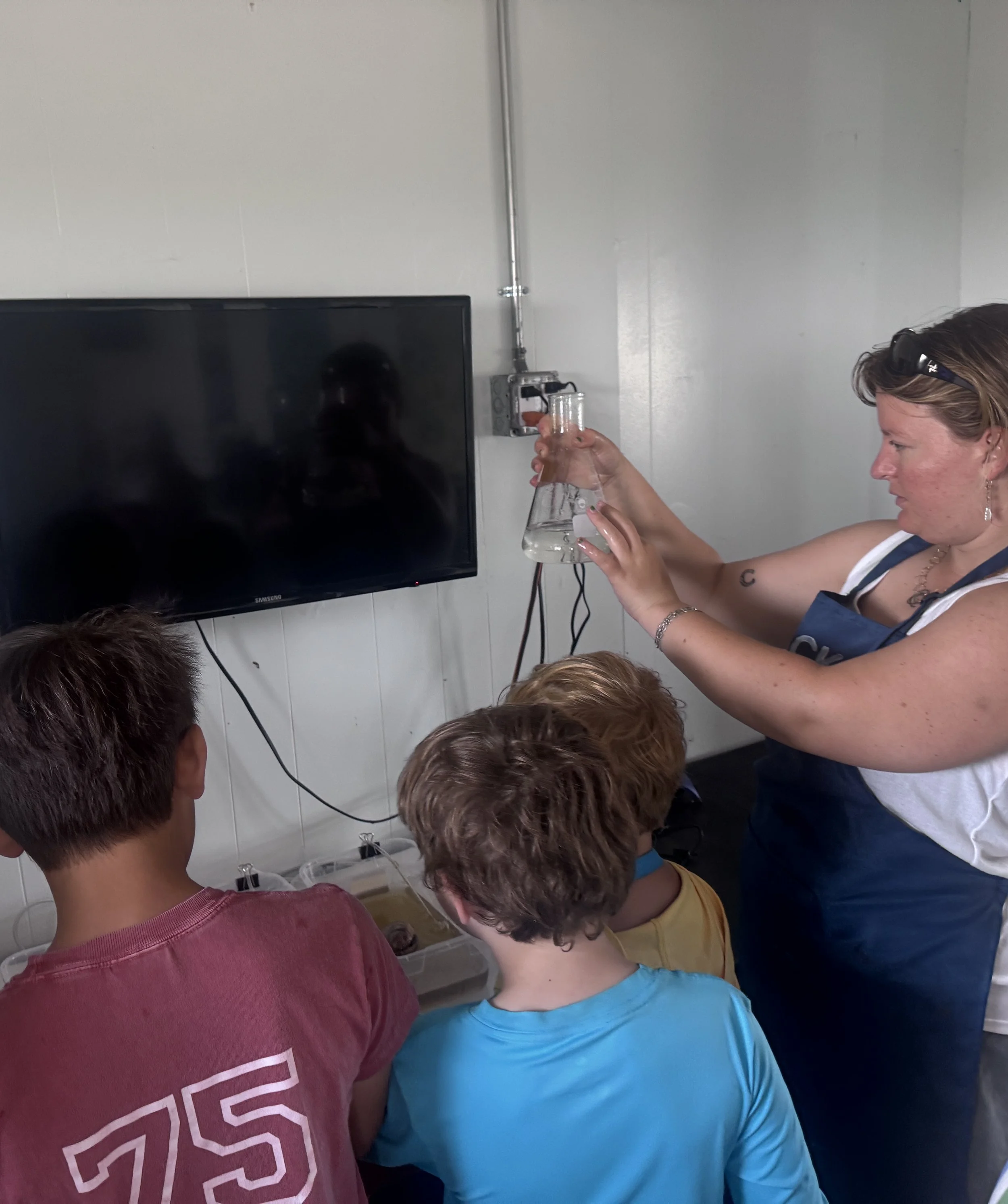
Caly Stewart joined our lineup of camp directors this year, after graduating in 2025 from Cornell University with a degree in Biology and Society.
Seahorse Art + Science Program
Campers came in with a love of seahorses, but by the end of the week, their excitement had expanded to an entire habitat. Campers discovered that seahorses are just one part of a much larger community supported by eelgrass. Guided by Kim Manzo, our Marine Meadows program manager, campers explored the many species that depend on eelgrass and learned why protecting these underwater habitats matters.
They put this learning into action through a range of activities, from observing pipefish during feeding time to burlap “tortilla” making, a tool used in our efforts to restore marine meadows. And, of course, everyone ventured out into the eelgrass meadows in Tiana Bay to seine for wildlife!
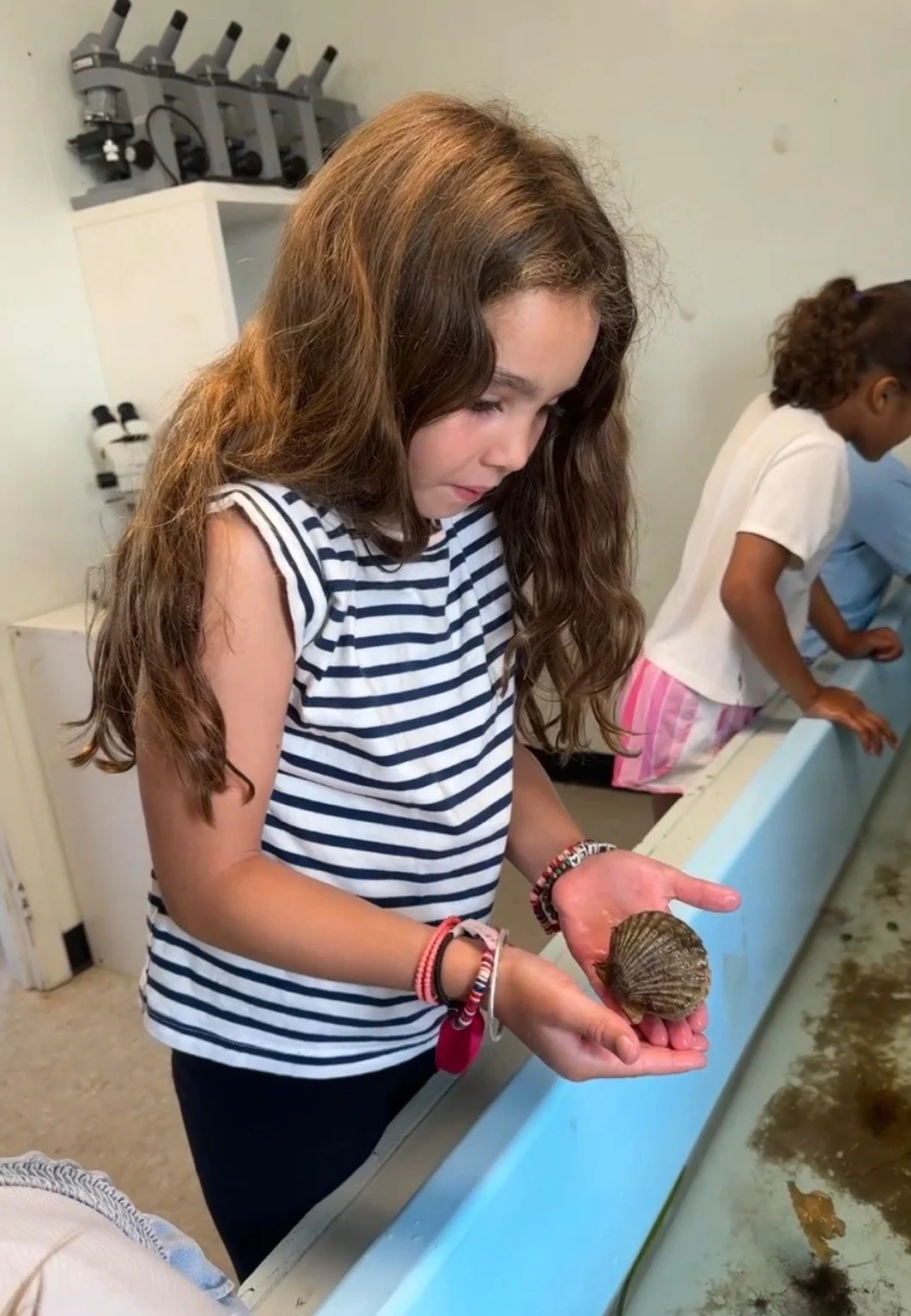
Campers learned that eelgrass is also an essential habitat for Bay Scallops, which were always a touch tank fave. Campers would hold their hands flat and wait patiently for a scallop to open, hoping to catch a glimpse inside of their 17 pairs of bright blue eyes!
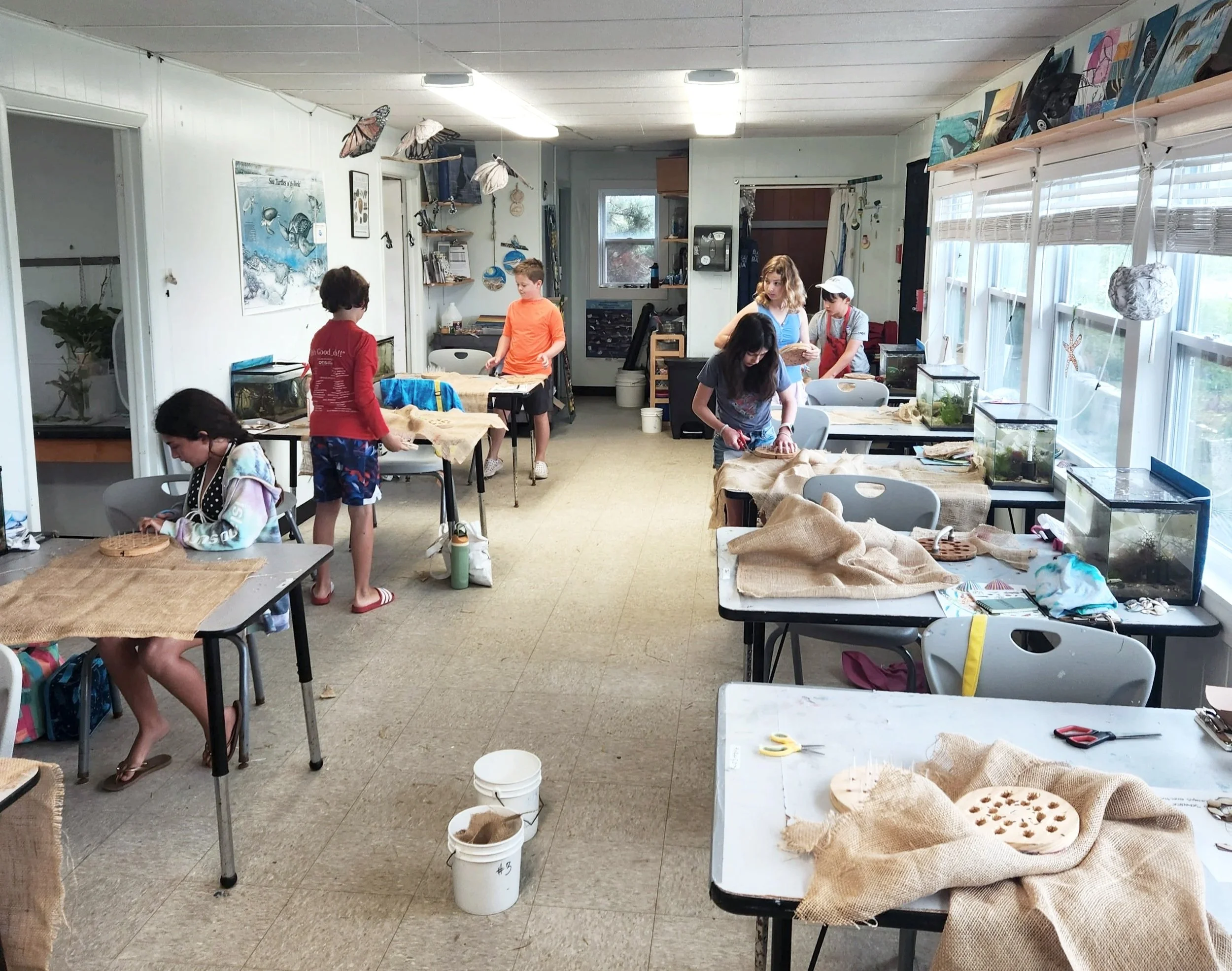
Burlap “tortilla” making to support eelgrass restoration: “Children are excited to help protect our environment; they just need to be given the opportunity,” camp assistant Sophia observed.
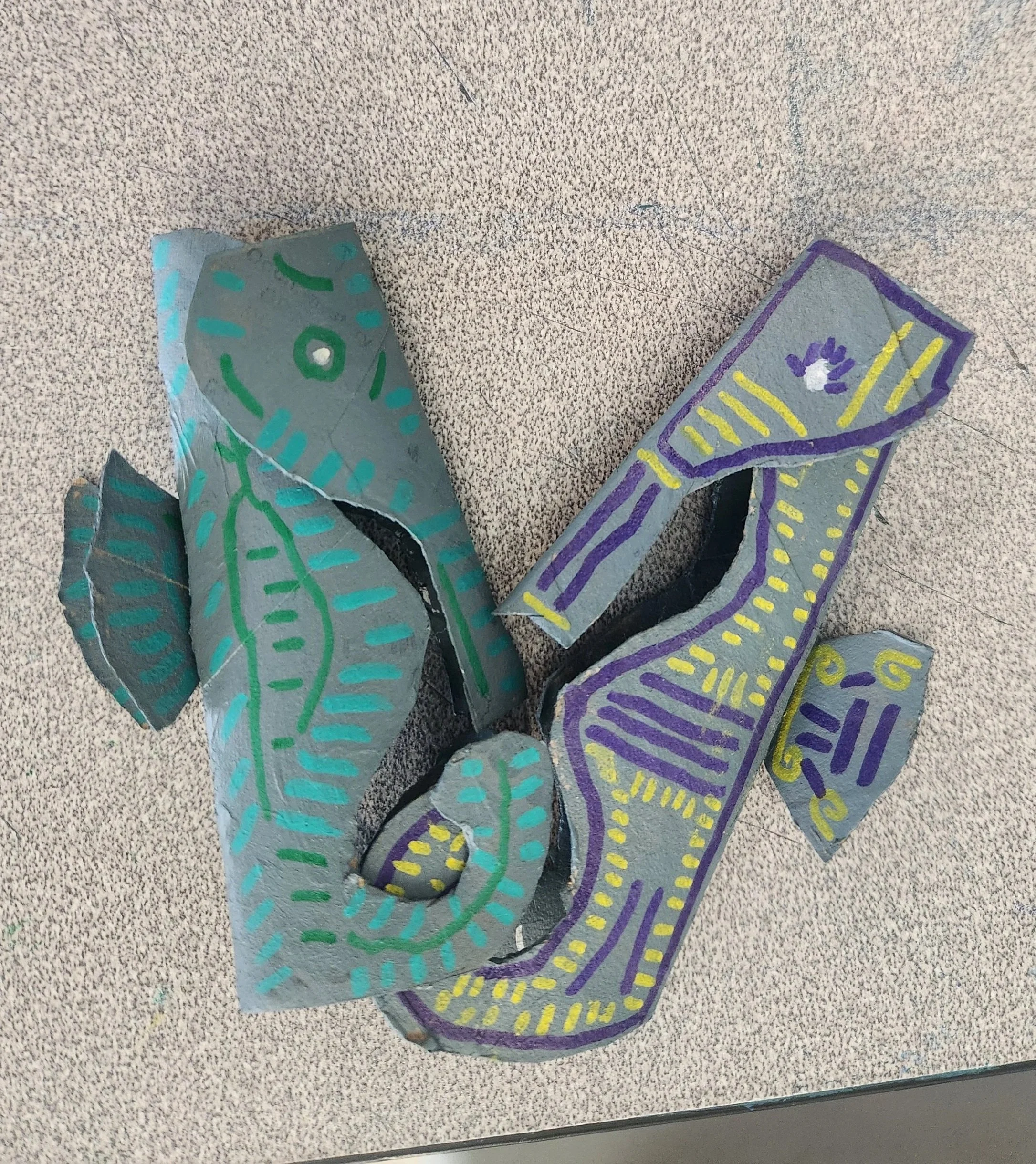
Seahorse themed artprojects, using upcycled toilet paper rolls.
ArtSEA ~ Where science + creativity meet
In ArtSEA, campers explored the many ways science and art work together. Led by local marine artist Carolyn Munaco, campers in both age groups engaged in art activities, including a week-long project. Younger campers created dioramas depicting local habitats, while older campers made 3-D sculptures of a favorite coastal or marine creature. Along the way, they discovered that art and science can work together to help us observe, understand, and share what we learn about the natural world.
Carolyn summed up this year’s camps well:
“Summer marine art & science camps at Tiana Bayside seem to be loved by all! It’s a good sign when the parents are asking if we can hold an adults only camp program!”
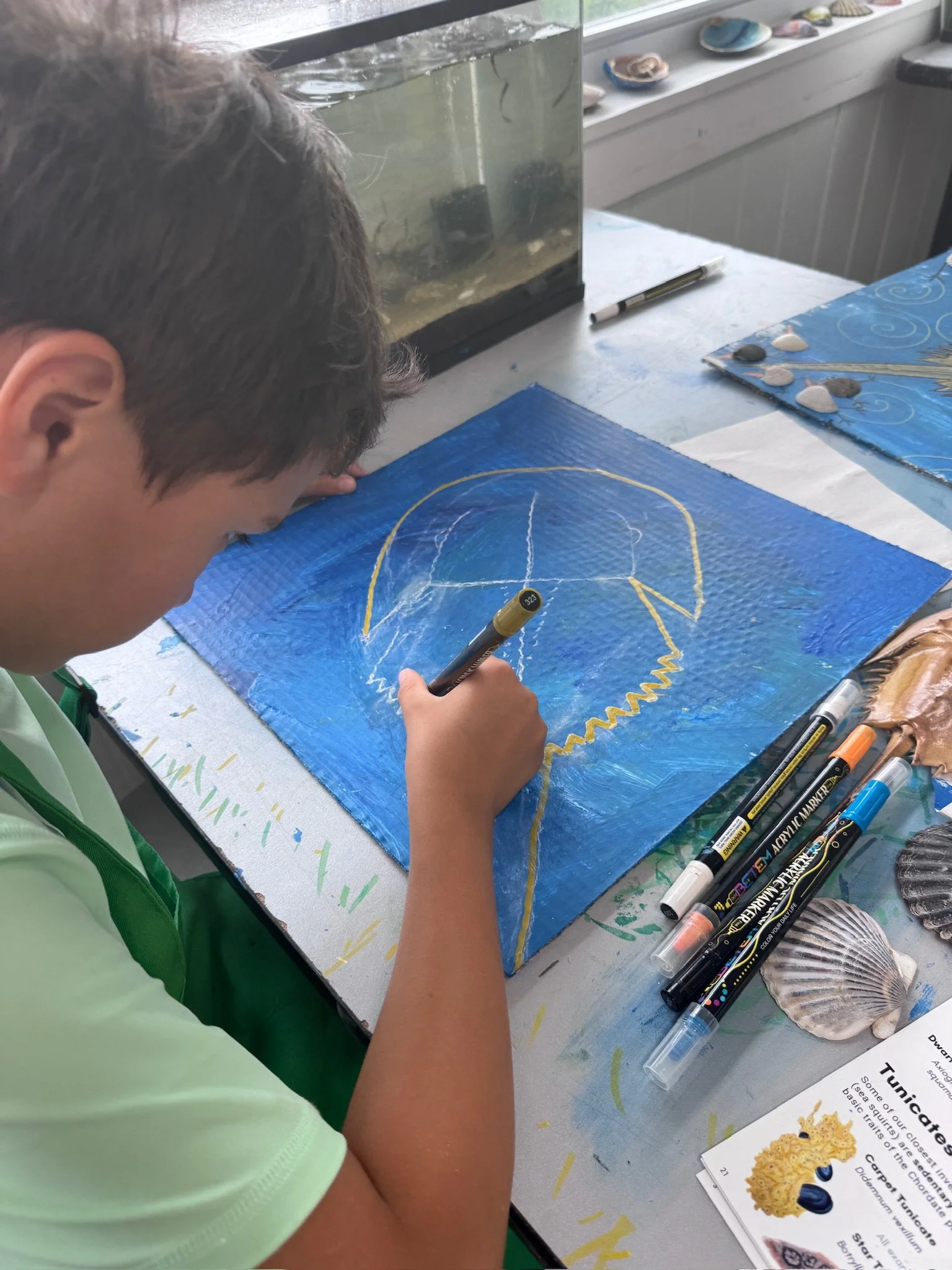
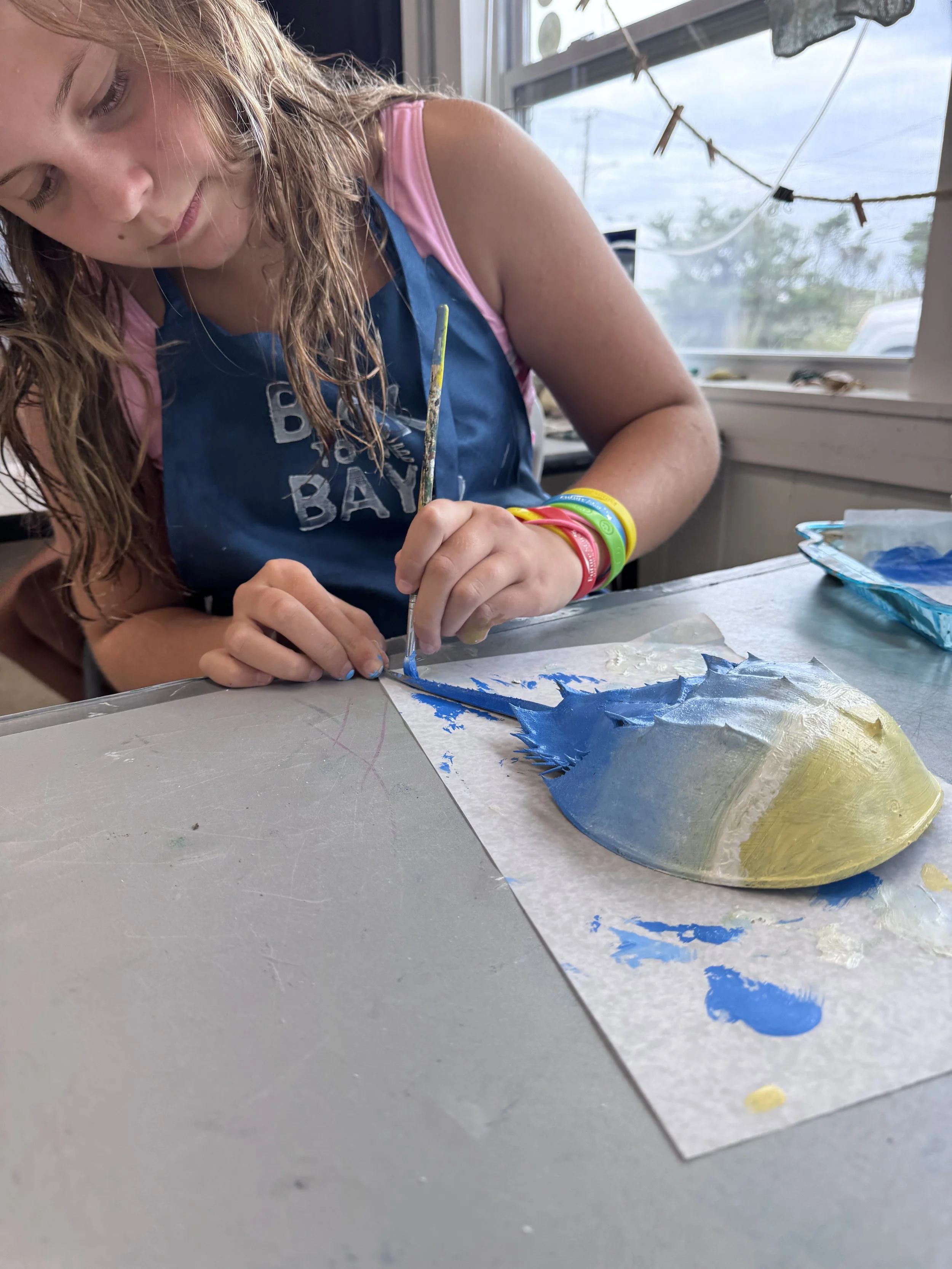
ArtSea Campers decorating the molts of horseshoe crabs.
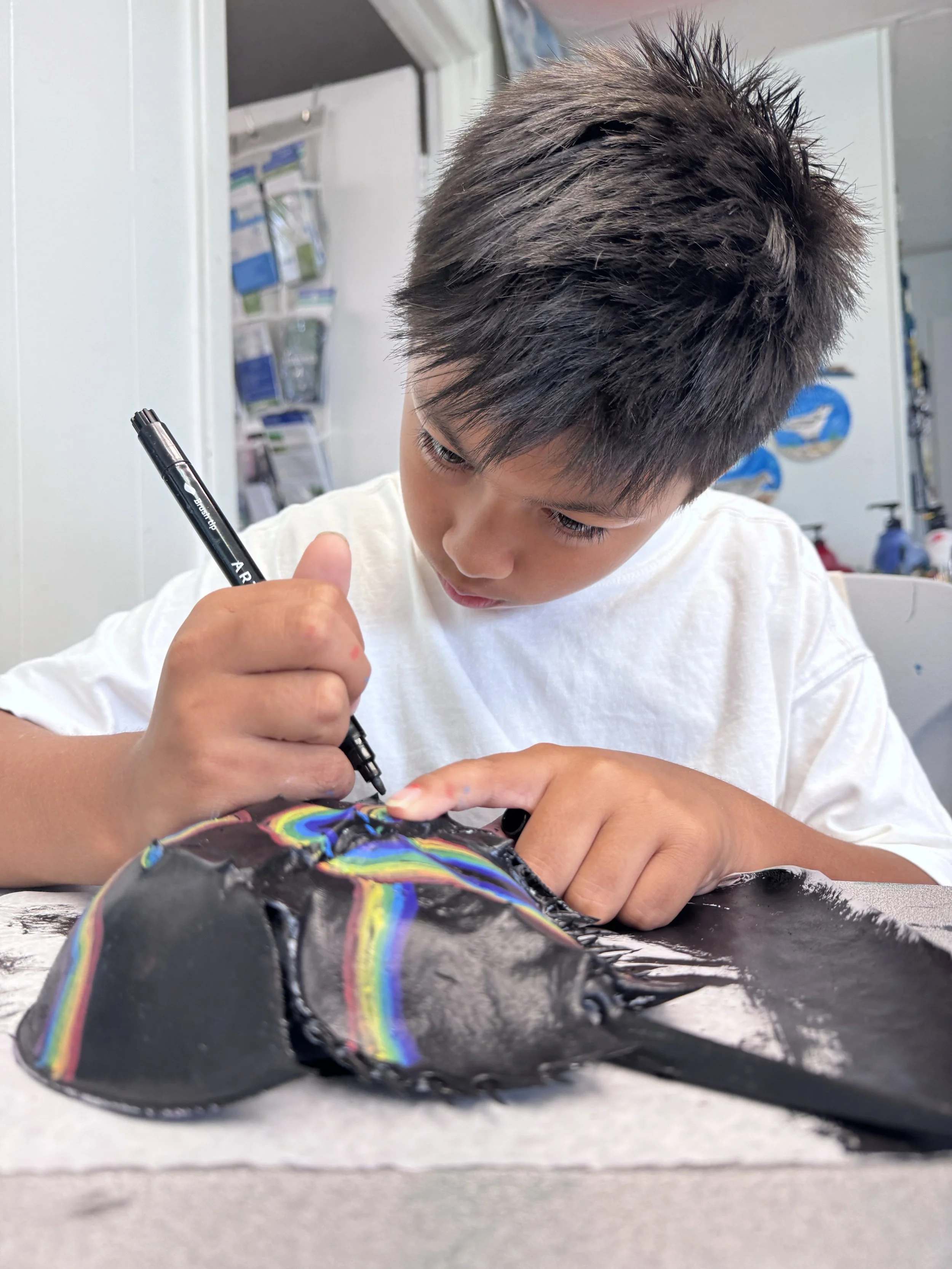
Camp Assistant, Sophia, shared “It was awesome to see campers bring their own personality and perspective into their art. Even when everyone started with the same materials and prompt, each camper created something unique. I loved seeing their creativity shine through and encouraging them to bring that same creativity and curiosity into science.”
seaFan Faves
While each camp had a different focus, they all had one thing in common: plenty of fun! Campers spent time in the water, tie-dyed their own shirts, and made new friends.
Of course, one of the stars of camp each week was something that campers had to take care of themselves: their very own fish tank!
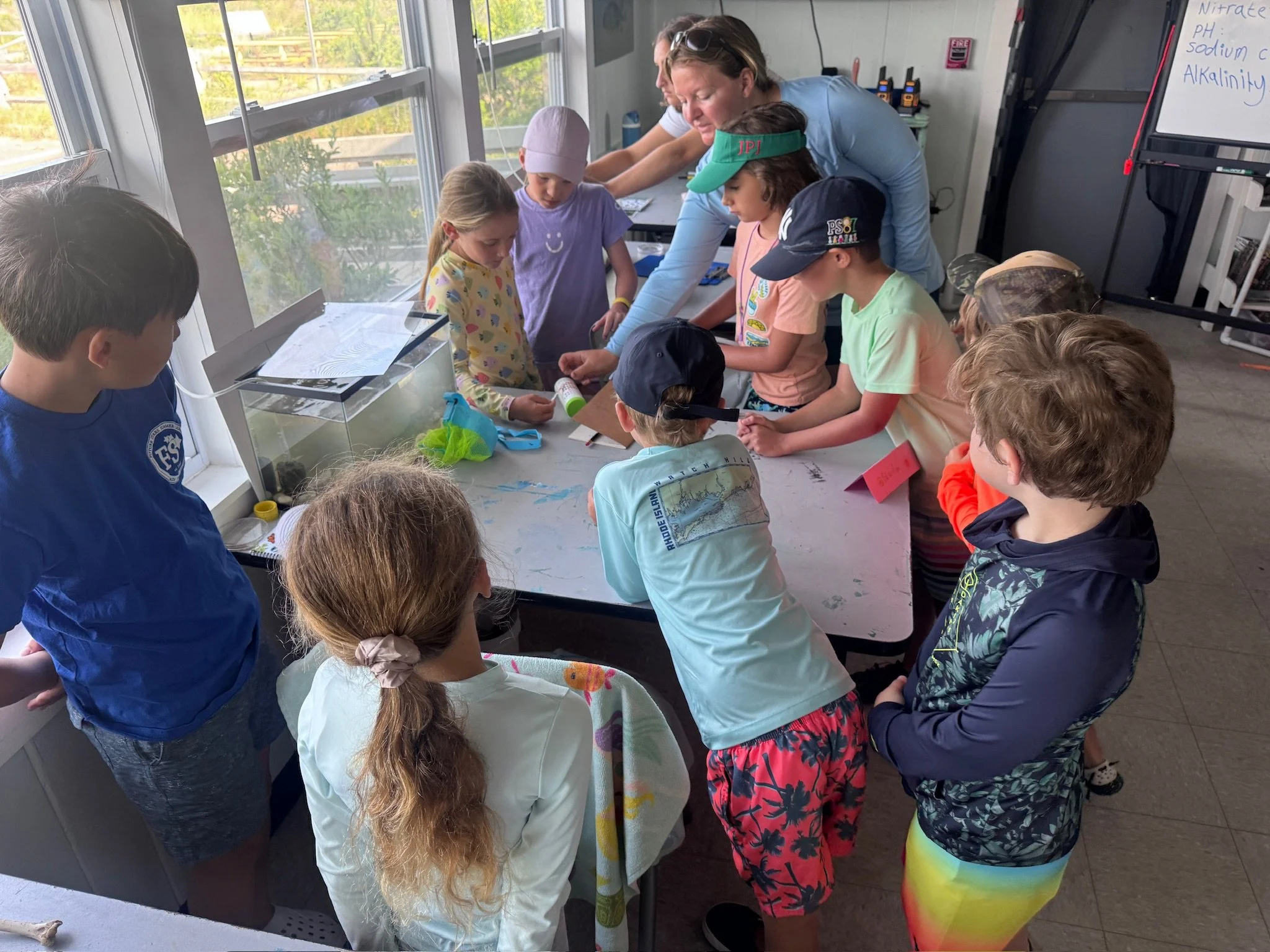
Caly teaching students to test the water quality in their fish tanks, learning to maintain a healthy pH, nitrogen levels, and
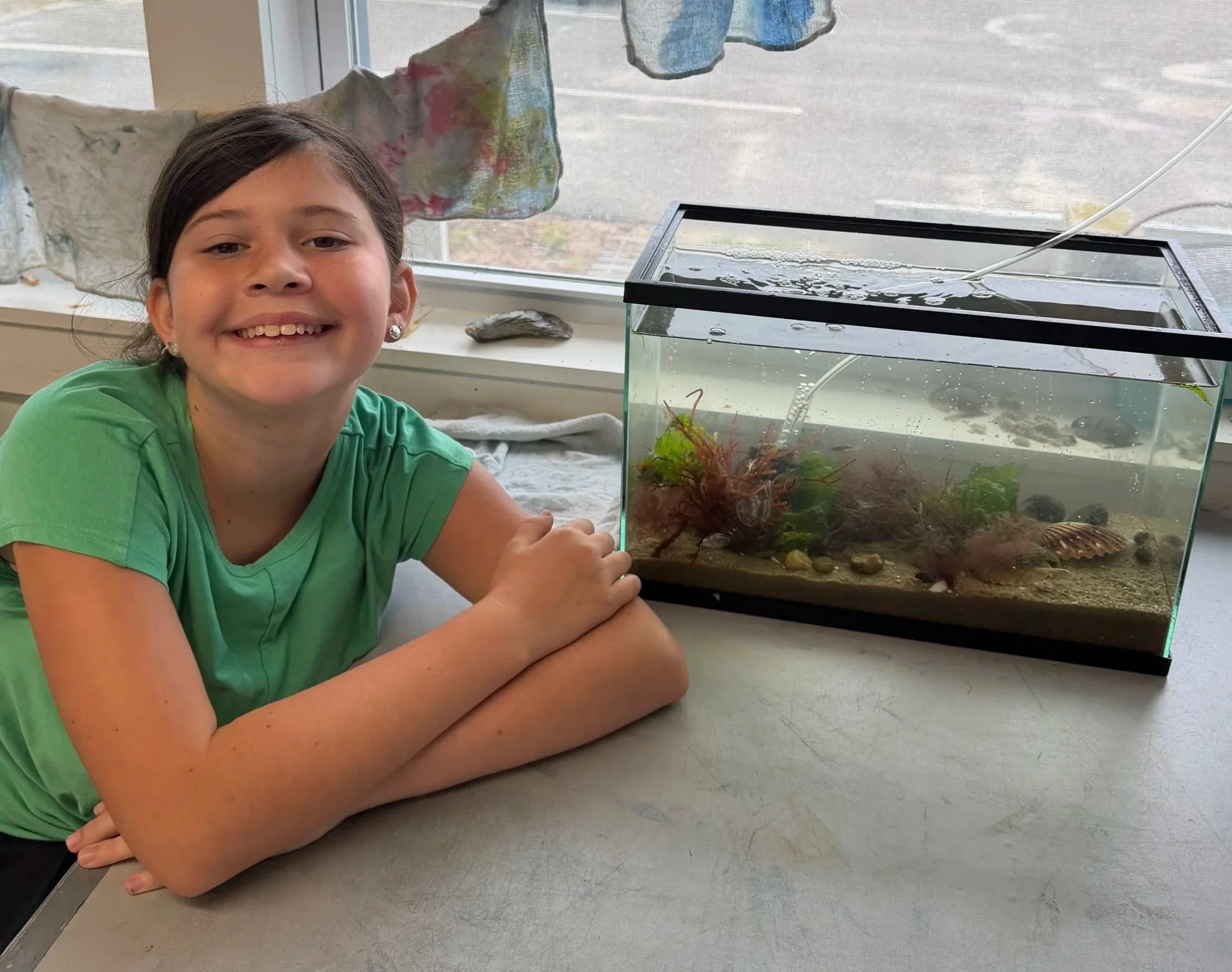
Throughout the week, campers collected and cared for a variety of creatures, from snails and hermit crabs to shrimp, fish, comb jellies, and more. They got to know each creature, observe and ask questions about their behaviors, and learn what it takes to maintain a healthy underwater environment.
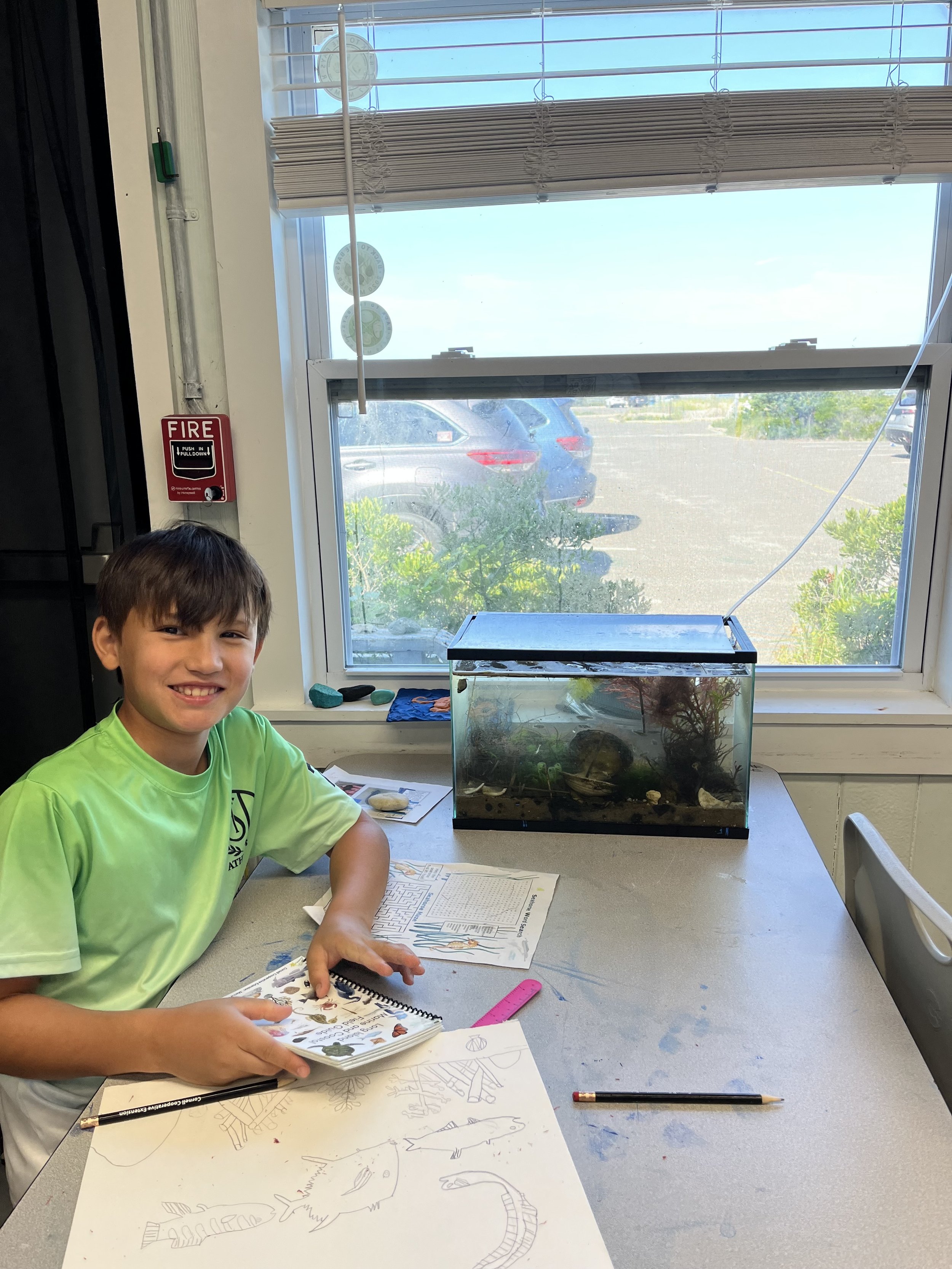
Each camper received a copy of our CCE-published Long Island Marine and Coastal Field Guide, which proved to be a handy, waterproof resource for identifying species collections and getting artistic inspiration.
Keeping a personal collection tank taught campers more than just the science of aquatic ecosystems. They also gave campers an opportunity to practice responsibility and learn what it means to care for something living. Campers learned to respect the animals in their care, pay attention to their needs, and understand that sometimes caring for wildlife also means knowing when it’s time to say goodbye.
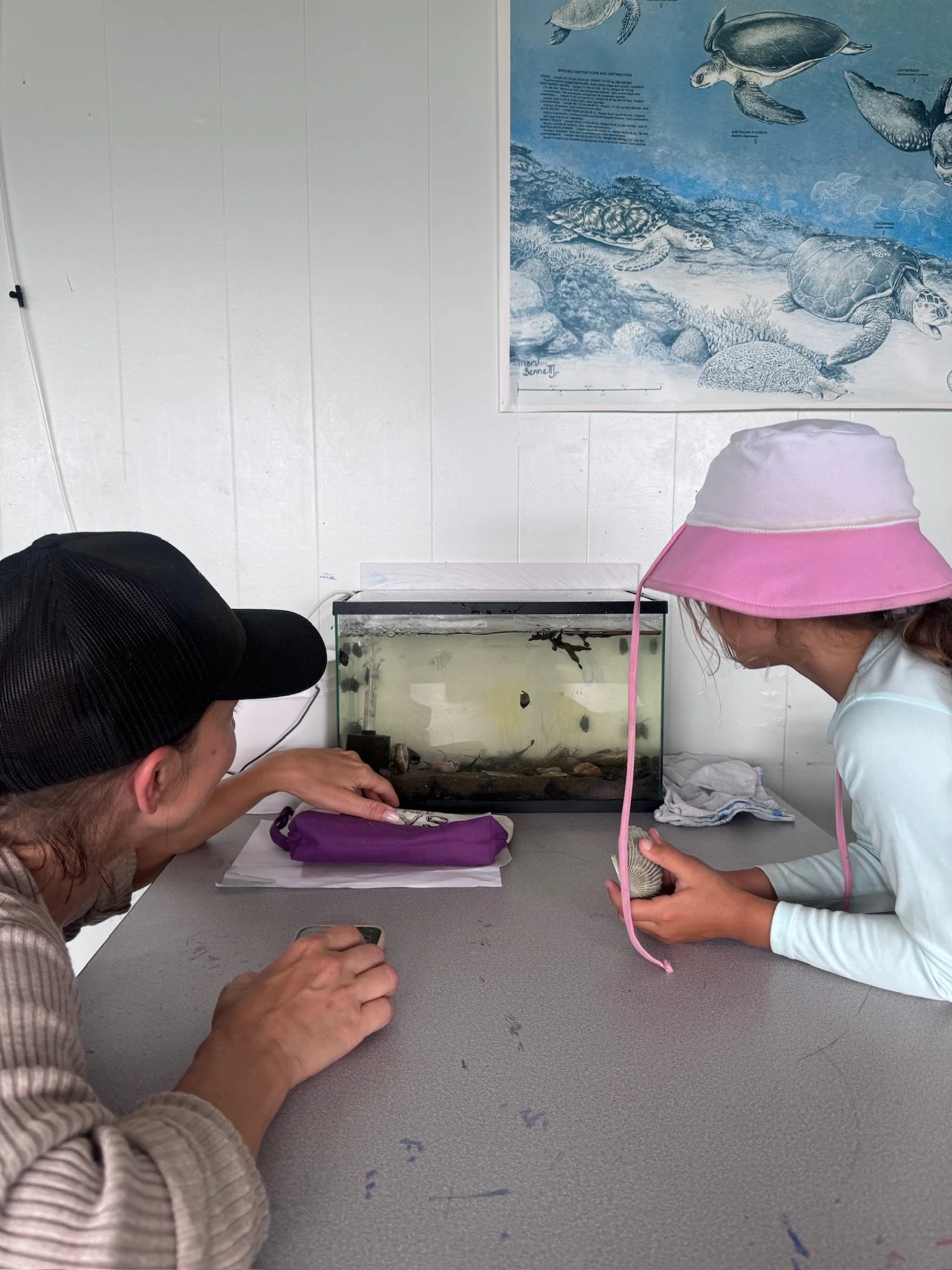
The campers loved to show off their personal fish tanks to family members at pickup time.
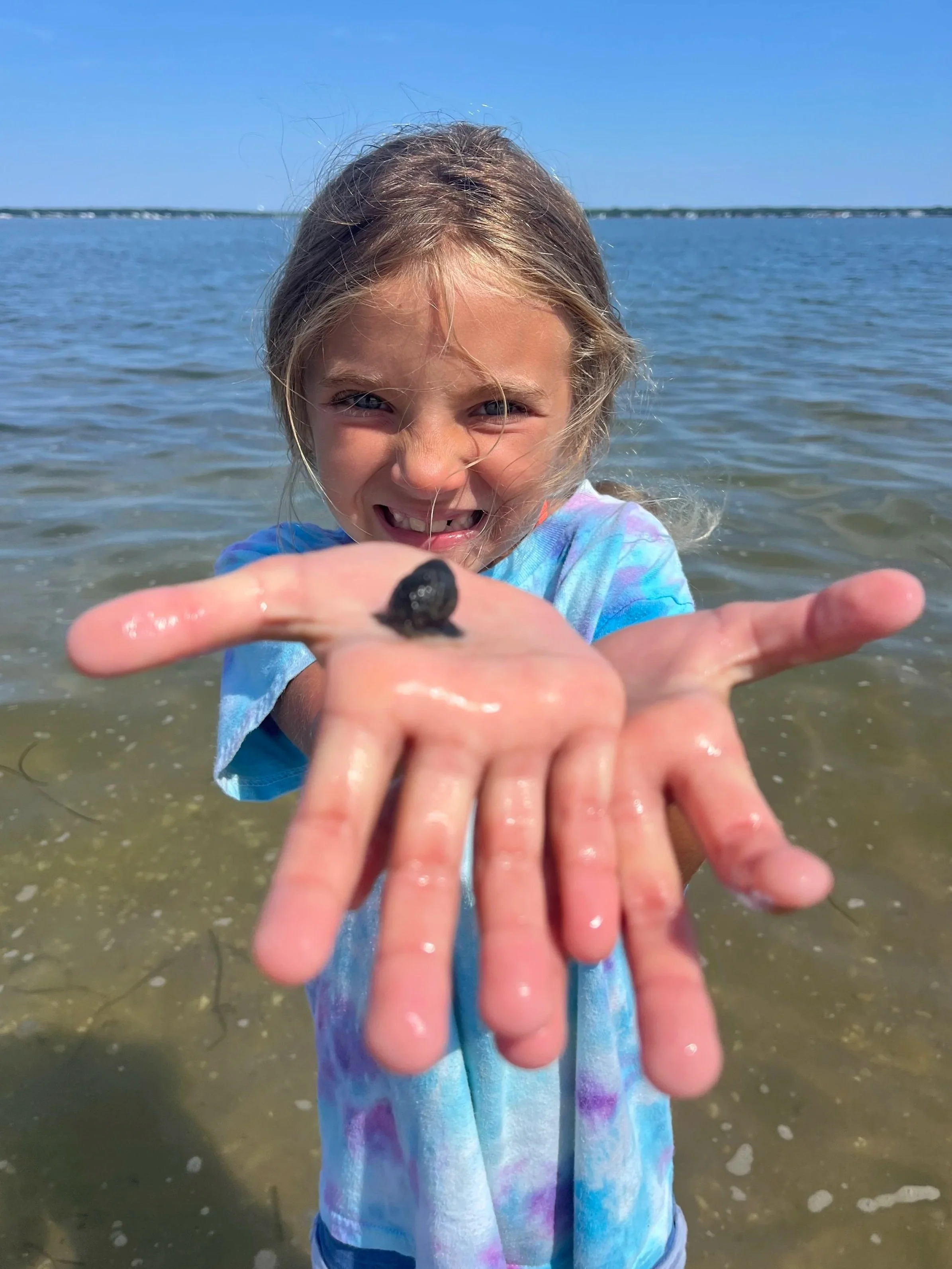
An excited camper getting ready to release her favorite creature of the week, a mudsnail given the name “Alien.”
Supporting Developing Careers in Marine Science
Our Back to the Bays Team had the pleasure of welcoming a new Marine Education Assistant this summer, Sophia Springer, who recently graduated with a degree in Biology and Environmental Studies from Swarthmore College. She reflects on her summer experience:
“I feel grateful to have gotten to know the local wildlife better while working as camp assistant. The campers always had great questions that encouraged me to think more deeply about our local ecosystems.
I found it rewarding to see campers come in each day and immediately head to their tanks and check in with their creatures. From doing water tests to make sure they had a healthy environment, to making sure all their hermit crabs had shells to choose from, it was fulfilling to see campers become so involved.
We also tried to expand this sense of care beyond their tanks to the environment around them, from discussions about sustainability and climate change to embarking on trash-collecting missions along the beach. We hope our campers continue to be stewards of the land, whether that means picking up litter, trying to cut down on their own plastic use, or initiating environmental conversations with family and friends. If even one camper leaves feeling inspired to take better care of the natural world around them, I would consider the summer a success.”
While the summer may be over, the discoveries don’t have to be. We hope our campers leave with a deeper appreciation for marine and coastal ecosystems and a lasting curiosity about the natural world outside their doors.
Check back for information about 2027 Summer Camps at our partner site: ccemarineeastend.org
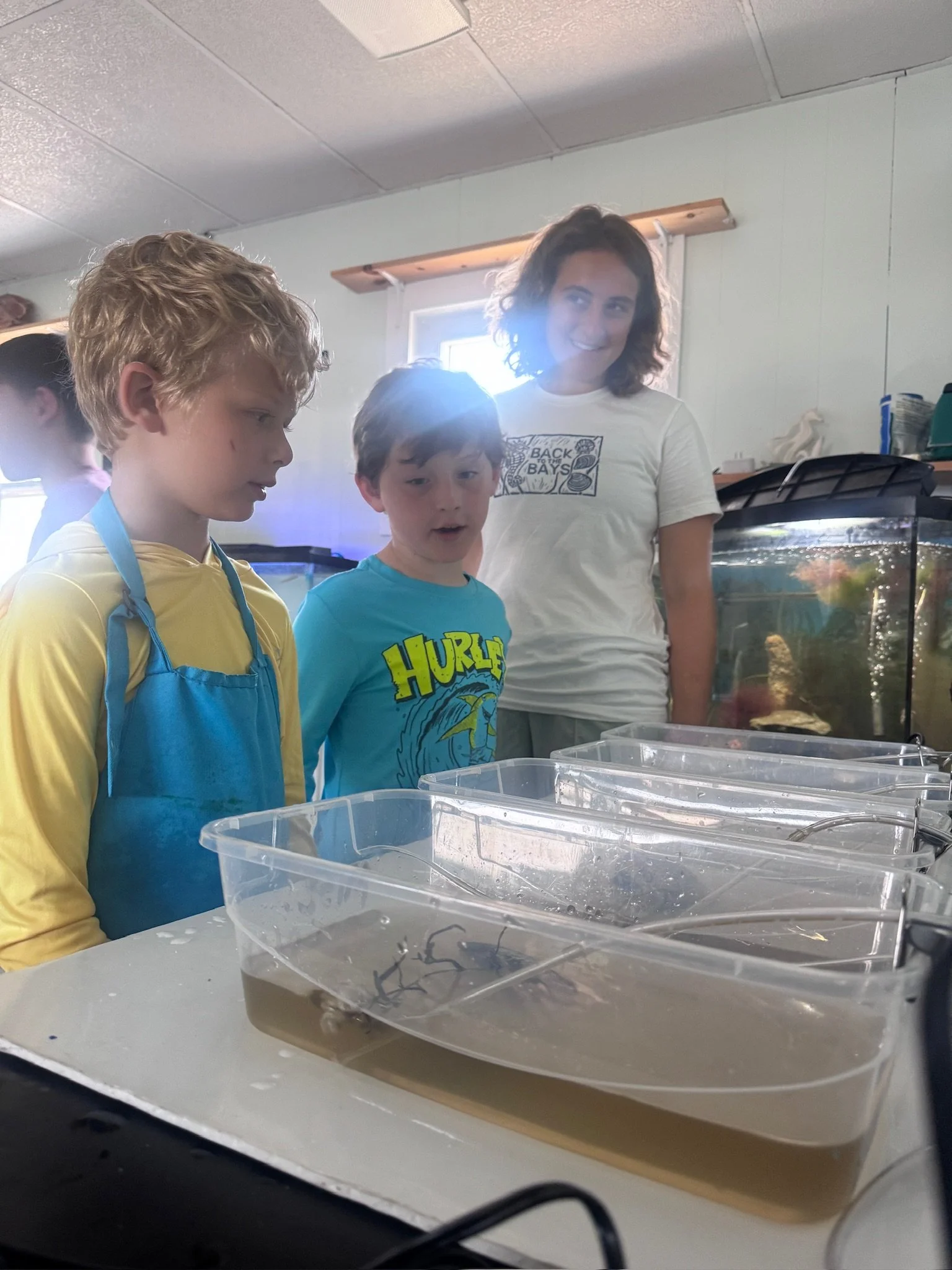
Education Assistant, Sophia, observing an experiment with campers.
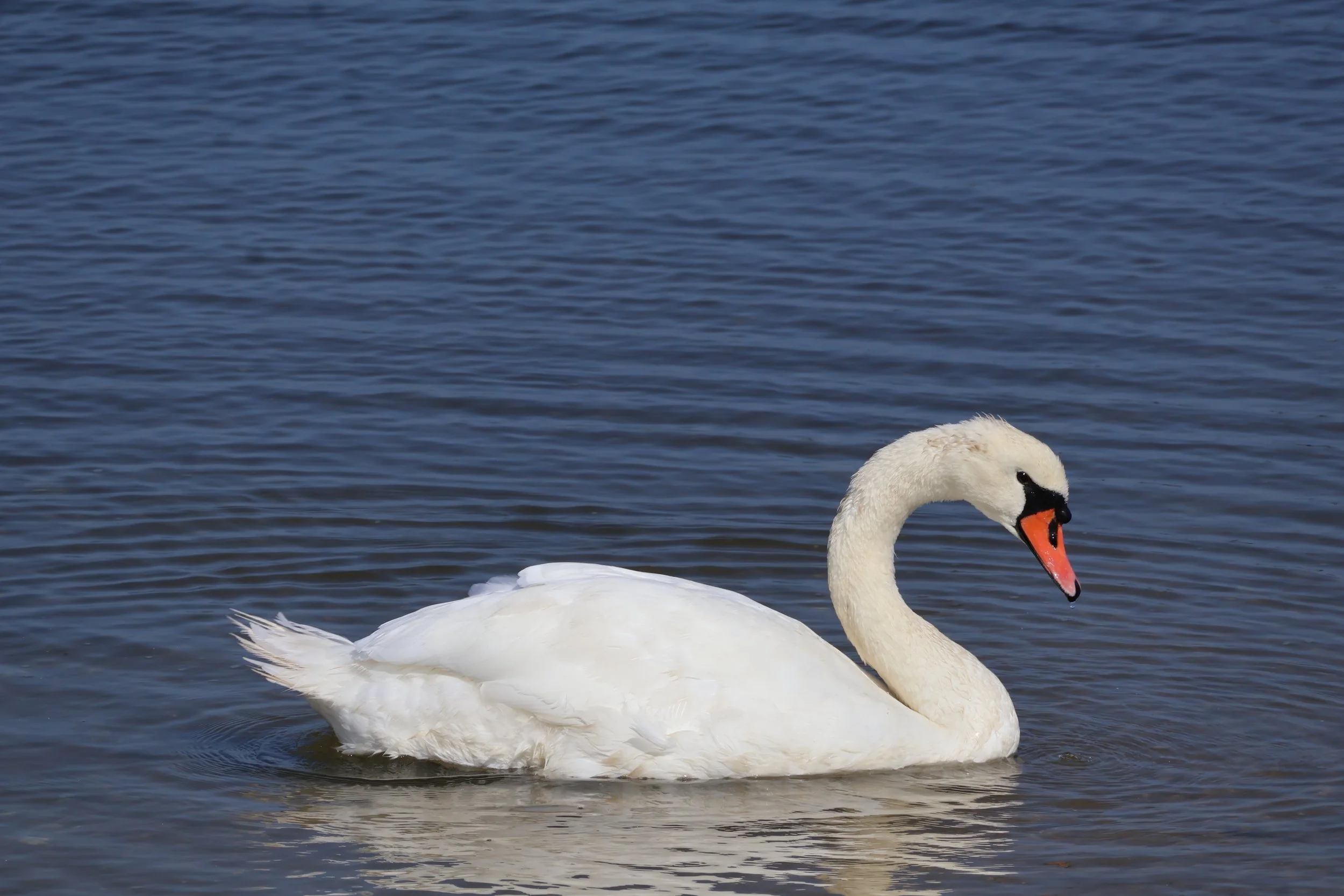
Sophia ~ “I took this photo of a local swan whose family frequently returned to the area around the camp. Although Mute Swans are considered invasive, I loved getting to observe their behavior throughout the summer and felt lucky to share the space with them.”