
Marsh Restoration Rafts update
This work has been funded in part through our Town of Southampton Community Preservation Fund Water Quality Improvement grant, and through the generous support provided to our Sag Harbor Stewardship Site Fund.
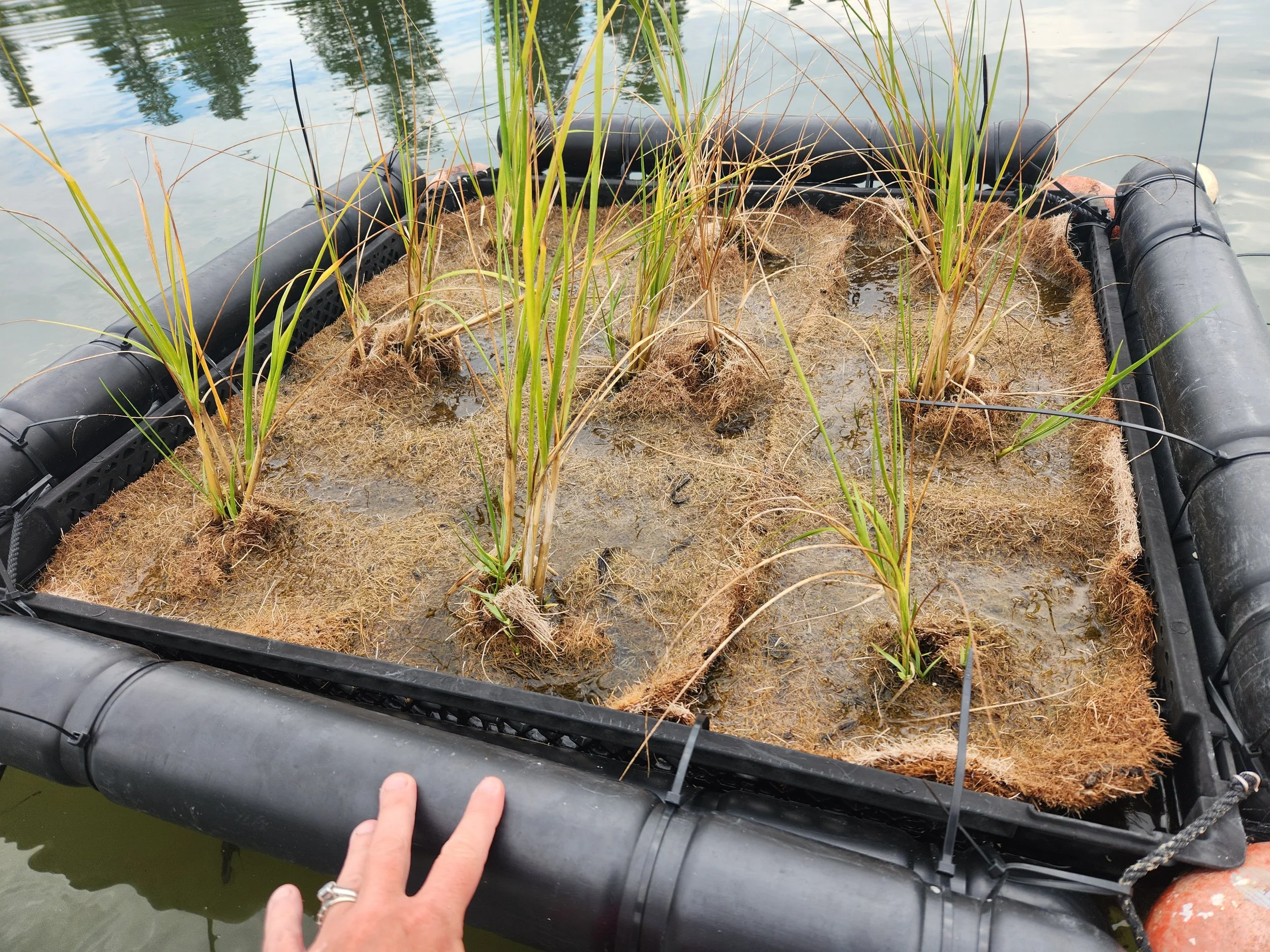
Floating marsh restoration raft, after a summer of growth!
Back to the Bays intern, Rachel Kapllani, an undergraduate at Georgetown University (class of ‘27), completed her senior thesis project with us, working under the guidance of Habitat Specialist and Education Manager, Kim Manzo. Below, she reflects on the conclusion of her project. (read her first blog post HERE)
“Good things take time. Growth takes time. As such, the smooth cordgrass (Sporobolus alterniflorus) plants I have focused on throughout my summer research at CCE Marine’s Suffolk County Marine Environmental Learning Center also took time. After two months of nearly uninterrupted growth in the floating wetland rafts that I constructed this past June, the plants finally made landfall just two weeks ago. I felt a real sense of eagerness at this point, slightly scared that the rafted plants weren’t as successful in taking their nutrients straight from the water as we’d hoped. Still, the fact that they sat through two months of the desired growth conditions meant they could offer me one indispensable thing - information! So, just before concluding my internship to return to university, I said my goodbyes to each of the thirty individual plants, collected final measurements on shoot height and overall plant weight, and recorded the general appearance of the plants, noting any other life that may have hitched a ride on the rafts.
Experimental Groups
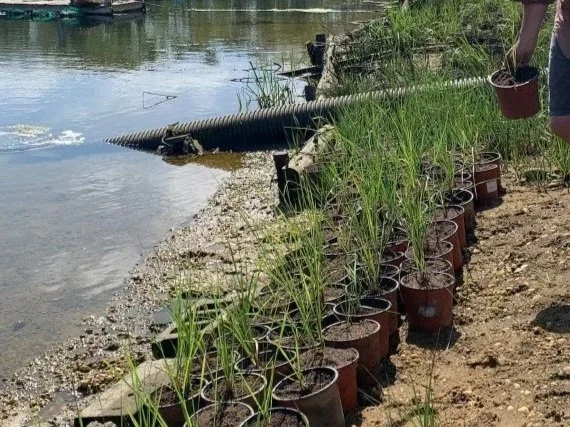
Control: Shoreline pots w/ regular soil (compost/sand mix). This is CCE’s typical growout method.
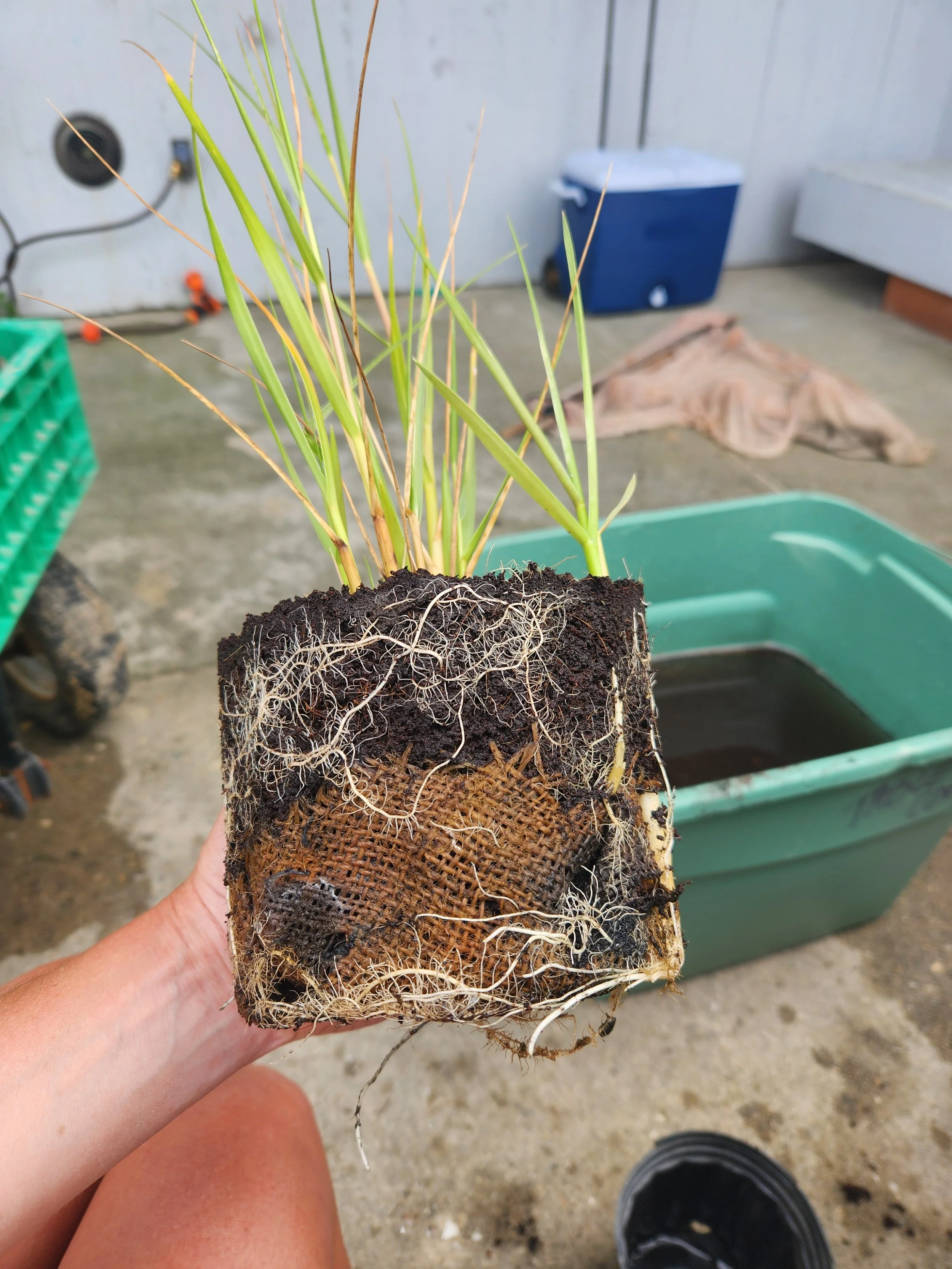
Treatment 1: Shoreline pots w/ coconut fiber soil
Sample size: 10 plants
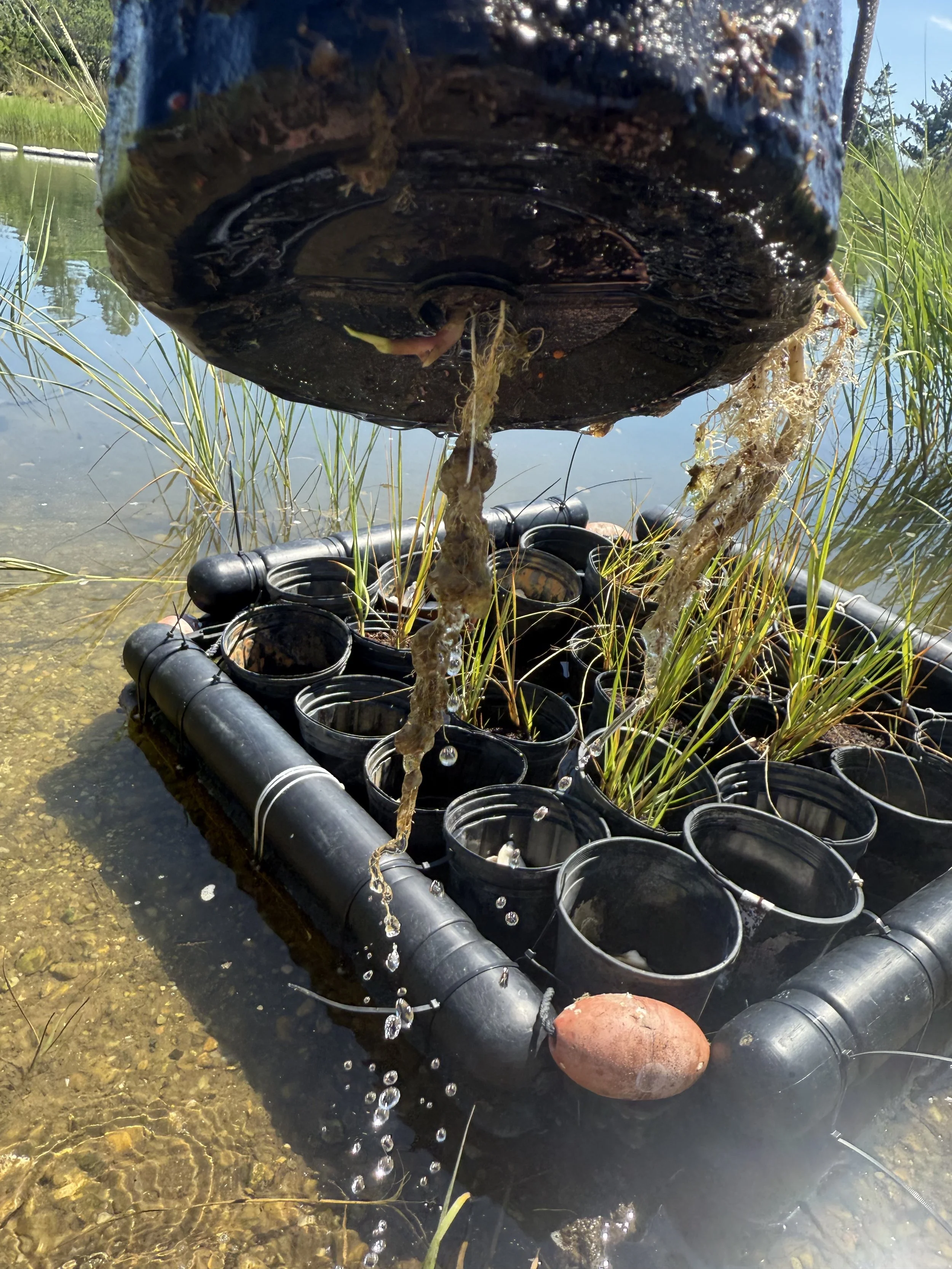
Treatment 2: Floating pots w/ coconut fiber soil
Sample size: 10 plants
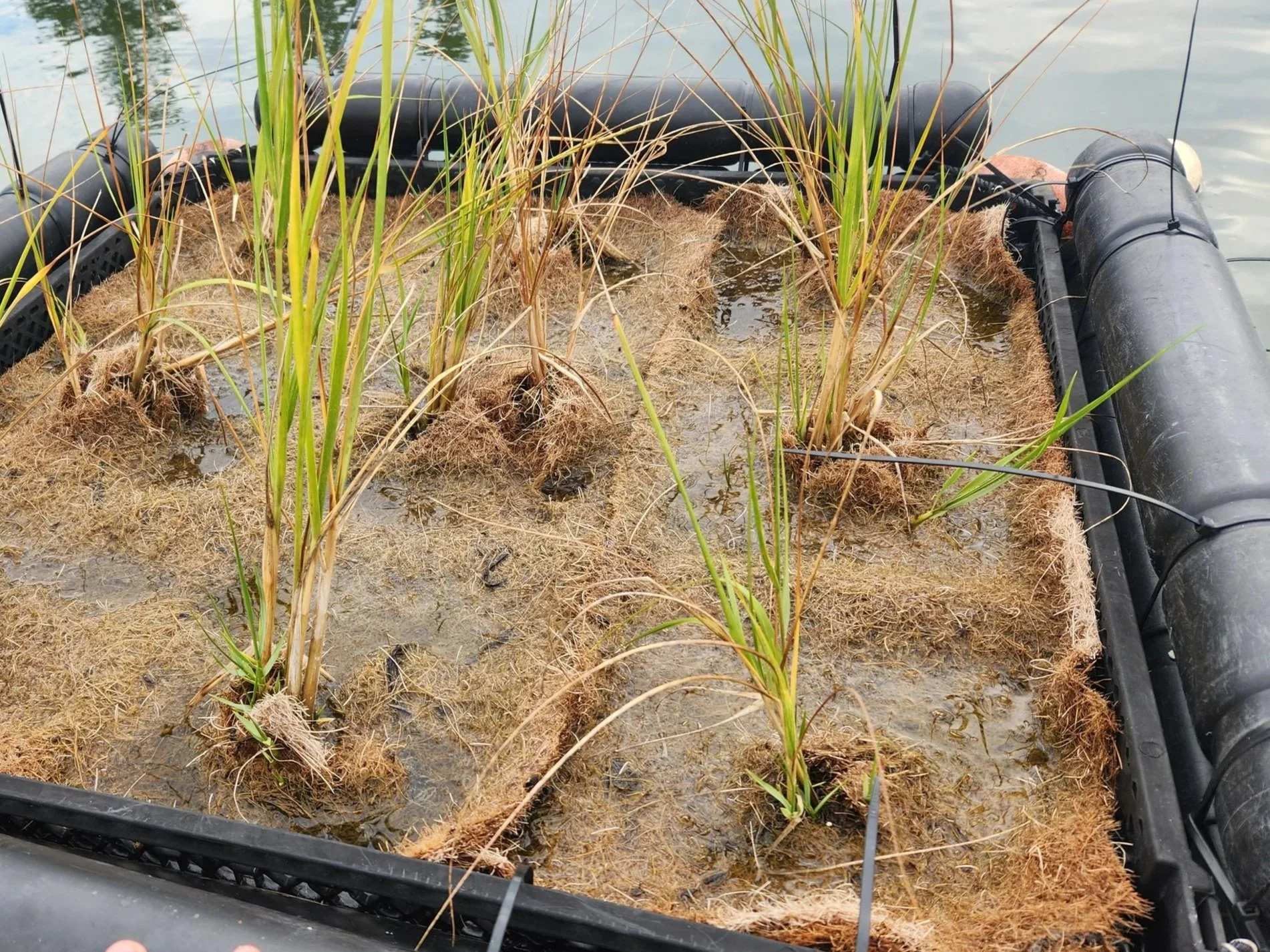
Treatment 3: Floating hydroponic (soil-free) w/ coconut fiber mats
Sample size: 10 plants
Supporting life in the marsh
Not a single restoration raft was left untouched by the vast array of salt marsh life that abounds in the Peconic Bay. The ten plants along the shore in regular soil (control group) were almost all colonized by rough periwinkles, a small snail, native to North Atlantic salt marshes.
A very different picture took shape in floating restoration raft containing cordgrass potted in coconut coir soil (treatment 2). Here, I actually found what looked to be a decomposing minnow in one pot, and the webs of a few seafaring spiders between the shoots of the plants.
Most obviously colonized, however, was the hydroponic raft (treatment 3), which had been lined with coconut fiber mats so as to support the plants in a “soil-free” environment. After months atop the water this raft had amassed clumps of sea squirts (tunicates) clinging to the buoys and protruding grass roots in a manner reminiscent of grapes on a vine.
While none of my measurements were destructive for the plants, I did have to remove many of these hitchhiking organisms, but it shows how much life is actually supported by one of these Restoration Rafts, and salt marshes in general.
Initial Growth Results
Once the plants were cleared of sea squirts, coconut coir, snails, and the like, I was able to see how their appearances differed by treatment group. While cordgrass that grew in the control group along the shore had modest root systems, those that grew in the coconut coir pot raft showcased dense networks of tiny, intricately woven roots, often filling the entire pot and spiraling into corkscrews. These plants were heavier on average than the control group, and my suspicion is that roots played a deciding role. Roots of plants in the coir mat raft grew shorter, but were noticeably more fibrous in the areas where they attached to the mats. Plants grown in the water also visually differed from those on shore; many in the floating marsh systems experienced more sun damaged leaves, but showed higher shoot density overall.
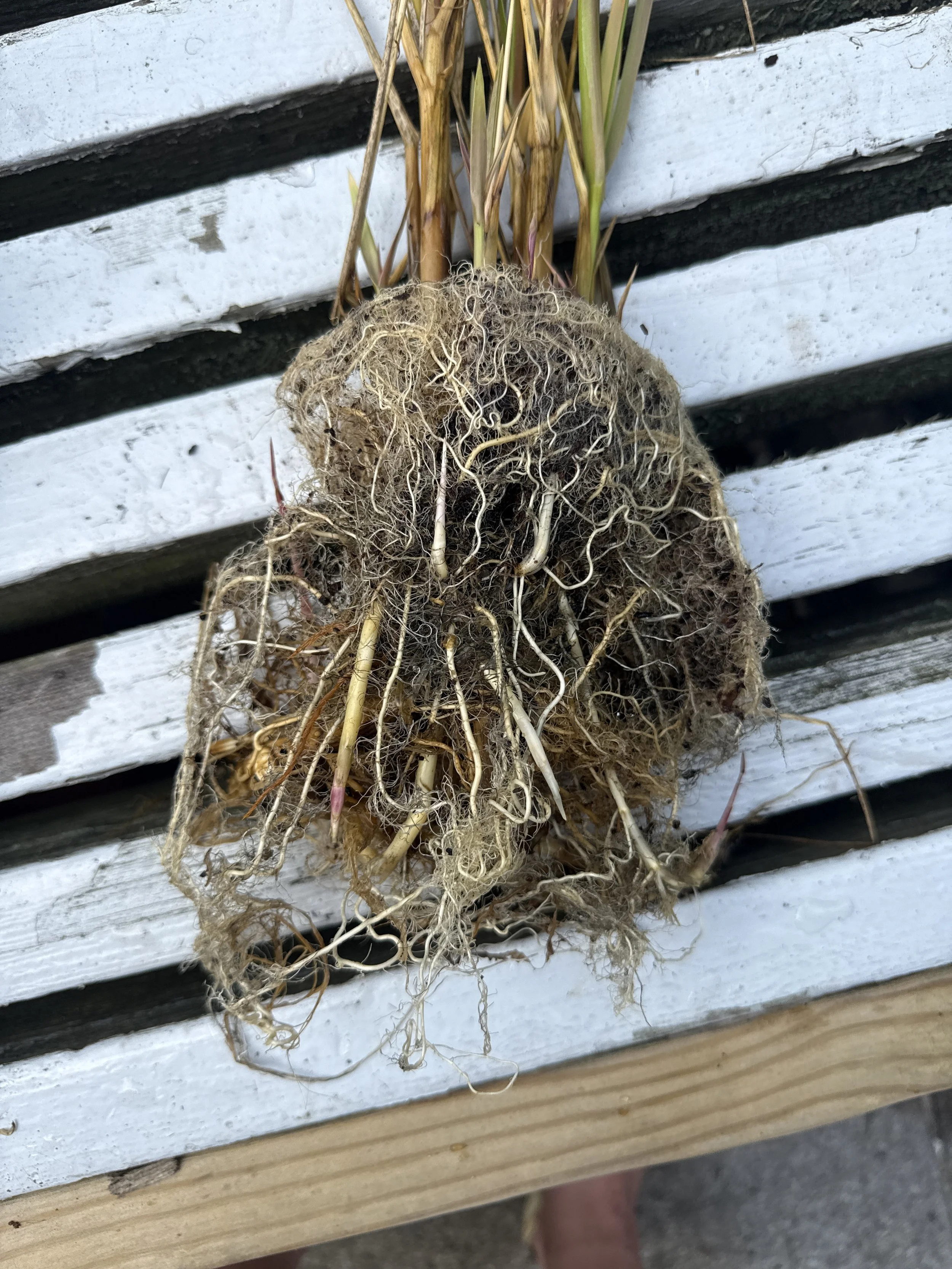
Treatment 2 (floating pots): showing high root density = high carbon sequestration
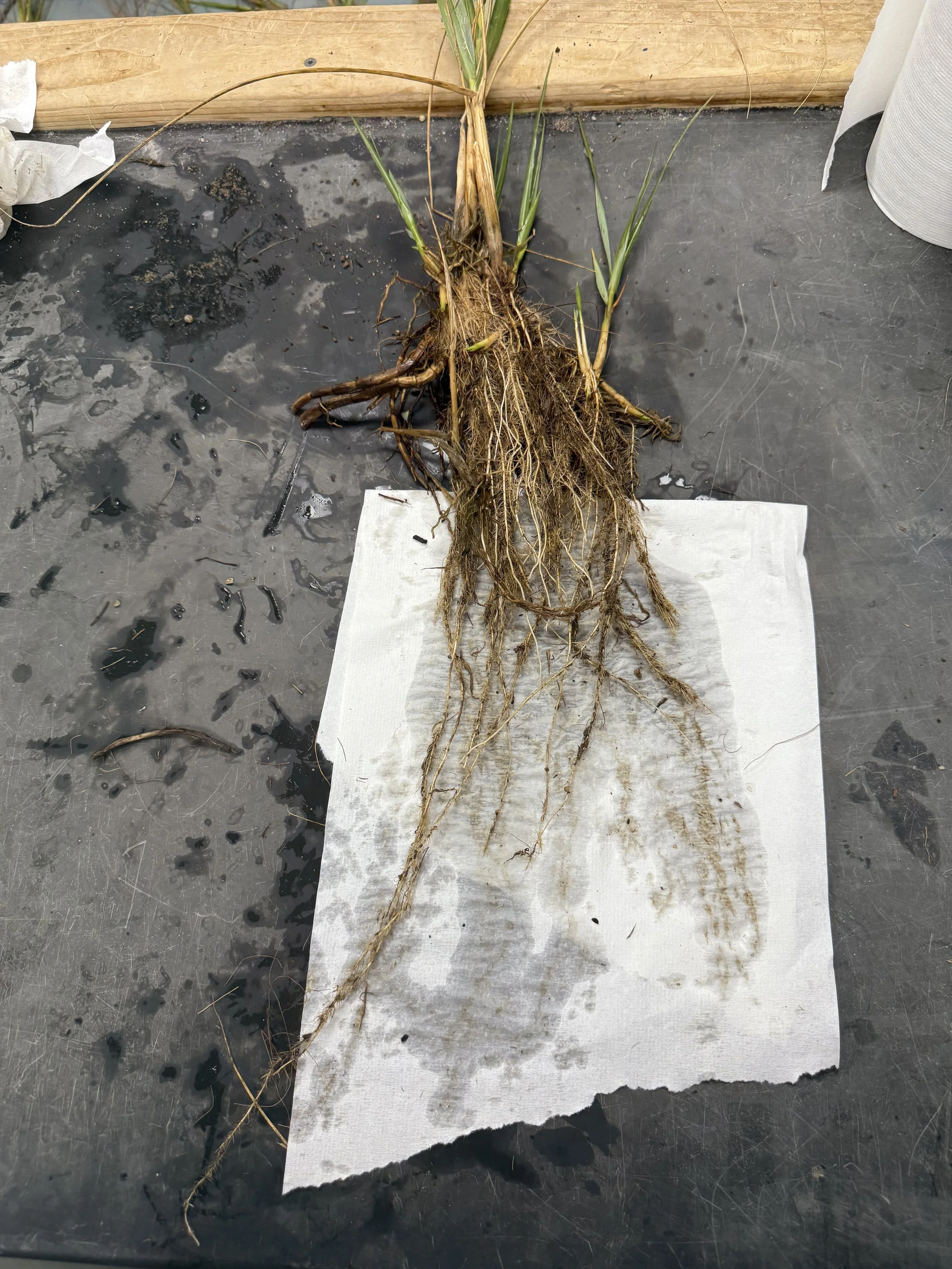
Treatment 3 (hydroponic): showing longer root systems
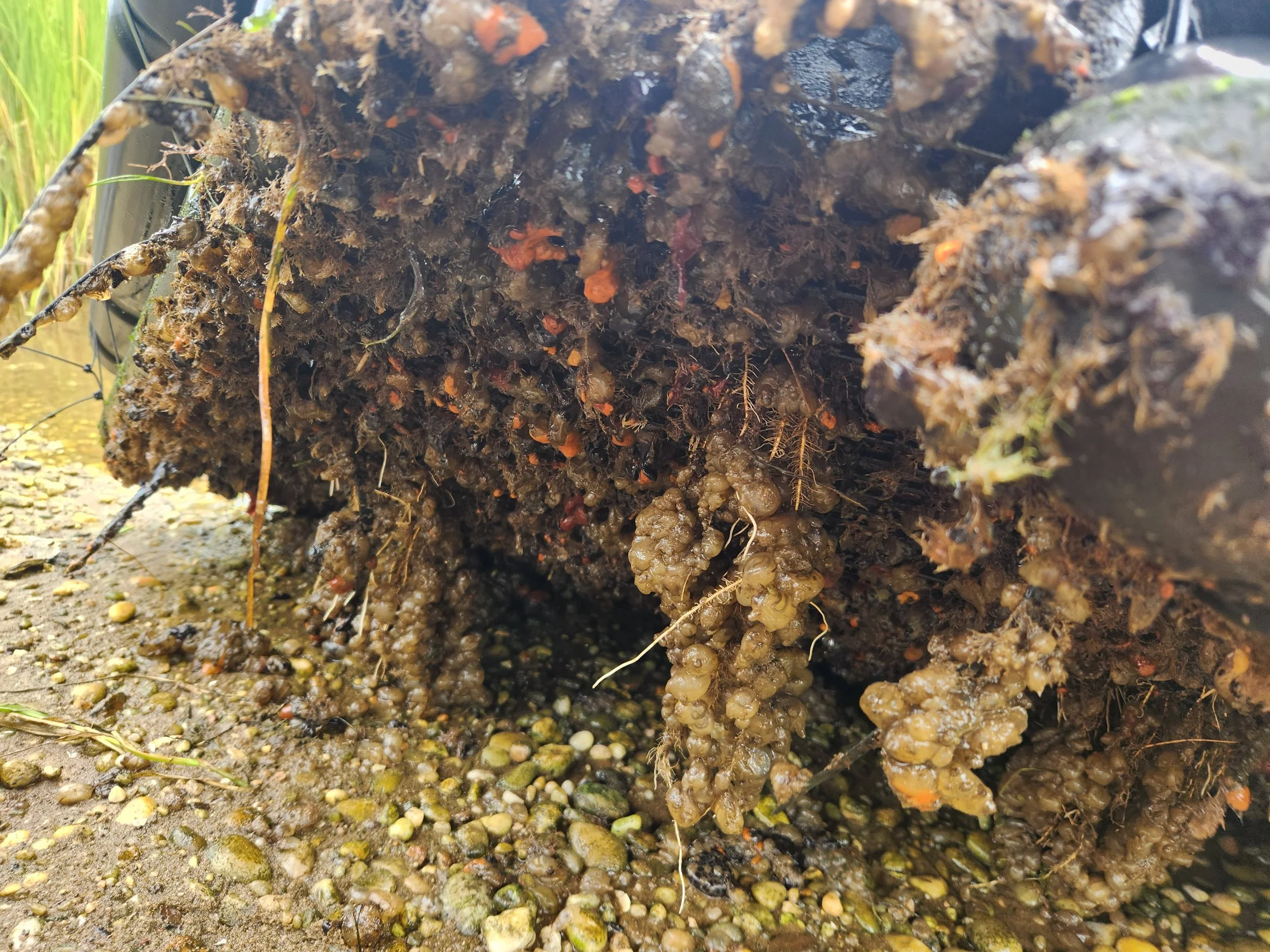
The exposed roots in our hydroponic floating raft (treatment 3), hosted a huge diversity of species that also help to filter seawater, including sea squirts and sponges!
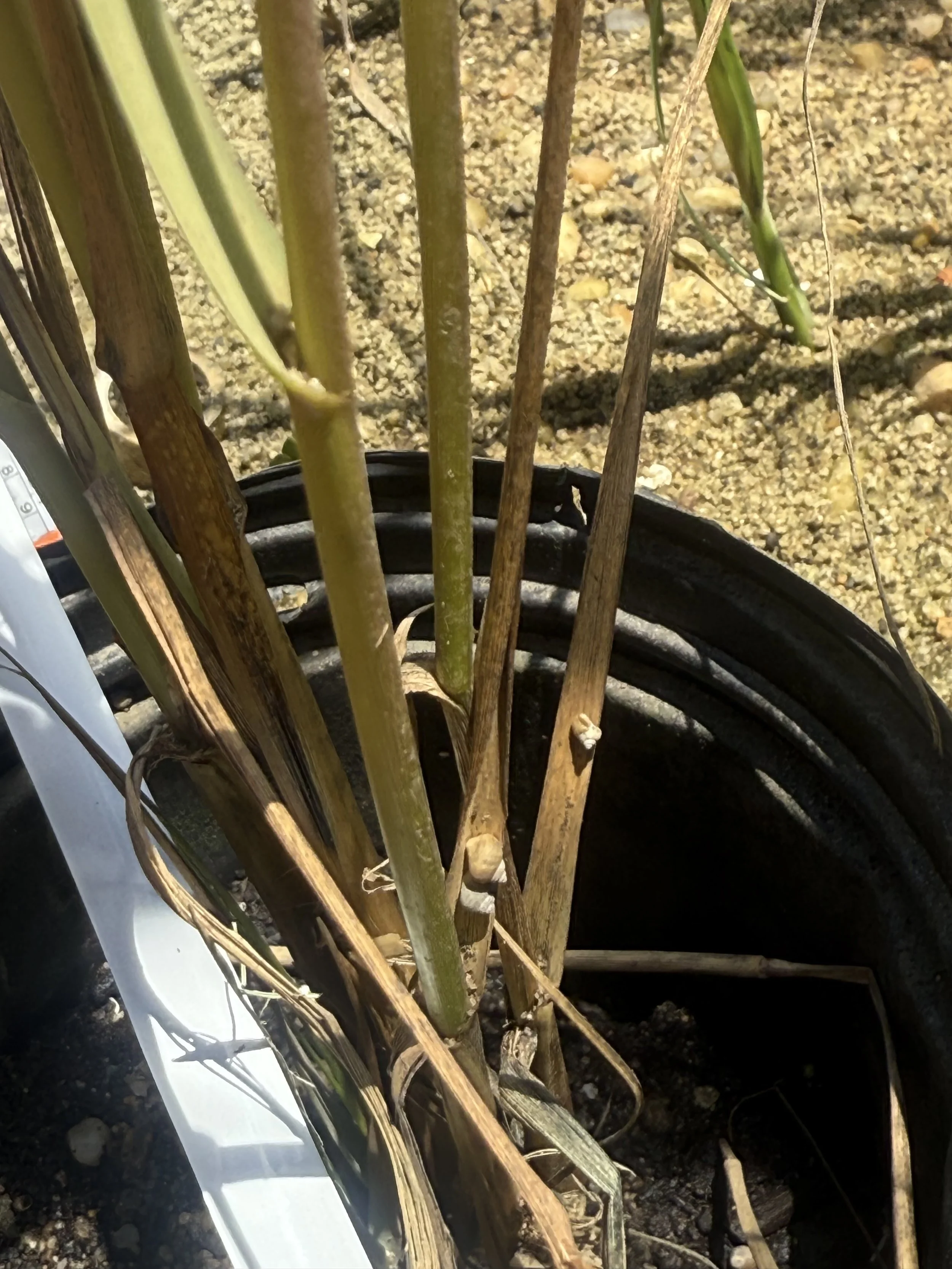
Periwinkle snails living on the shoots of our shoreline potted plants
A few roots managed to grow through the pots in treatment 2, allowing some life to colonize.
This difference in root density and plant growth could be attributed to the ability of these unique aquatic plants to take up nutrients directly from the water column. Marsh grasses and other marine plants are known to be some of the best “carbon sinks” in the world. As they photosynthesis, taking in carbon dioxide, they store it in their dense root systems. Preserving and restoring these carbon sequestering habitats, nick named “Blue Carbon” can ultimately help reduce carbon dioxide and mitigate climate change.
A summer well-spent
Now I could go on in paragraphs more about the tiny details and nuances that we poured over when examining specimens, but the most valuable experiences of my internship were not those spent with plants or ecology alone. Rather, working with the Back to the Bays Initiative taught me about the importance of exchanging knowledge with the community around you. The science, in my case engineering a raft prototype and monitoring plant growth, does not matter nearly as much when people aren’t aware of it, or worse, are not convinced of its value.
The final stewardship session I attended this summer was a floating marsh raft assembly workshop at Back to the Bays’ new Redwood Anchorage facility in Sag Harbor. I had the opportunity to assist alongside staff and members of the local community in bringing a larger scale version of my raft prototypes to life. This allowed me to explain my process and how innovative growing solutions can help provide ecosystem services, like water quality mediation, in places where natural marshes and other coastal habitats have been depleted.
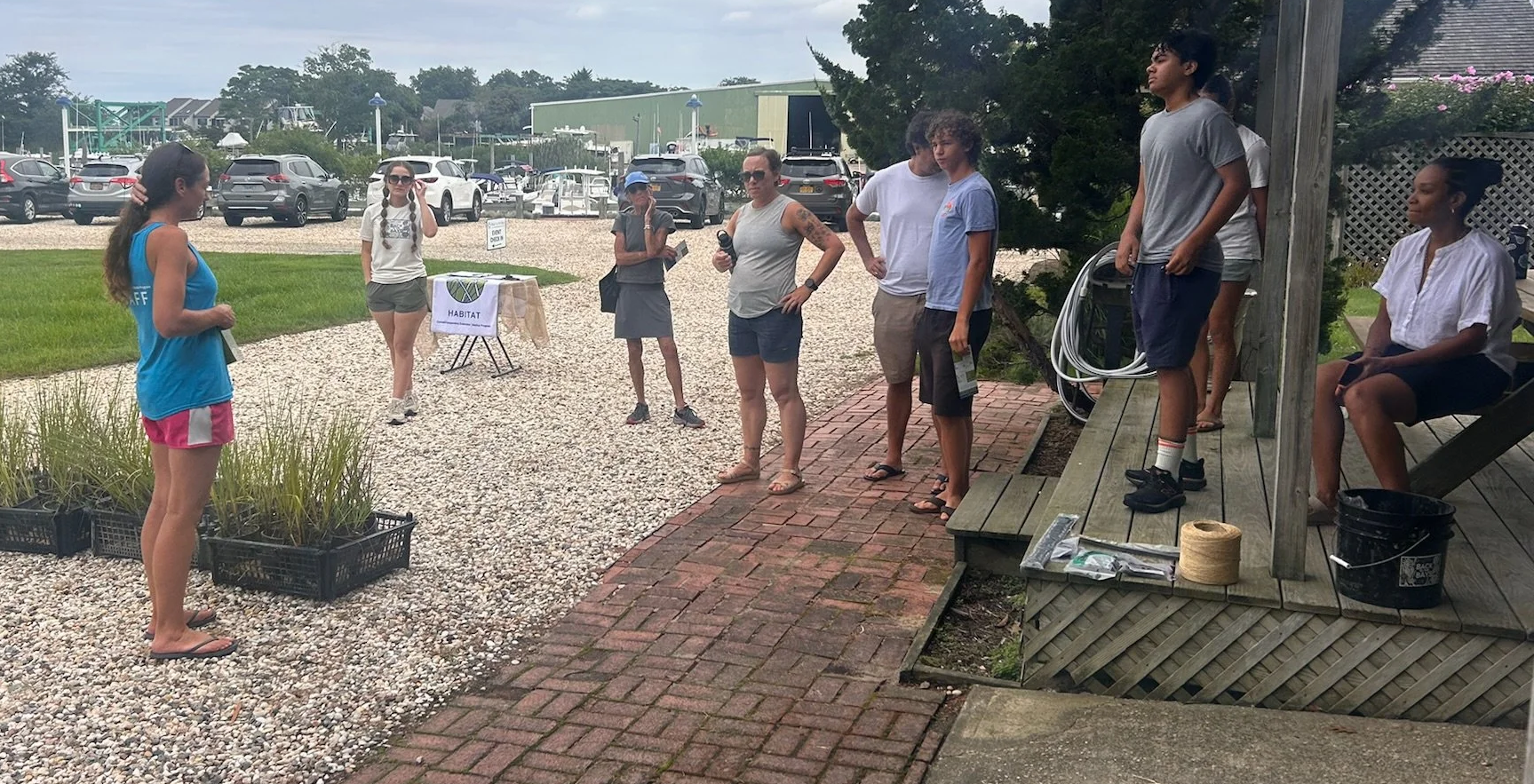
Stewardship Session at Redwood Facility in Sag Harbor - Kim Manzo and Rachel Kapllani teaching our volunteer Stewards all about marshes and the importance of the work they will be helping with.
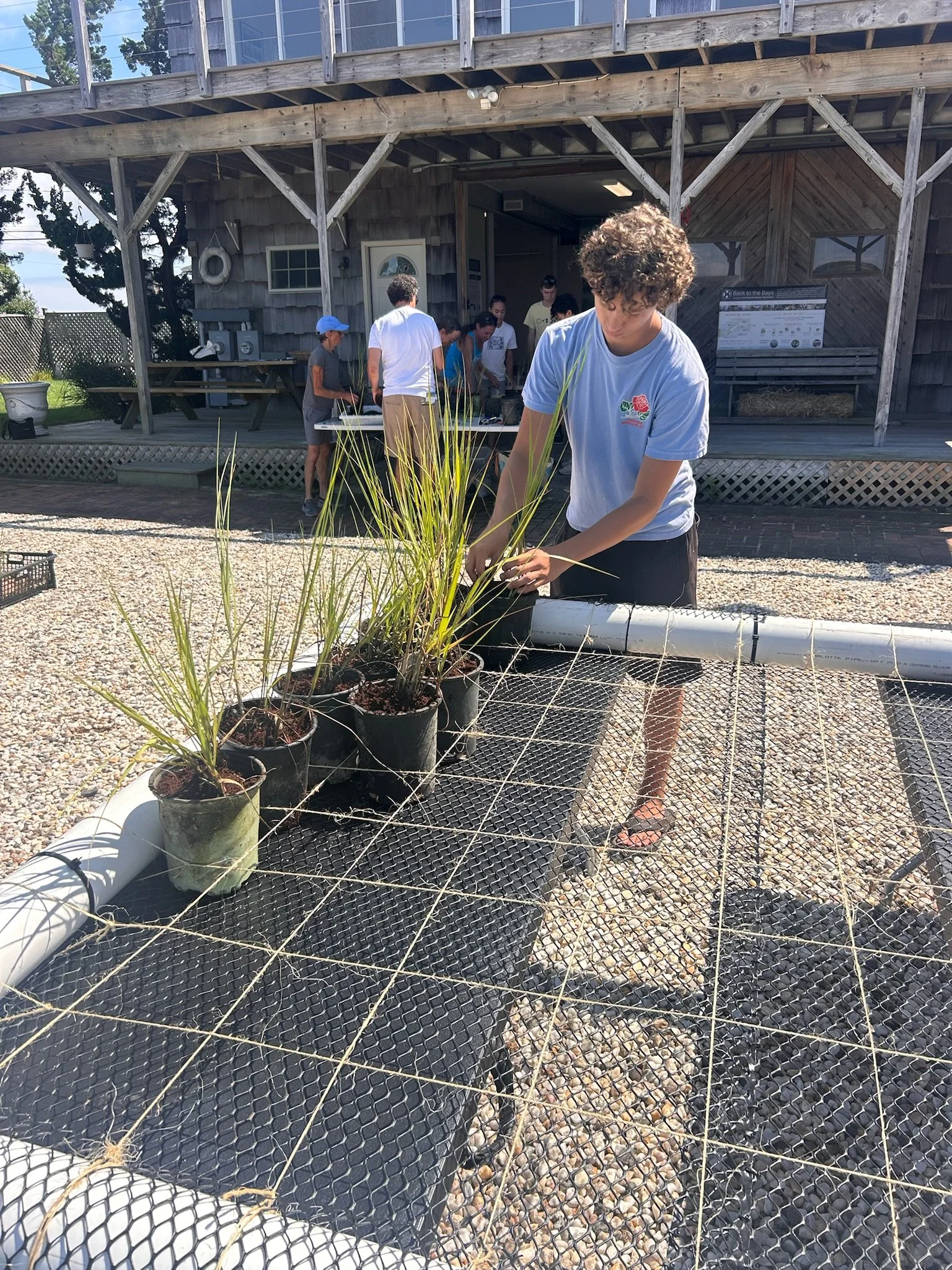
Volunteers helping to load potted cordgrass plants into the raft
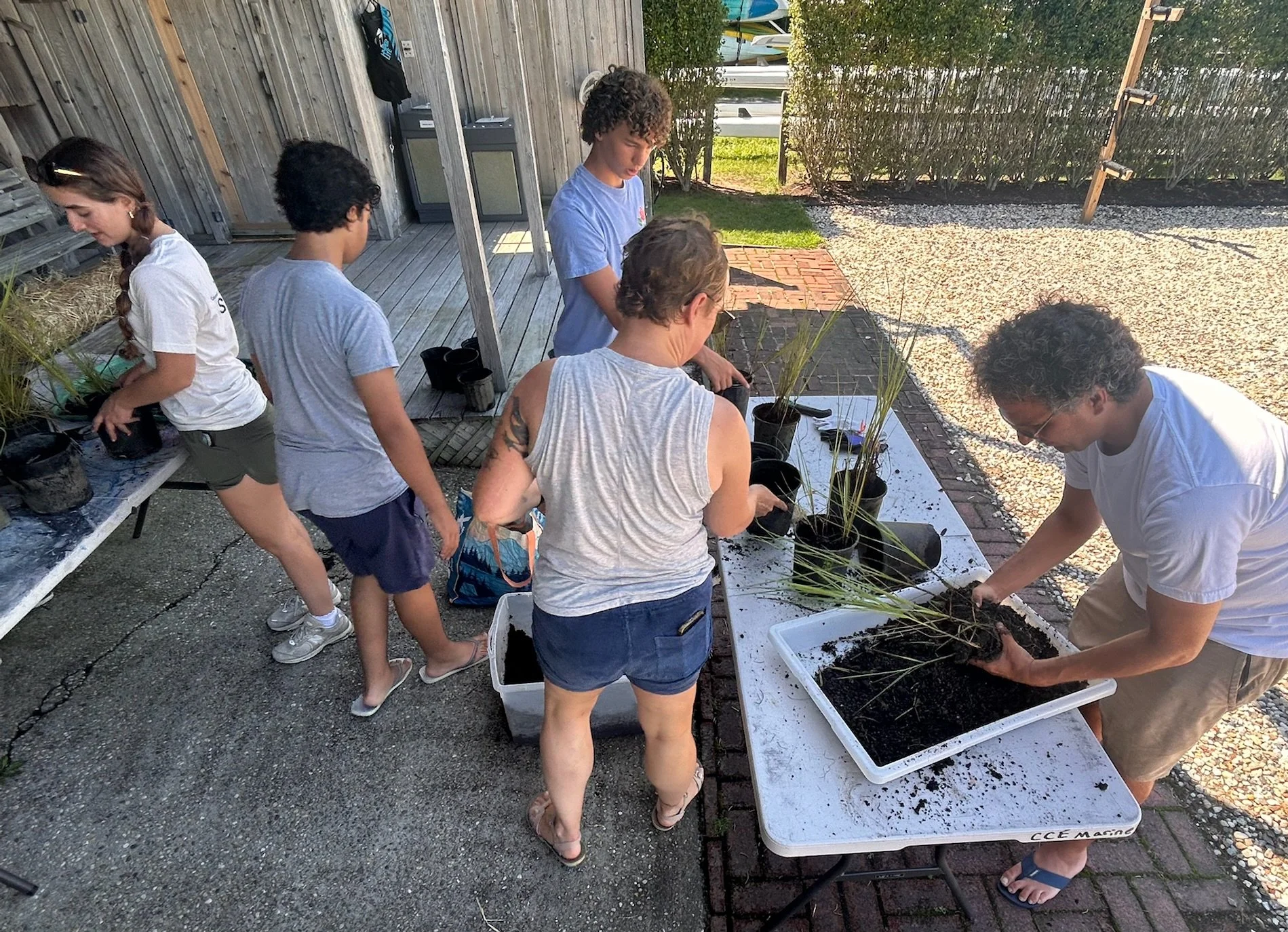
Volunteers helping to plant cordgrass shoots into pots that will be held in the restoration raft (Rachel Kapllani, far left)
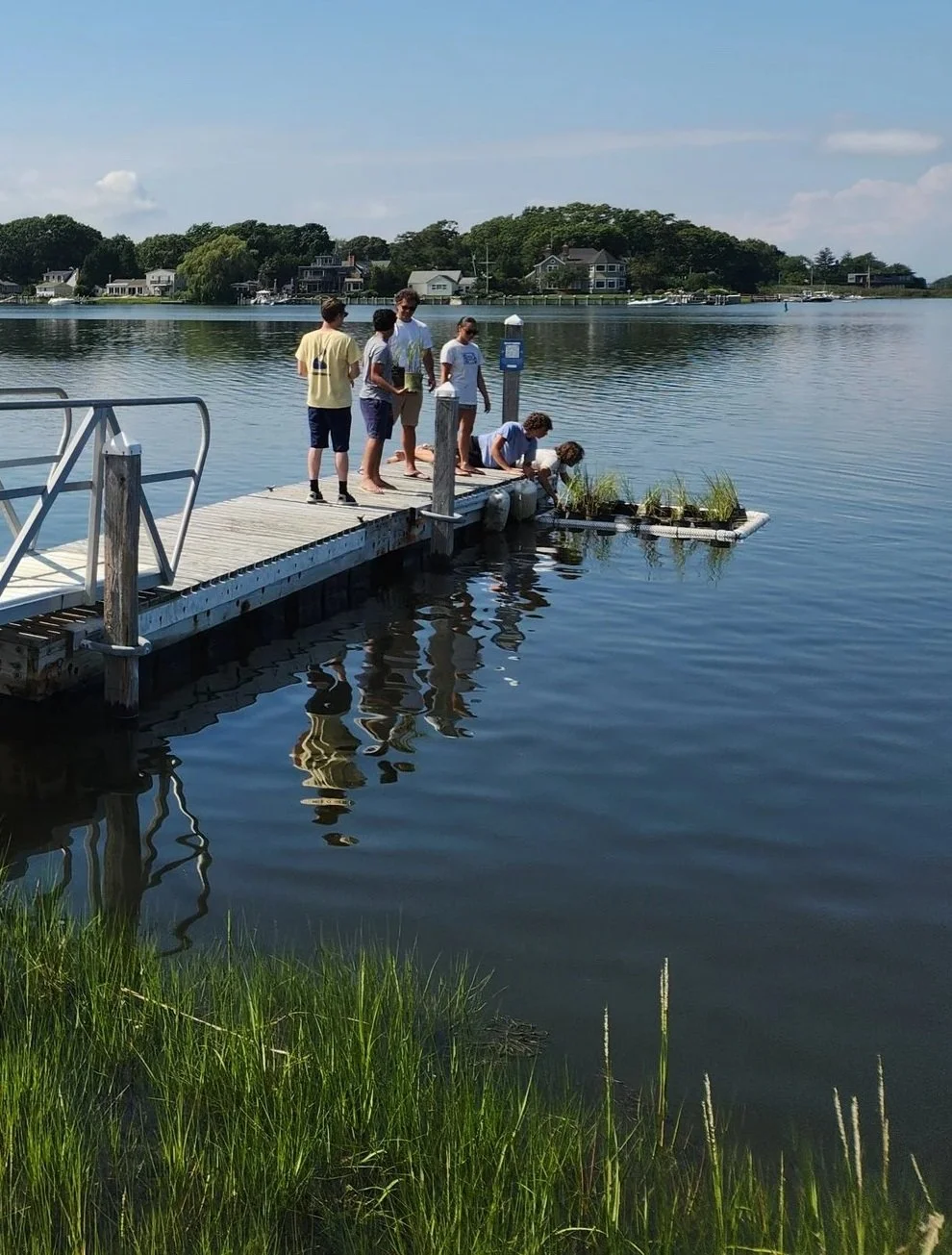
Launching the final product at the dock at our new Redwood Facility!
When science is forced to think outside the box and reach into its many disciplines and pockets of knowledge, restoration work can coexist among the hustle and bustle of human life - even in marinas, where man-made structures and boat activity may otherwise deplete aquatic vegetation and erode shorelines.
Science performed in a vacuum is hardly science, and these parting memories with the Back to the Bays Initiative only serve to highlight the long series of events where this lesson has been repeatedly made clear to me. I leave 30 plants and four rafts behind me this summer as I return back to school to crunch the final numbers, but I consider it a responsibility to take these opportunities of collaboration, learning, conservation, and stewardship with me.” ~ Rachel Kapllani, 2026 Back to the Bays Intern
We’d like to extend an enormous THANK YOU to Rachel for dedicating her summer to working with us. She made an essential contribution to CCE’s Back to the Bays Team, and we wish her the best in her next scientific adventure!
Get involved and support our work by contributing to our Redwood Facility Fund and/or Sag Harbor Stewardship Site Fund.