
Marsh Restoration Rafts - a summer 2026 intern project
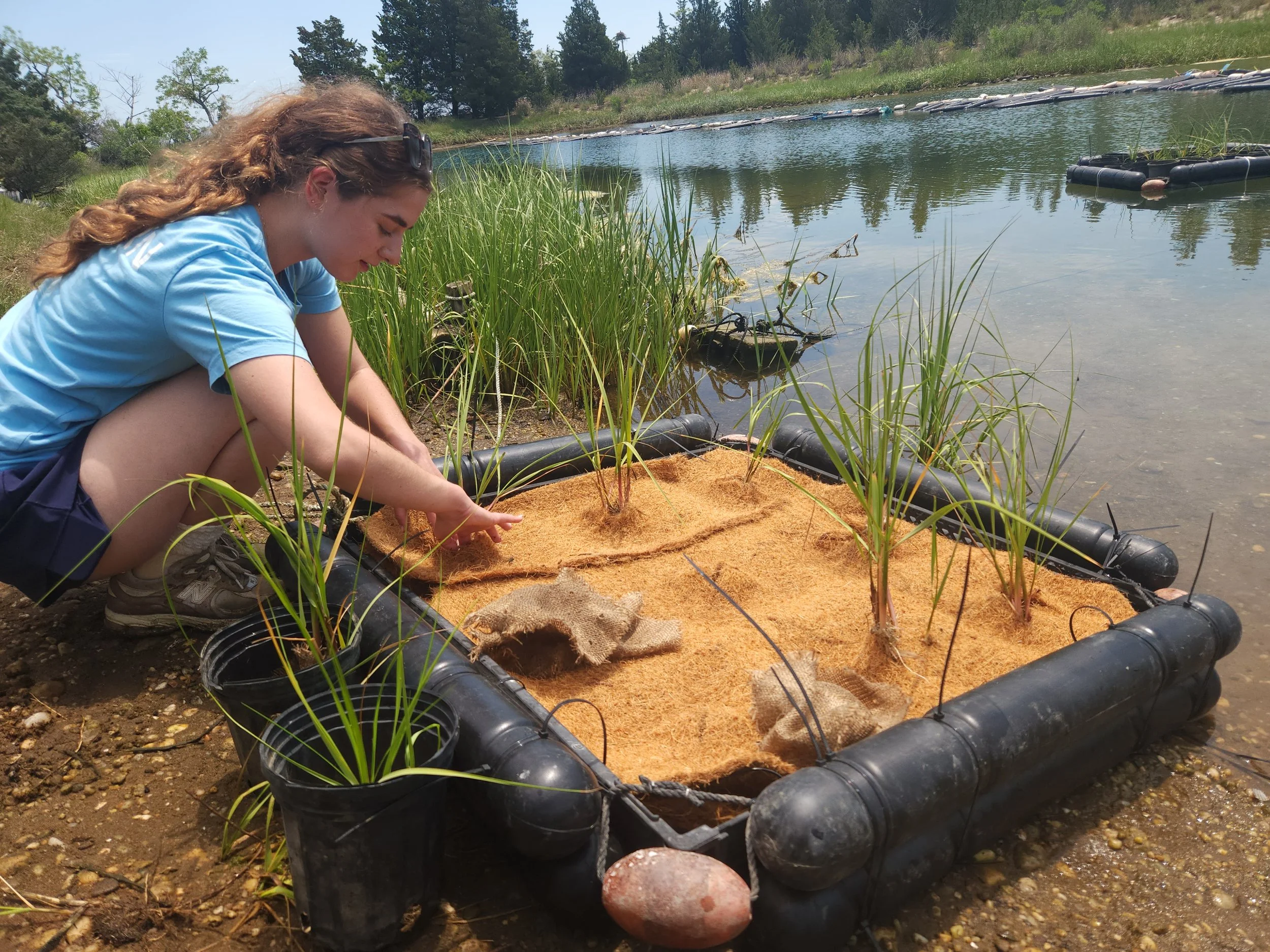
Rachel Kapllani, loading saltmarsh cordgrass plants into a floating Restoration Raft for growout at our Southold facility
Back to the Bays intern, Rachel Kapllani, an undergraduate at Georgetown University (class of ‘27), is completing her senior thesis project with us, working under the guidance of Habitat Specialist and Education Manager, Kim Manzo. Below, she reflects on her experience and project topic thus far:
“Though the name sounds like gibberish to the untrained ear (and to me when I haphazardly guessed the spelling the first time I heard it), Sporobolus alterniflorus is likely a common sight for those who visit Long Island’s beaches. More commonly known as smooth cordgrass, this specialized plant grows in the intertidal zones of salt marshes and estuaries, exposed to daily flooding with brackish water. In becoming acquainted with the plant, I learned just how foundational it truly is to our temperate coastal ecosystems. Like many marine plants, Sporobolus provides essential habitat for native species, like our ribbed mussels, which in turn fertilize the grasses with their feces. The extensive root system also traps sediment to build up shorelines and prevent erosion. Of greatest importance to me is its ability to sequester large amounts of nitrogen, phosphorus, and carbon.

Salt marsh at low tide. Sporobolus alterniflorus dominates the low marsh, providing essential habitat for marine fish and invertebrates.
As a summer intern for CCE Marine Program’s Back to the Bays Initiative, working with Sporobolus allows me to better understand what my environmental science coursework has made me most curious about: the interactions soil minerals, nutrients, and microorganisms have with plants and their root systems. My focus has been on the actual growing methods for cultivating Sporobolus, and I’ve spent my time building Sporobolus “Restoration Rafts” this summer. Our hope is that this project will set the stage for larger, longer-term rafts that will hold plants at our Back to the Bays sites, improving the surrounding water quality during growout.
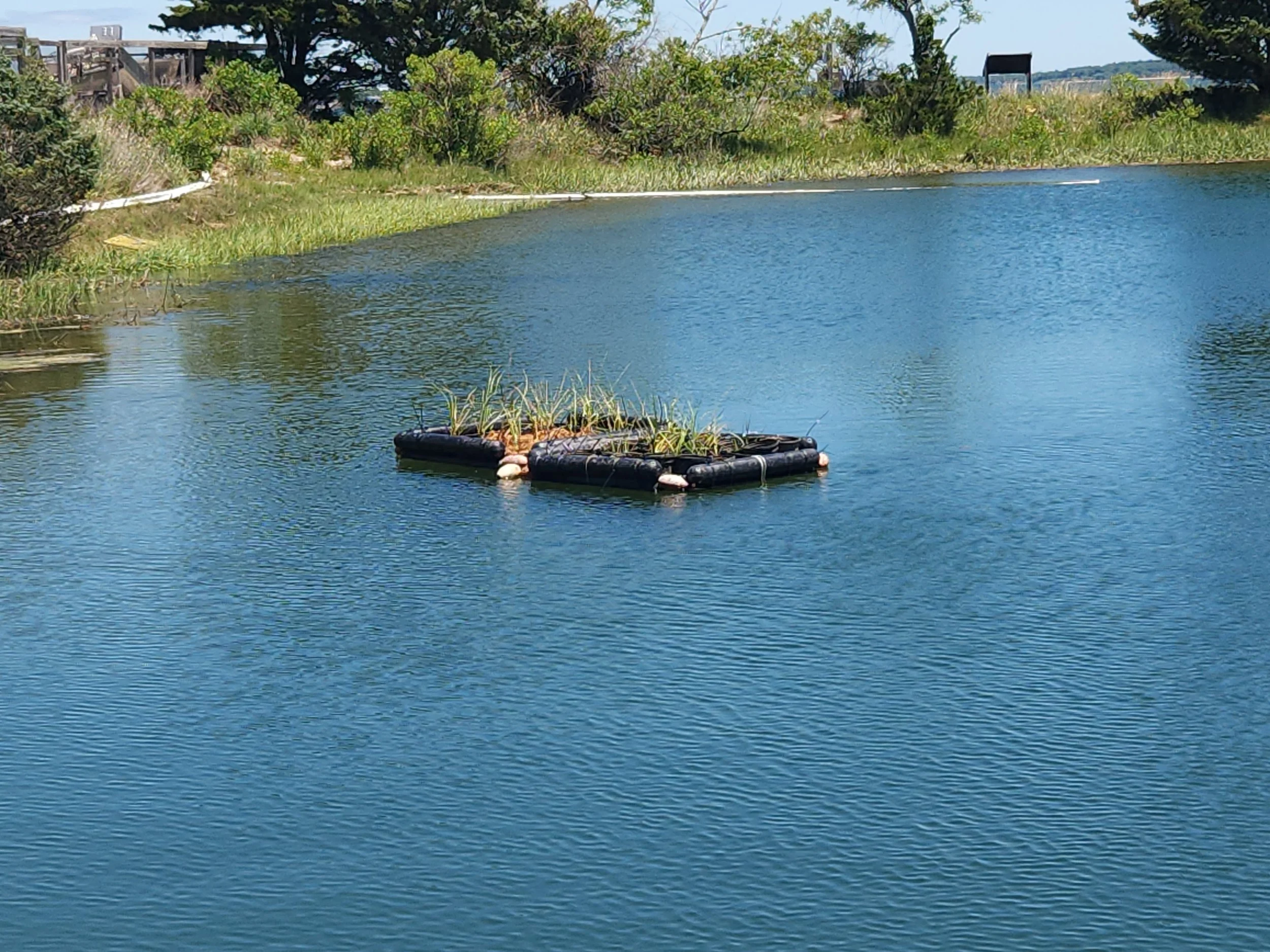
Marsh Restoration Rafts, comparing two growing mediums at our Southold Facility
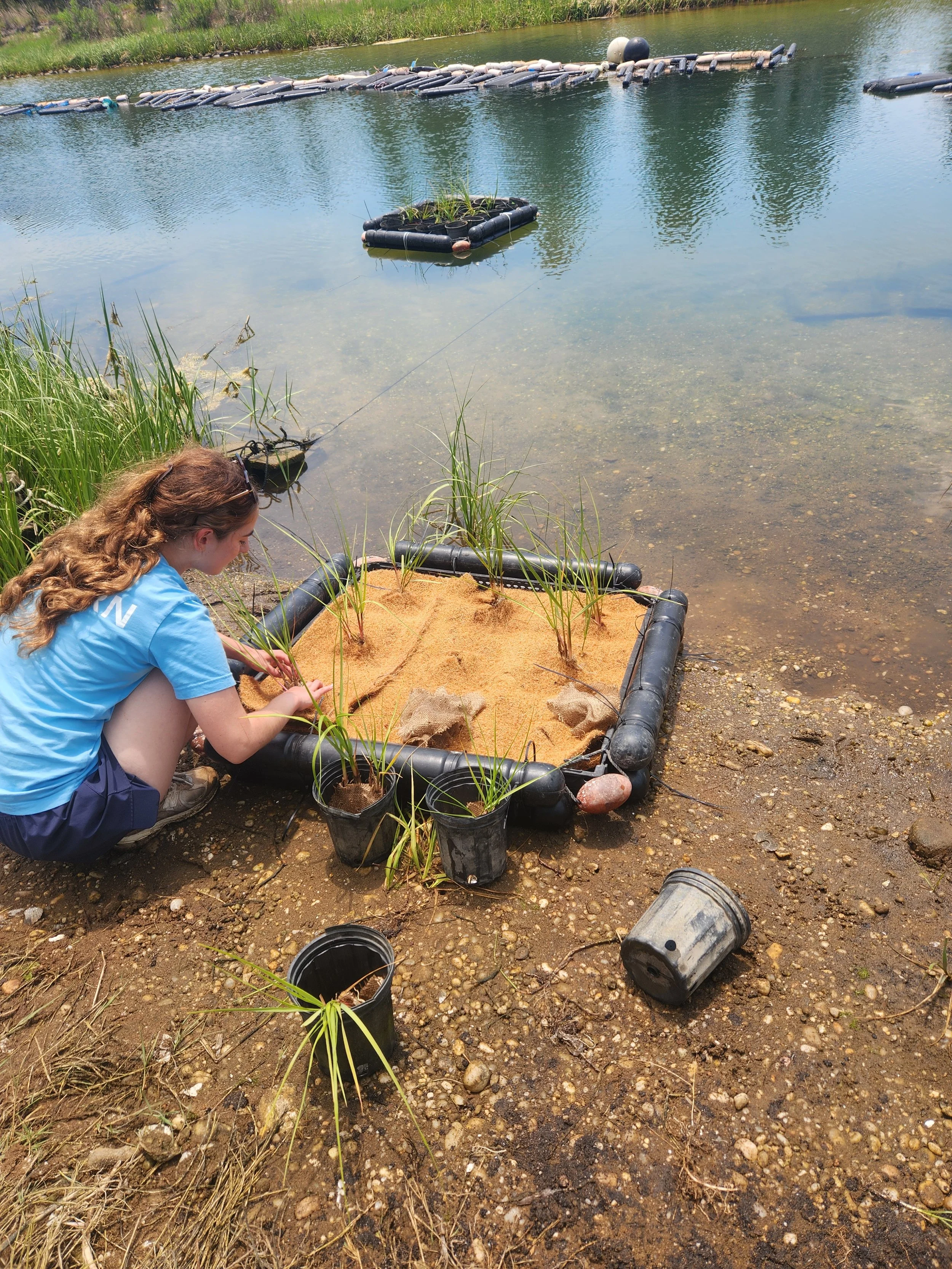
Rachel transfers Sporoblus clusters from pots to the raft for growout in the bay
To achieve these large goals, we need to start small. I began the process this summer by tinkering around at CCE Marine’s Suffolk County Marine Environmental Learning Center in Southold with repurposed crates, buoys, and a surplus of zip ties to create a raft prototype that would stay afloat while supporting ten separate plants. At the end of my amateur engineering feat, I had created two rafts that successfully completed the task, which we determined would support groups of Sporobolus plants in both lightweight soil and non-soil treatments.
Getting to know (or process) my plants was the next task. These were days where I sat by the waterside of our little inlet, selecting pots of hardy Sporobolus that survived a harsh winter after a year of being grown from seed with the help of Back to the Bays volunteers. I de-potted each plant, re-homed the occasional juvenile mussel or fiddler crab taking refuge in the pots, and carefully rinsed their artful networks of roots, trying my best to preserve all of their connections. Then came separating them into equal sized clumps, taking their weights, and measuring the length of each shoot. I observed shoots in vibrant greens and occasional reds, processing stalks so thick they resembled scallions to those so young and slight that I have yet to see whether the promise of growth they offer the experiment will be fulfilled.
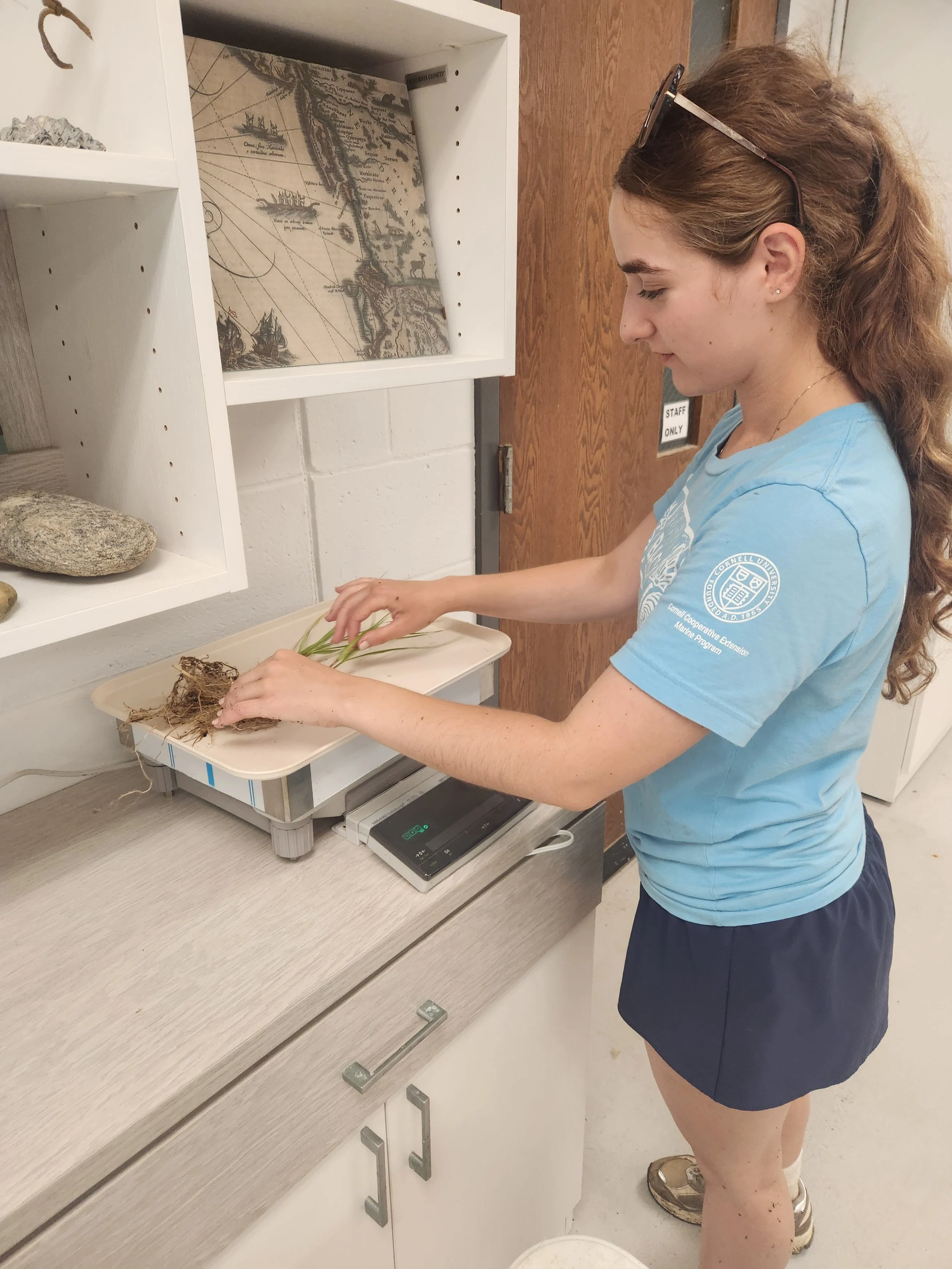
Rachel weighing a marsh grass clump to estimate biomass before growout in the Restoration Raft
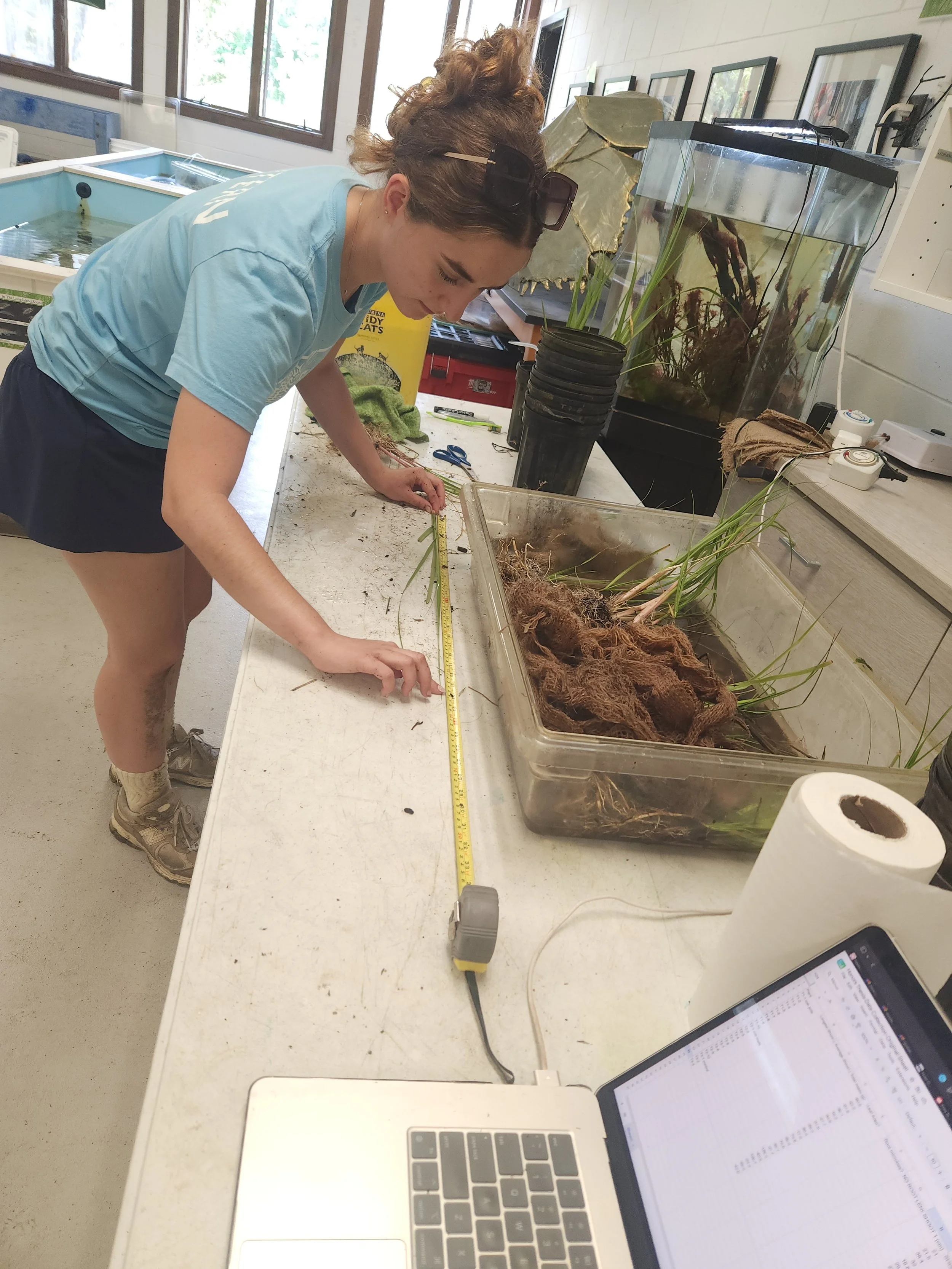
Measuring individual shoot length to get a baseline for average growth during the course of the growout experiment
I transferred the processed plants into each of the two rafts, one filled with loose coconut coir and the other lined with coconut fiber mats. A third subset were repotted using the standard compost-sand mix that CCE normally raises Sporobolus in and left on the shore in the intertidal zone. These will provide a control to compare the growth of our rafted plants against come late August, when the measurements of all the plants will be taken again. For now, our plants are braving the wind and the surface currents, free to utilize our rafts for new growth.” ~ Rachel Kapllani
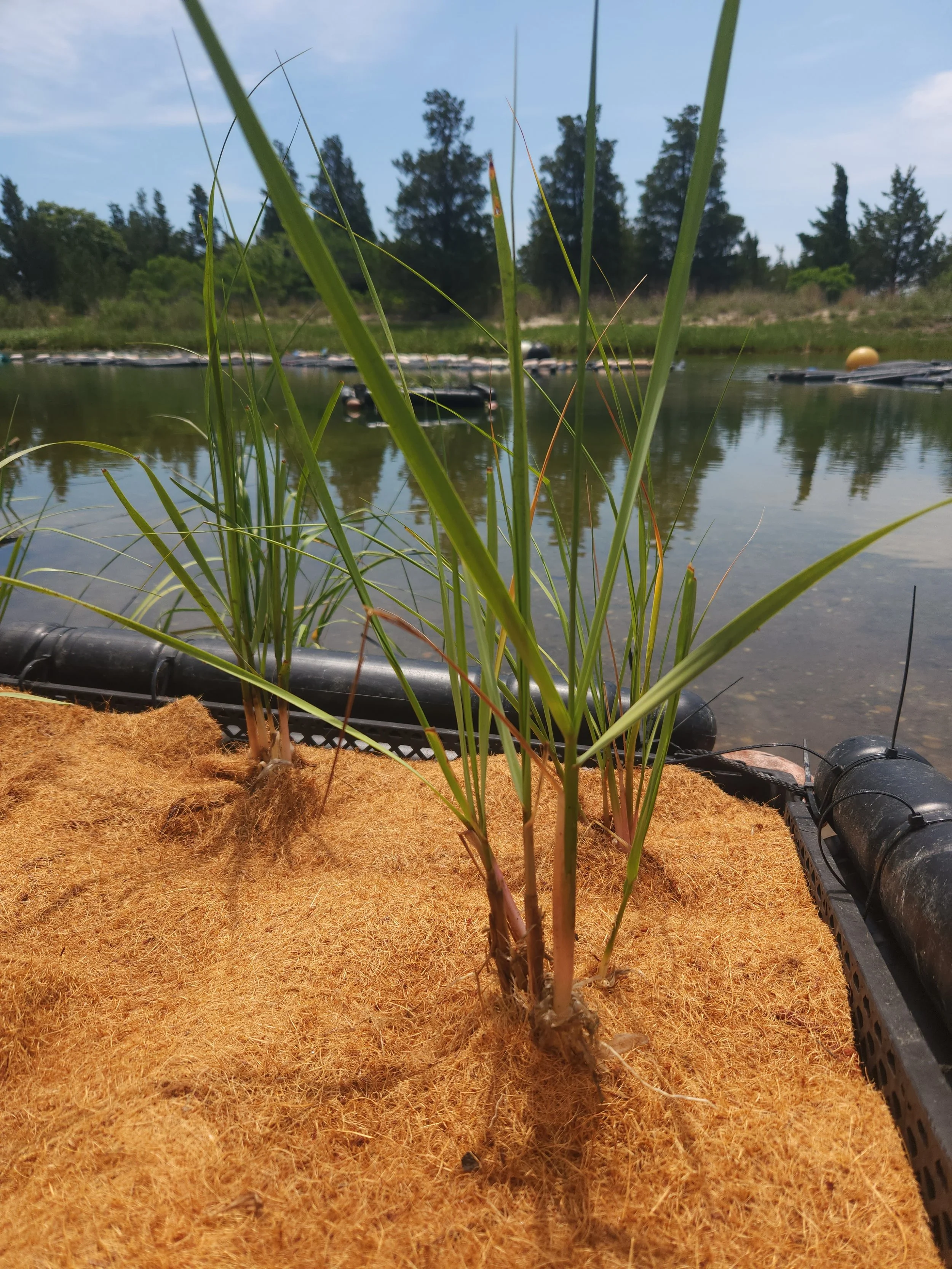
Cluster of marsh grass transferred to one of the floating rafts, lined with coconut fiber mats
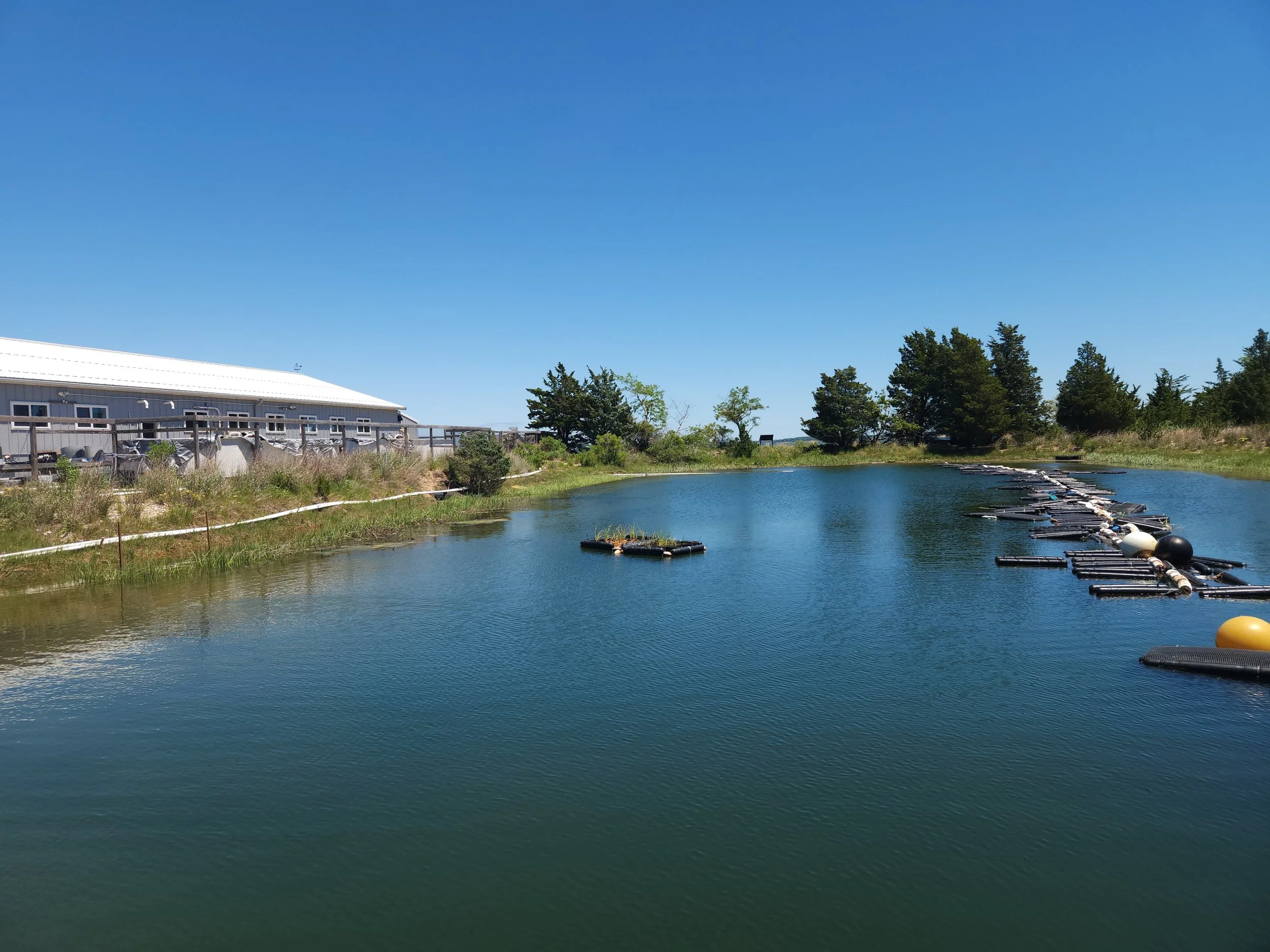
Restoration Rafts floating near the shore of our Southold Facility - Suffolk County Marine Environmental Learning Center (SCMELC), operated by CCE Marine Program
Learn more by reading Rachel’s end of summer update blog HERE!