
Horseshoe Crab Monitoring at Tiana Bayside - 2026 Cycle 1 + Volunteer Spotlights
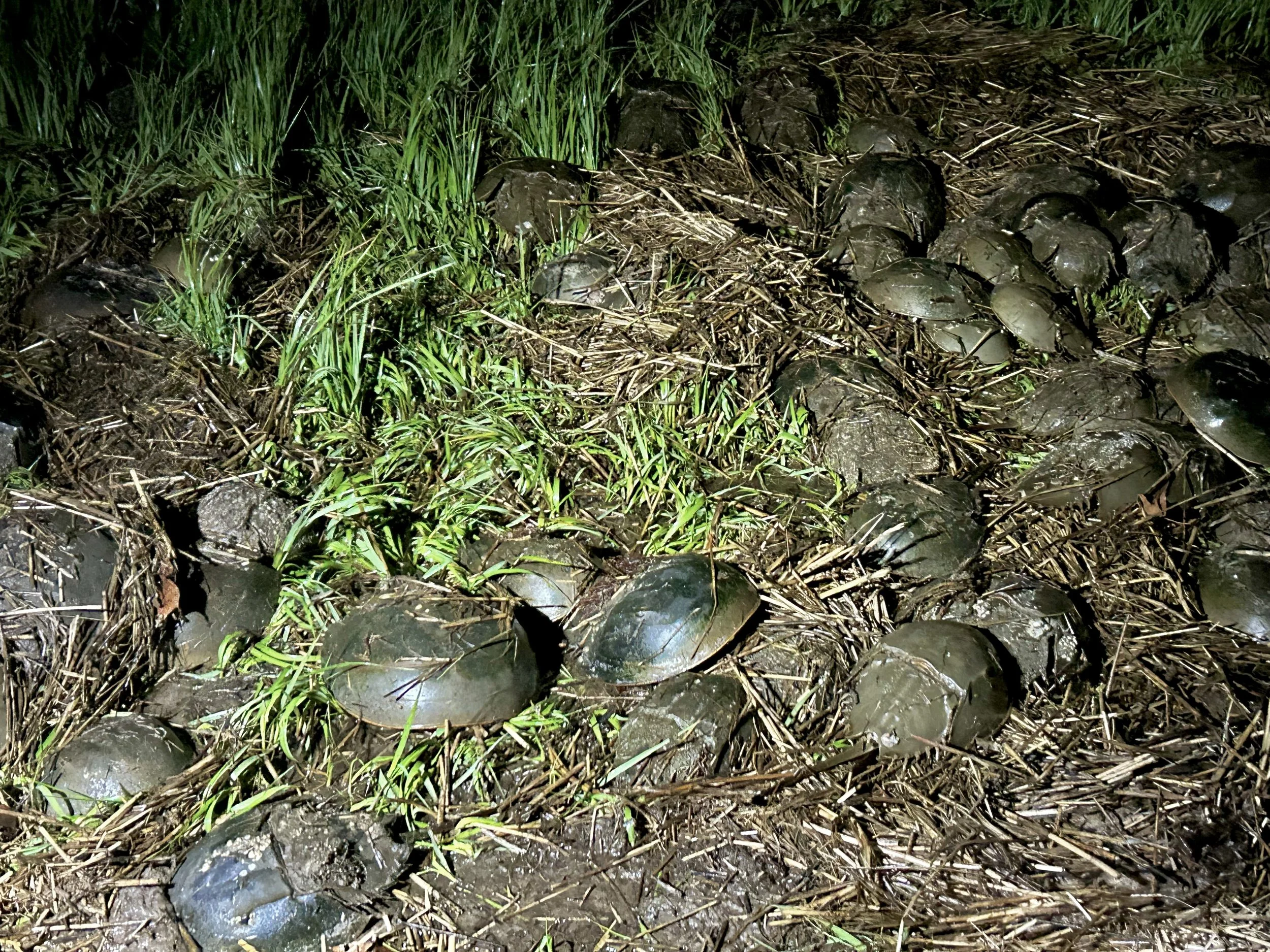
100s of horseshoe crabs visible in the marsh grass, after the tide receded
2026 Season Begins
Cornell Cooperative Extension’s Marine Program works with the NY DEC to monitor our local horseshoe crab population. CCE’s Back to the Bays is responsible for managing the Tiana Bayside Facility monitoring site in Hampton Bays. We kicked off the 2026 season on May 14th, 16th (new moon), and 18th. A team of 9 helped over the course of cycle 1 - some long-time volunteers, first-timers, DEC biologist Jen Lander and her 2 staff members, all led by new volunteer, Ava Sheldon, who stepped up to fill in for Site Coordinator, Danielle Morris.
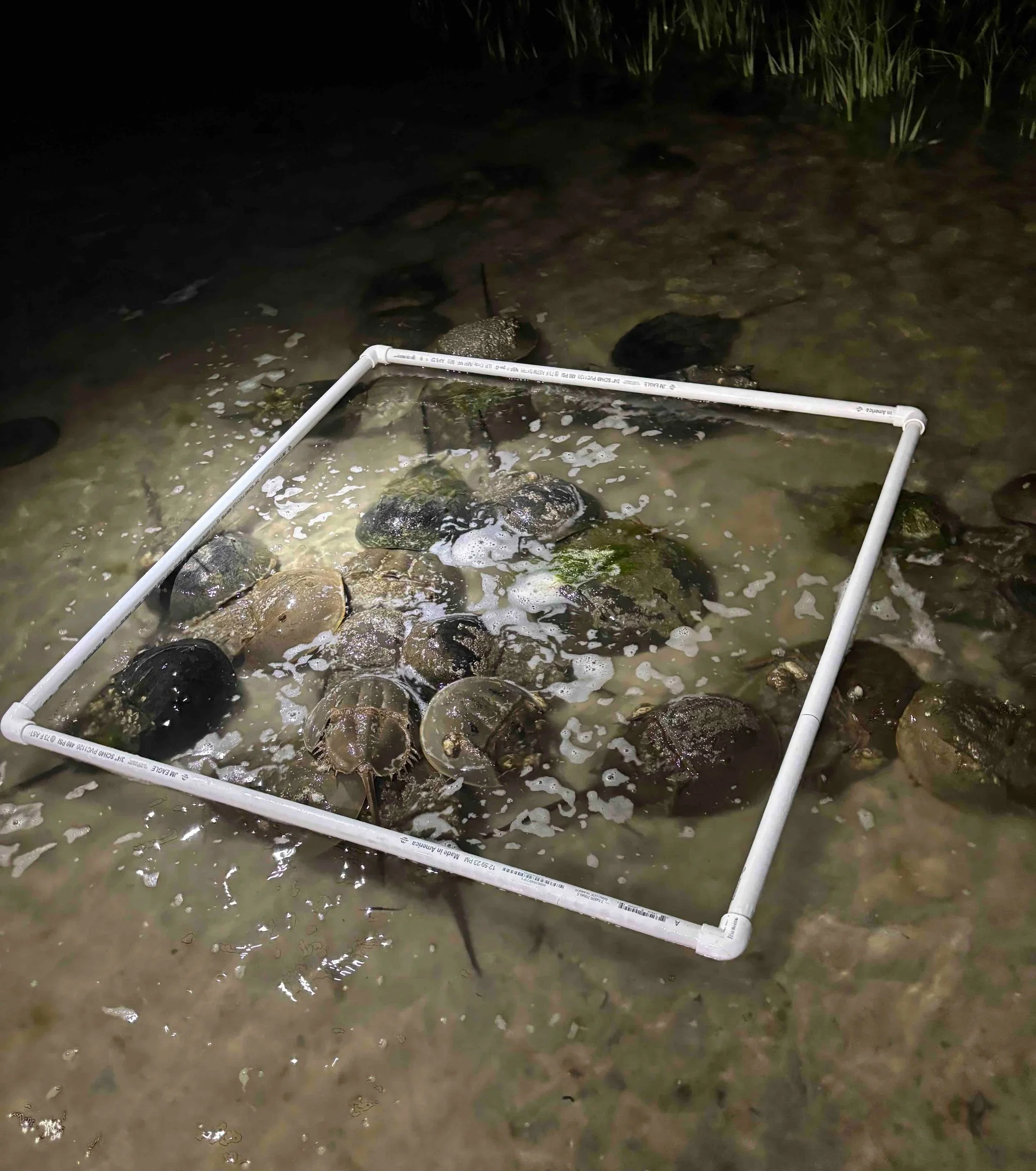
Quadrat used for counting a subsample of horseshoe crabs
Due to the high abundance of crabs at the Tiana site (sometimes in the 1000s!) we now use the quadrat method, which involves moving along a designated sampling path, placing a 1-square meter sampling frame at set intervals, and only counting individuals within the frame. Learn more about quadrat method
After the population count is conducted, a subset of crabs are tagged and released, recording for each one the sex, carapace width, and epibiont coverage (algae, barnacles, slipper snails, and other encrusting organisms growing on the HSC’s shell - used to estimate age).
First 2026 cycle stats:
303 males and 158 females counted in quadrats
100 horseshoe crabs tagged and data collected
Largest measured so far - 29.5 cm, female
11 tags recovered, including 5 from previous seasons
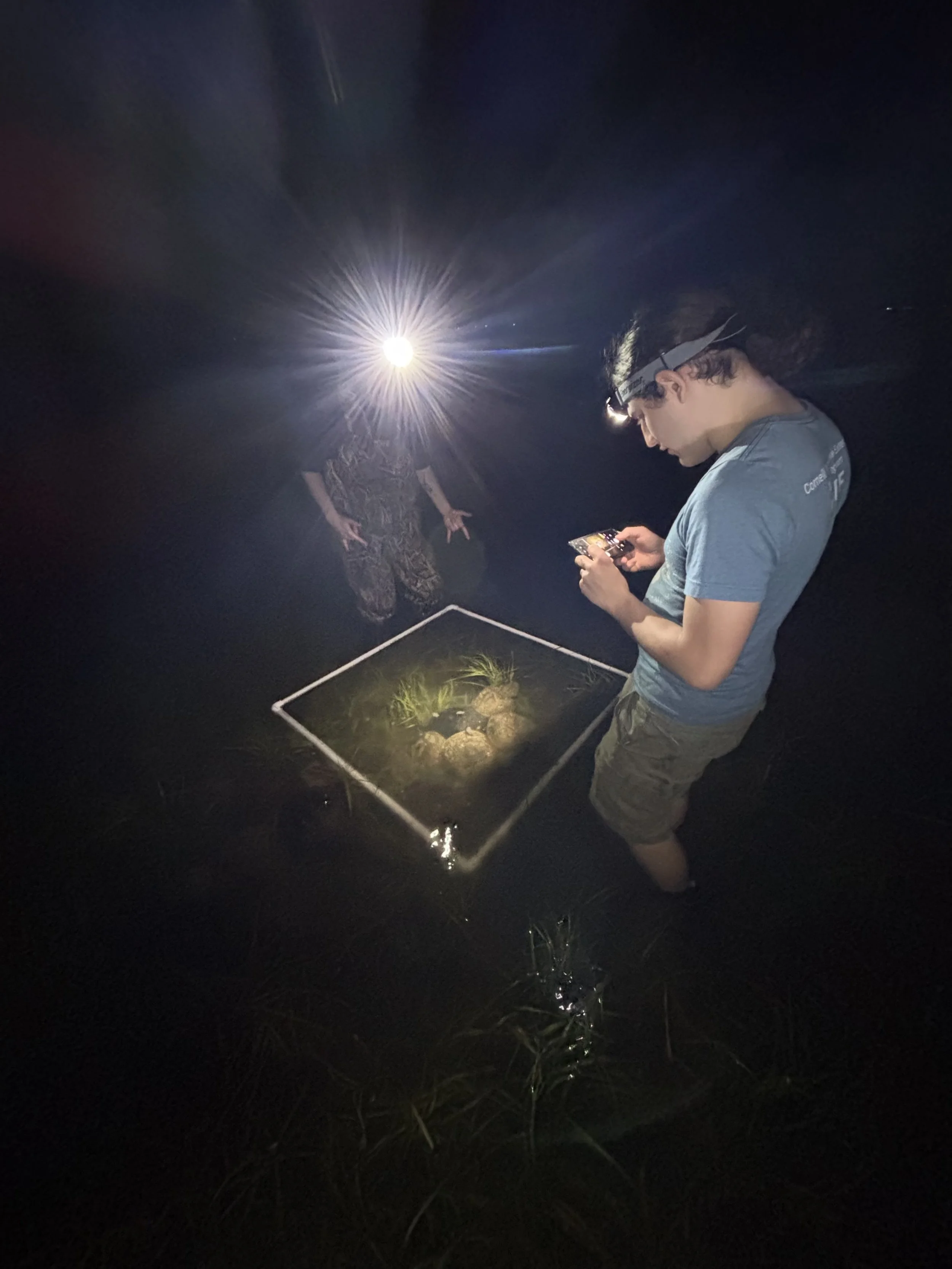
Quadrat sampling
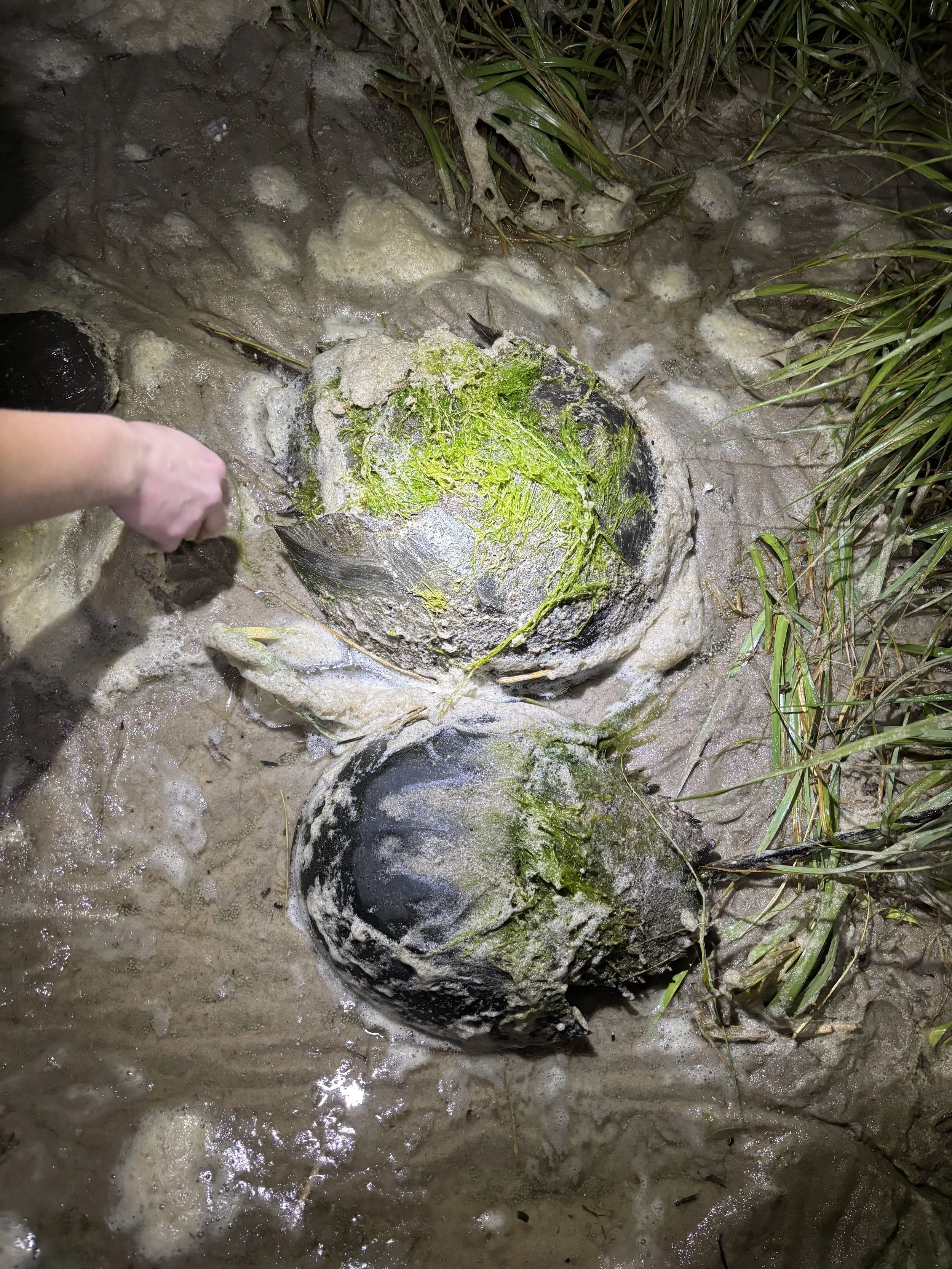
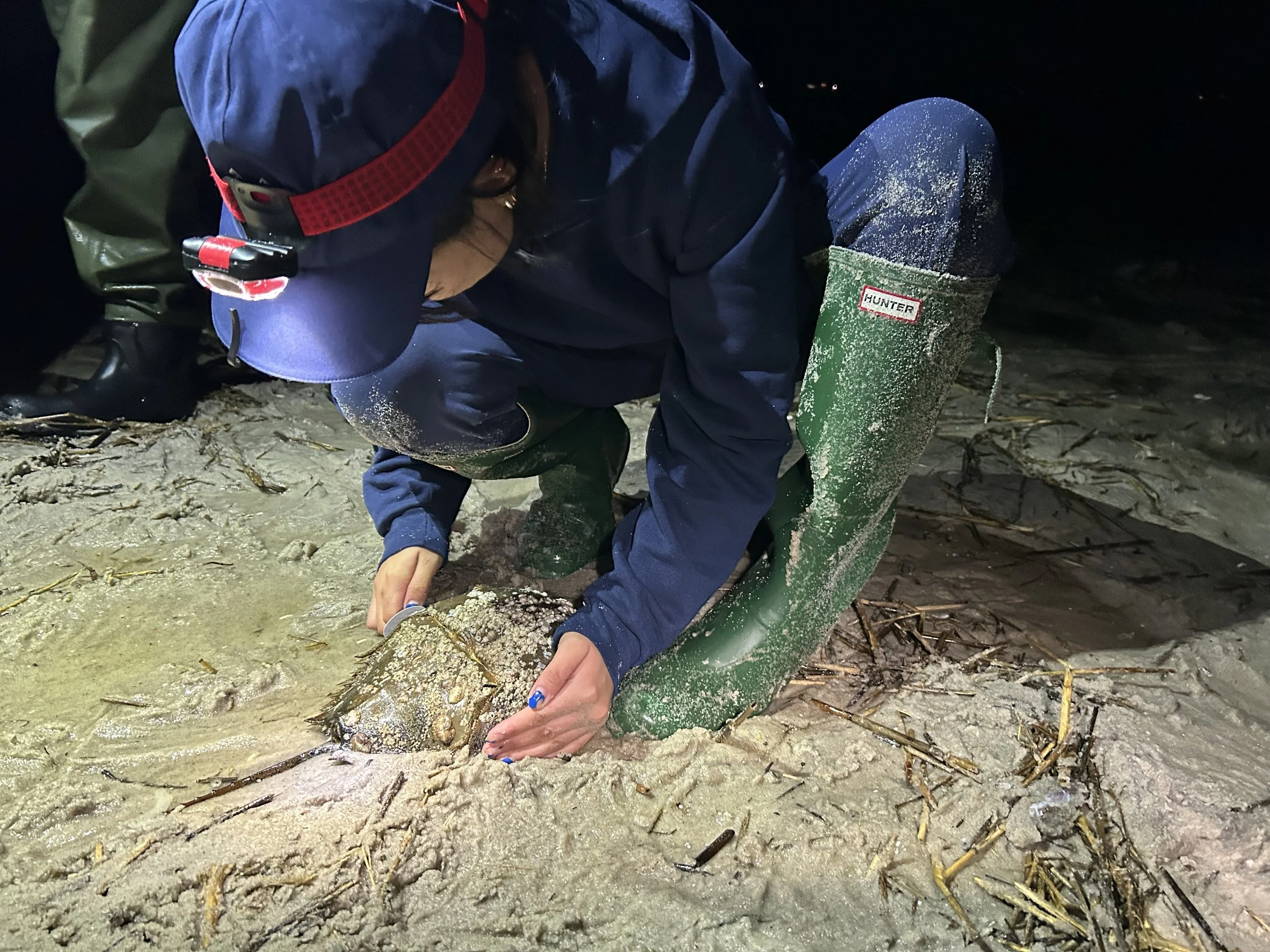
Volunteer tagging her first horseshoe crab!
Volunteer-powered
The data collected through tagging, counting, and measuring size helps inform public policy, most recently The Horseshoe Crab Protection Act. This long-term project is fueled by our dedicated volunteers. And as devoted staff members, wearing many hats, many of the sites in the NY Horseshoe Crab Network are coordinated through volunteered time.
With the 2026 season underway, we want to acknowledge the incredible contribution of our dedicated volunteers and interns, by sharing some of their inspiring success stories and first-hand experiences.
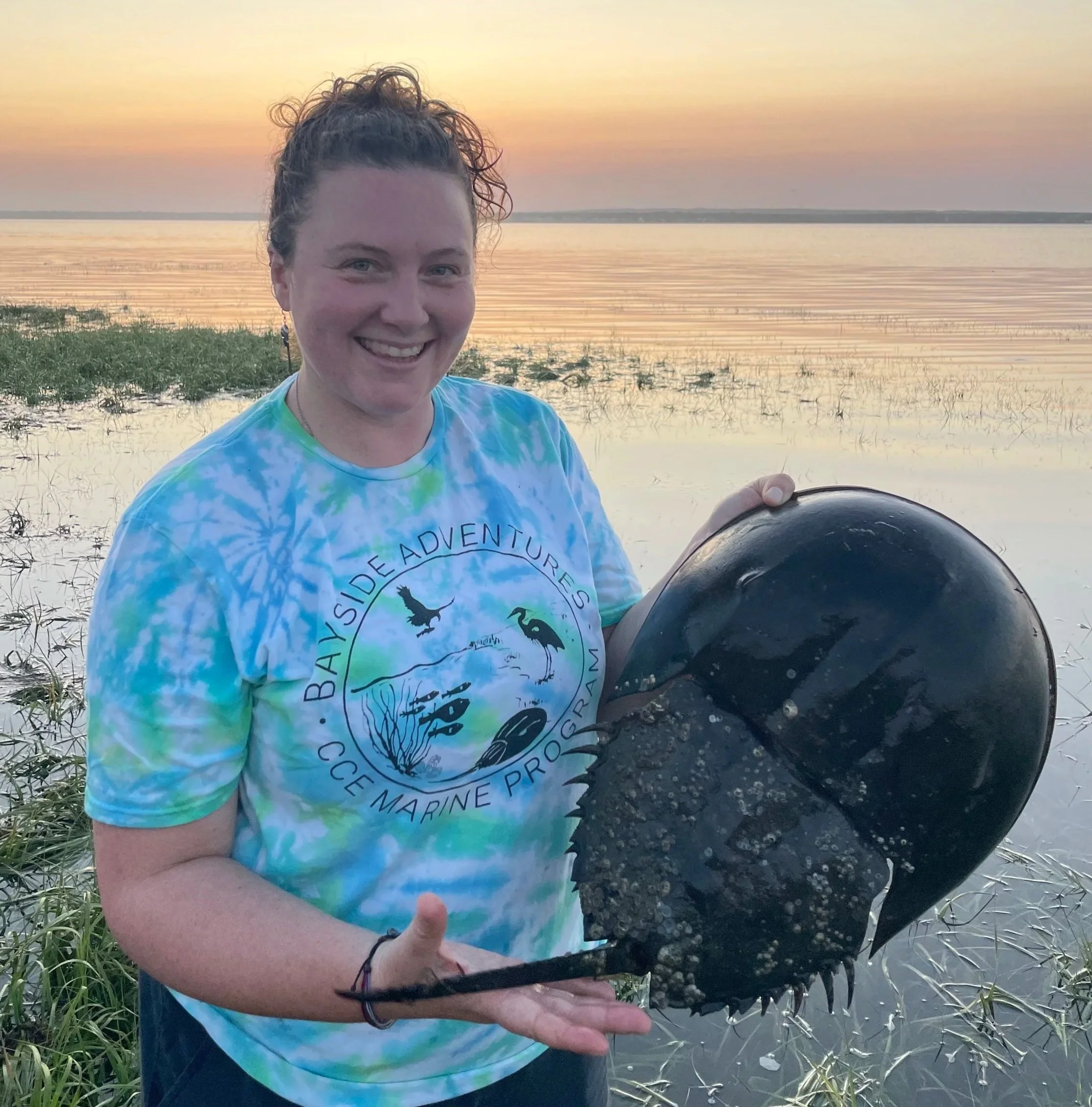
Hazel Wodehouse
Hazel Wodehouse, site coordinator from 2021 to 2023, reflects,
“I’ve personally witnessed this incredibly unique volunteer experience serve as a career building block for aspiring marine conservationists, myself included. I volunteered at my first tagging night at West Meadow Beach as a Stony Brook University undergraduate in 2006 and I was hooked! Little did I know, nearly 20 years later I’d be inspiring the next generation to care as deeply as I do about these magnificent ‘ancient fossils.’”
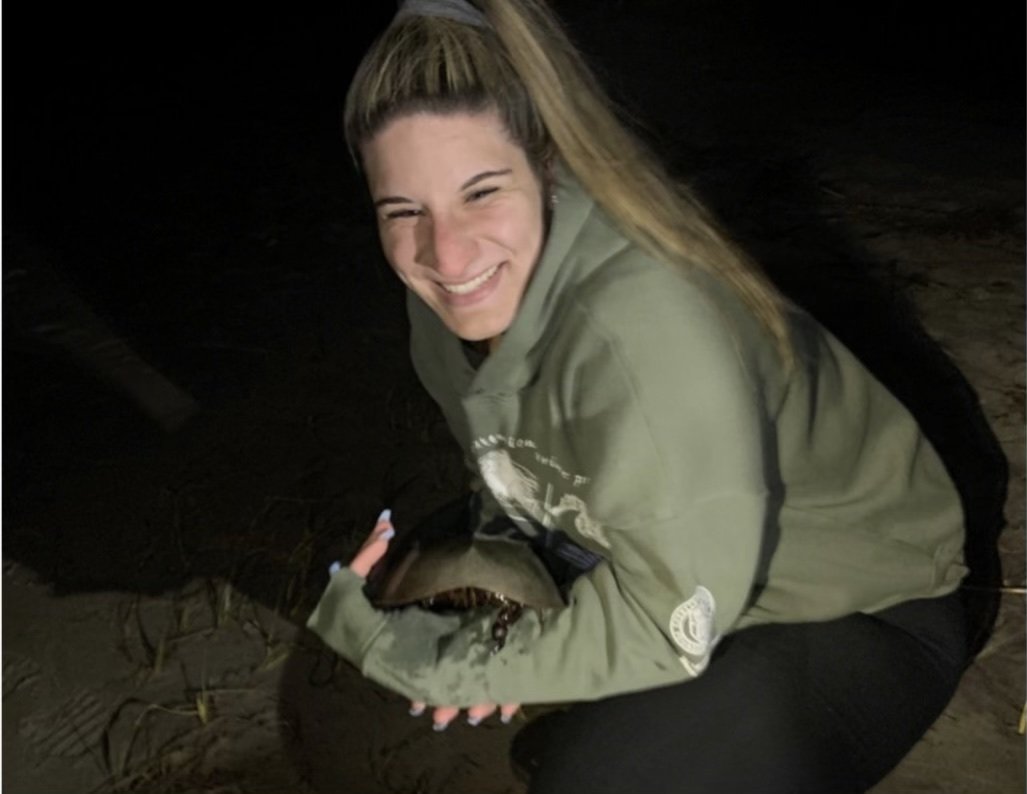
Danielle Morris
Danielle Morris, our current Tiana Bayside Site Coordinator, began volunteering with Hazel at Tiana in 2021, when she was also Stony Brook student marine science major.
“Danielle immediately became one of my most trusted volunteers, weathering dark and rainy nights with me, and encouraging others to get involved.” ~ Hazel
Danielle went on to secure a technician position in our largest CCE Marine Shellfish Hatchery, and is now managing the entire hatchery! Her undying passion for horseshoe crabs brings her back to Tiana where she is now the site coordinator. She helped facilitate a methods shift from using transect lines to the quadrat method, due to the unexpectedly high abundance of crabs at this particular site.
This year, Danielle trained a new Back to the Bays volunteer, Ava Sheldon, to help with site coordination. Ava came on as a volunteer this Spring, and is now a paid summer field assistant!
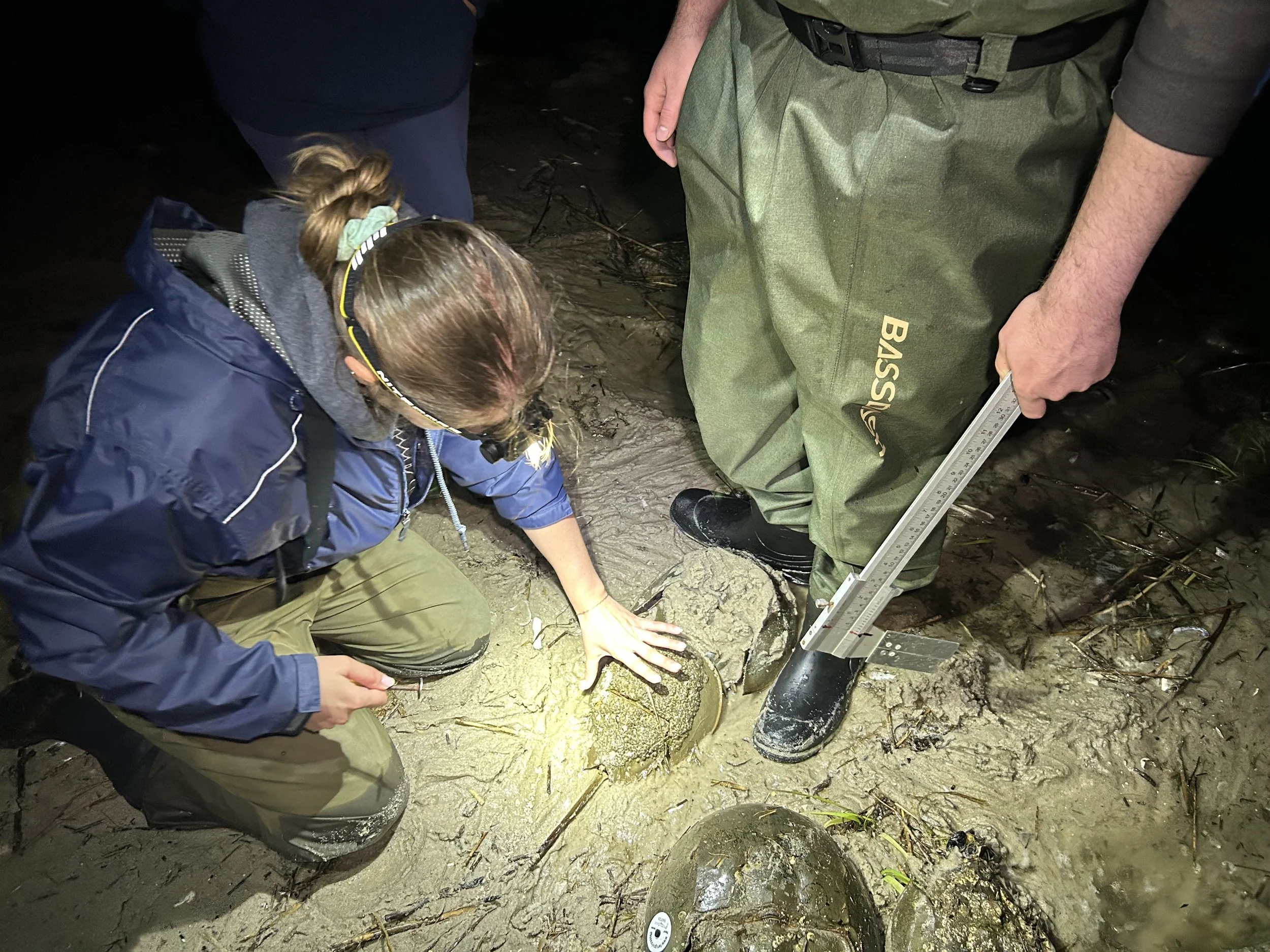
DEC biologist, Jen Lander, teaching how to use the awl for tagging, which is less disruptive than the drill method for a mating pair, and can be used on a submerged crab
Ava reflects on her first experience with horseshoe crab monitoring:
“Night 1 was all about business and efficiency, but as my first time I still had a ton of fun! There were far fewer crabs that night than on the other 2 nights, which helped me get used to the art of taking very controlled and cautious steps in the marsh to wade through them. Susan taught us all a lot about HSC anatomy, and I practiced giving a few of them tough love, scraping overloaded epibionts off their shells. I recovered my first tag and sent in the data. I’m really excited to see where it came from and get my horseshoe crab pin in the mail!
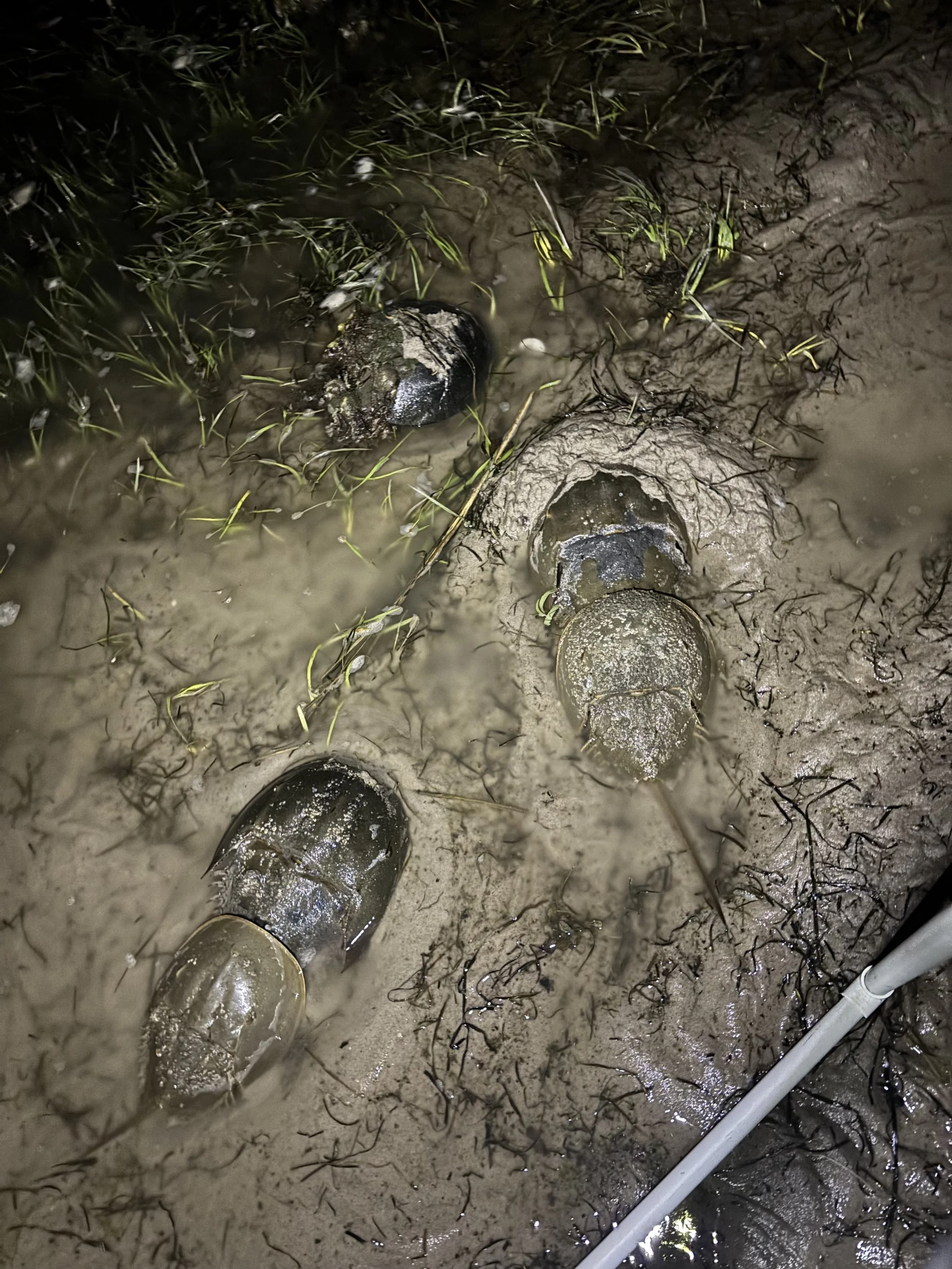
Mating pairs digging in
By night 2, when the new moon creates the highest tide, there were tons of horseshoe crabs everywhere, even under dense layers of Phragmites wrack! Almost all were actively spawning, with mating pairs everywhere. With only 2 staff, we made a giant pile of all the single crabs to tag. They crawled over into our laps and tried to burrow under us while we tagged. A sneaky mystery bird kept hopping over to us and then quickly diving into the brush as soon as we aimed our flashlights toward it. Perhaps it was trying to get a snack of tasty horseshoe crab eggs.
By night 3 the DEC biologist, Jen Lander, taught us to the awl method to tag instead of the power drill. I was nervous and struggled at first, but she’d converted me to that method by the end of the night, as it allows you to keep the crab partially submerged while tagging. It was really cool to learn more about the whole population survey process from someone like her.
Overall, it all went really smoothly, and I've been having so much fun with the slow, moonlit walks among the crabs. I'm learning to stay impartial and scientific, but I do get excited when the quadrats happens to land around a big cluster of horseshoe crabs or I get to measure a big female! There are so many more visible outside the sample area, and the scientists will use this data as an index to compare population density across sites, seasons, and years. I've been really lucky to have so many experienced staff members looking out for me and making sure I have help every night.”
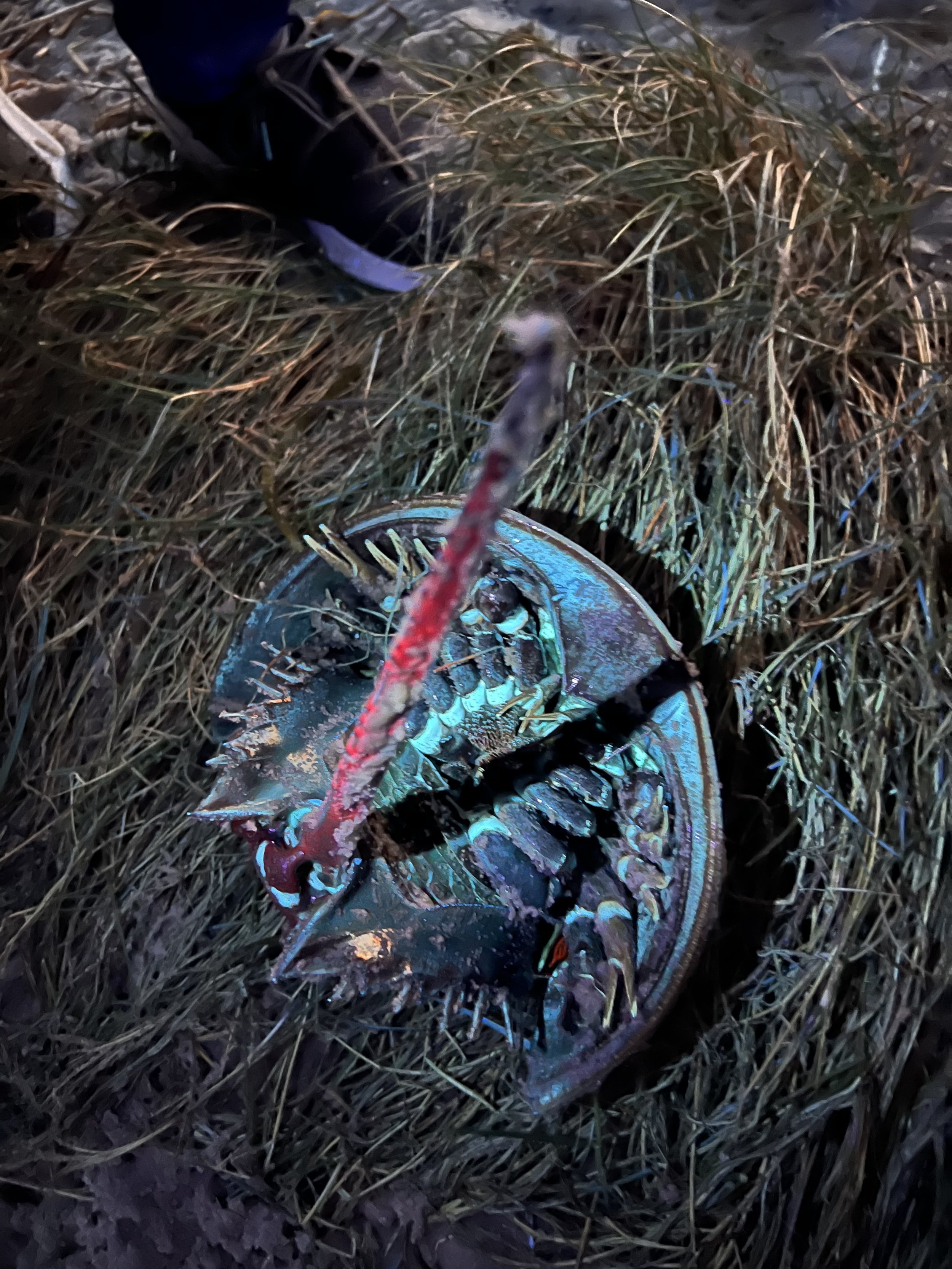
Horseshoe crab glowing under a UV light
Local Hampton Bays resident, Susan Ruocco and her family, have been volunteering at our Tiana horseshoe crab site for many years. Susan previously worked in the NY and Long Island Aquaria, and even now as a working registered nurse, still dedicates time to her marine conservation passion. She loves to teach new volunteers about horseshoe crabs.
Susan: “This year I got a UV flashlight to show everyone how they GLOW!”
Hazel: “What?!? They glow?!!”
Susan: “I just learned this year!!!”
Seems we all learn something everyday, and these ancient creatures have much to teach us.
Join us for the next cycle of monitoring to see for yourself!