
Breakfast is served ~ Horseshoe crab eggs fuel bird migrations
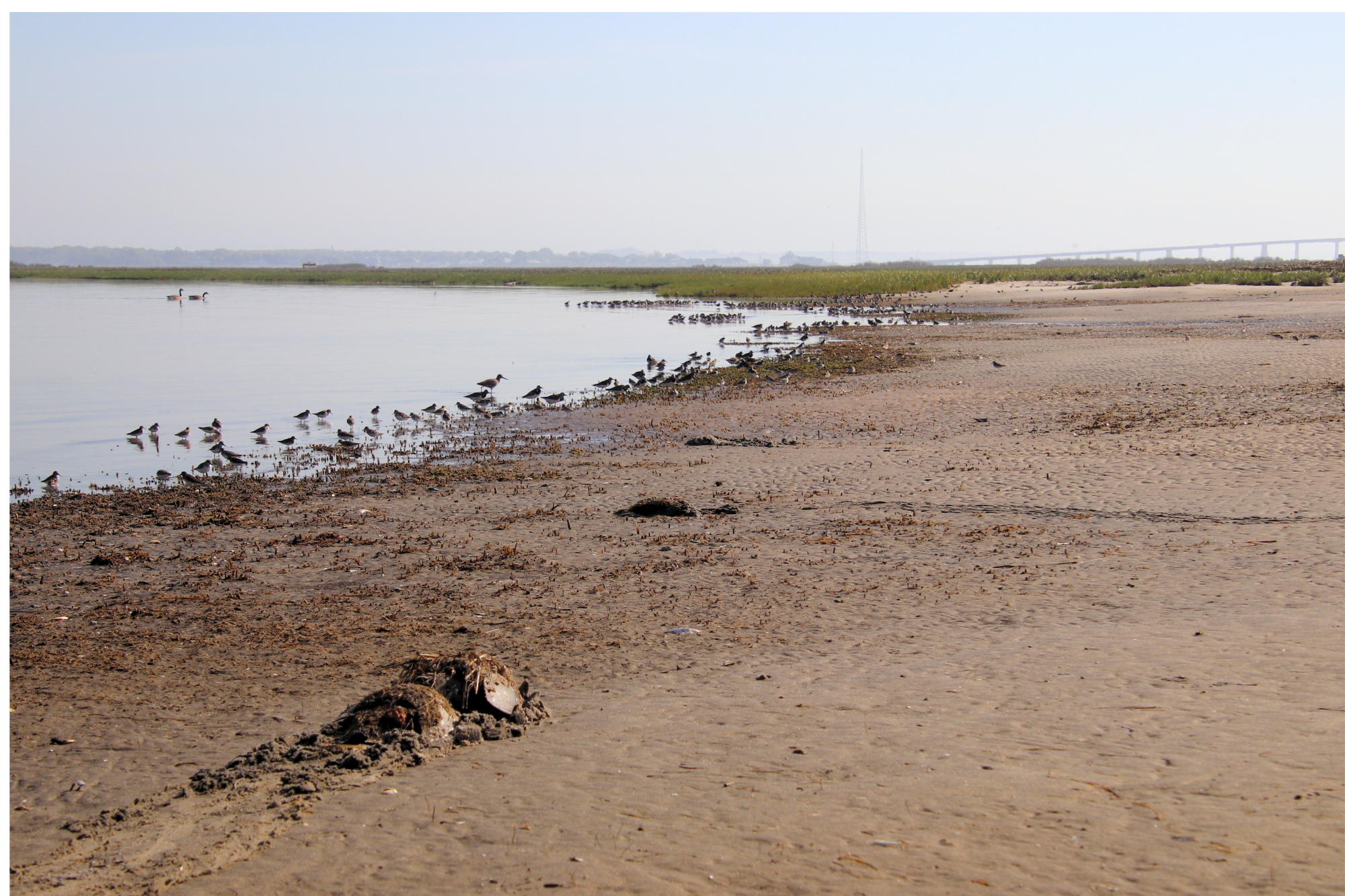
Mating pair of horseshoe crabs at Tiana Bayside, burrowing to wait out the low tide; shorebirds in the background enjoying the fast-food delight! Photo credit: Carolyn Munaco
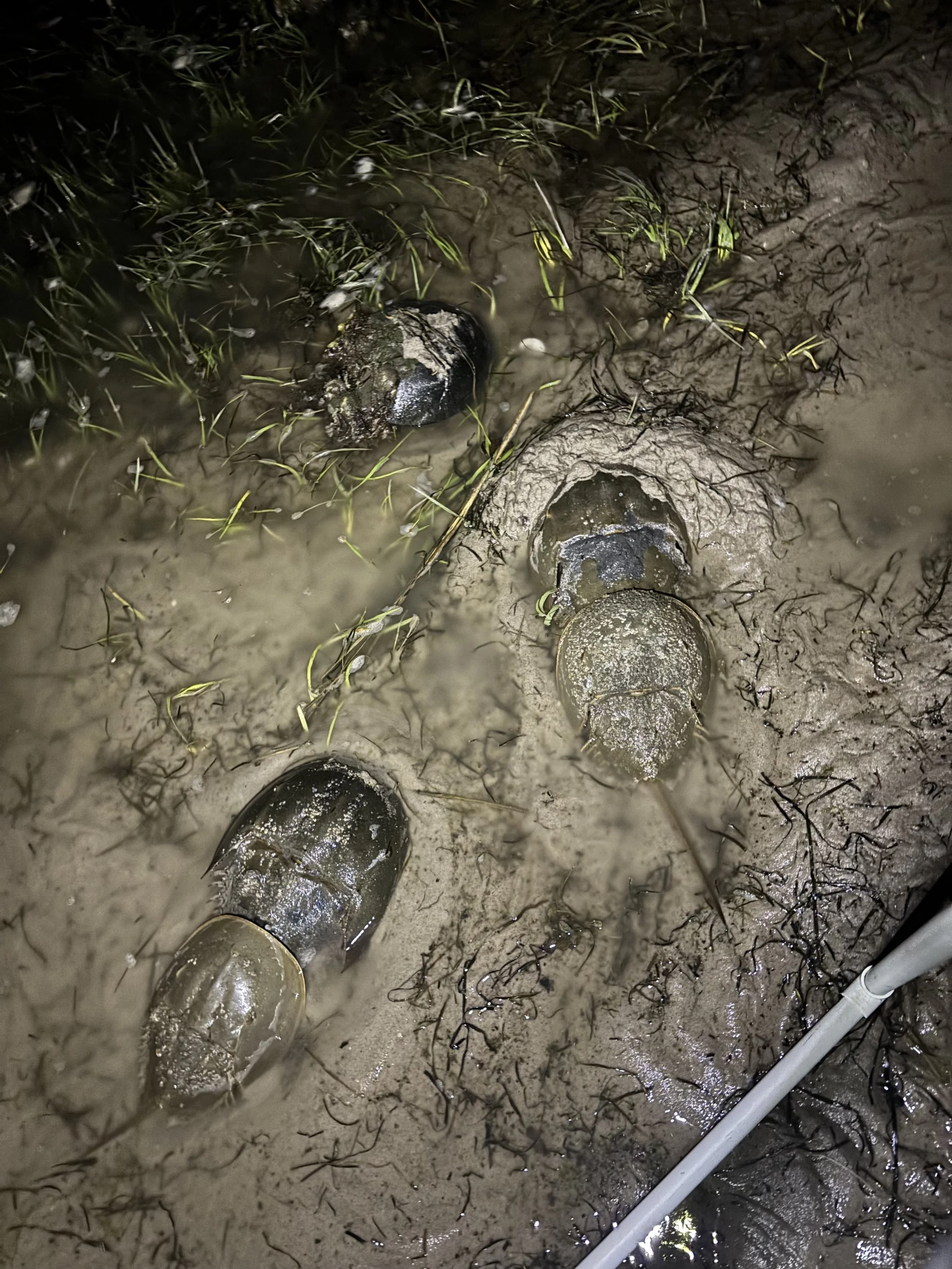
Mating pairs digging in to deposit eggs, observed during a night-time population survey
Got eggs?
It’s that time of year again. Our beloved, ancient horseshoe crabs migrate from the deep ocean floor into shallow bays to reproduce. Chasing the highest of tides under the glow of a full moon, or the dark veil of a new moon, they aggregate along the calm sandy shores of our bays and estuaries. The female giants are in control, following the rising water line, carrying a male mate latched on to her hind shell with his specialized hook claws. She selects when and where to deposit her precious cargo, digging a pit with her specialized hind legs, she buries her “face” (the front edge of her carapace) in the sand. When she’s ready she will release a sticky cluster of ~4,000 blue-green eggs, each the size of a pin head. The male releases a cloud of sperm to fertilize them externally, and the female, often 2-3 times the size of her male counterpart, may be trailed by several “satellite” males, hoping to get a shot at passing on their genes to the next generation.
Blog in a blog: This is the moment that our scientists want to capture through volunteer-powered population surveys. Read about our 2026 season kickoff and get first-hand accounts from our incredible volunteers HERE.
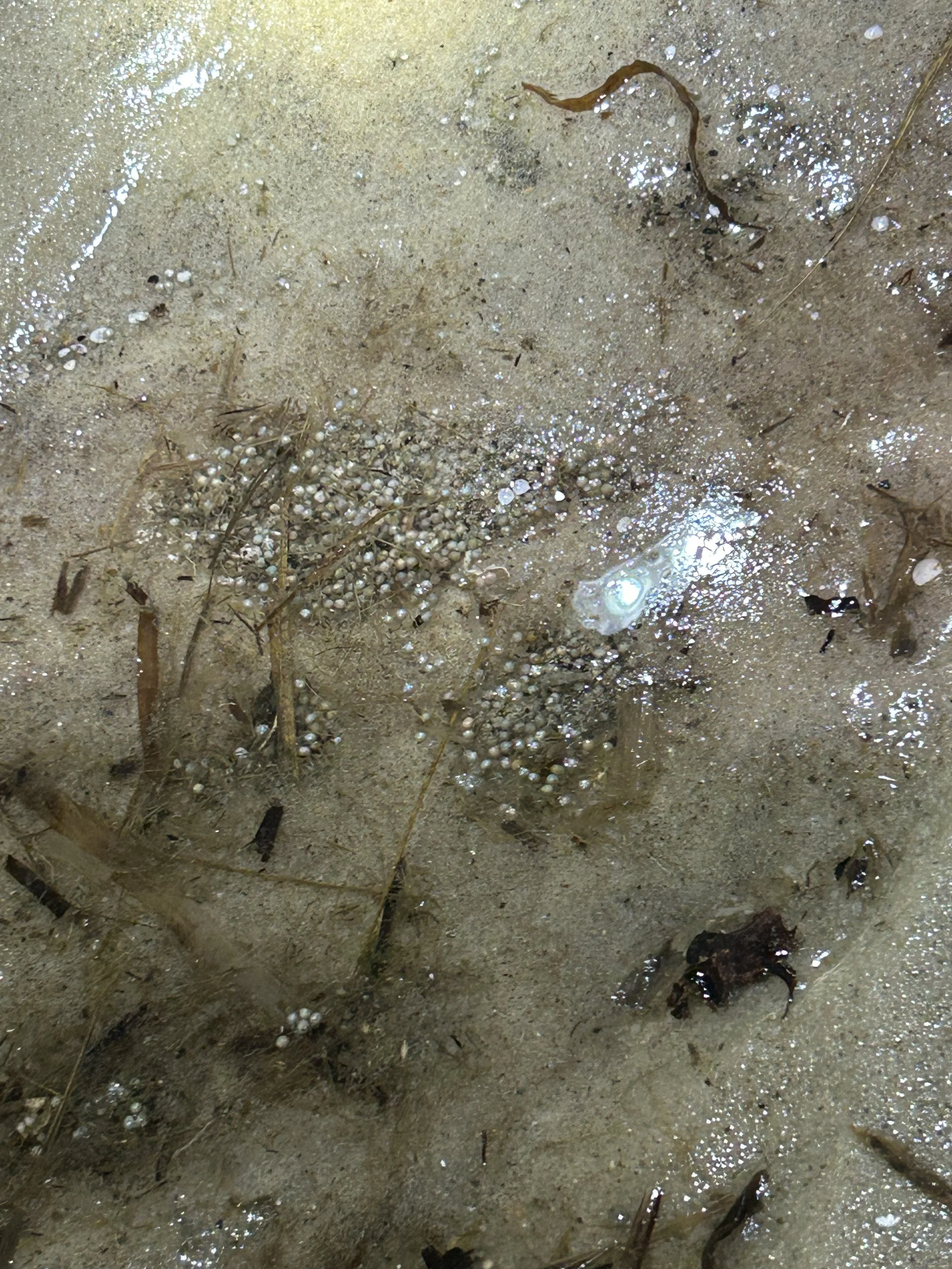
Horseshoe crab eggs that have been stirred up
Back to the story...If all goes smoothly, the mating pairs will separate and retreat back into the water. It is not uncommon for a mating pair or a solo female to get stranded in the intertidal zone if the tide recedes before she is ready. If buried sufficiently in wet sand, horseshoe crabs can keep their gills moist and oxygenated enough to wait out the low tide.
Horseshoe Crabs take many years to reach sexual maturity (~10 for females, 9 for males), a relatively unique life history among invertebrates. Even so, once they lay their eggs, that’s it. They don’t come back to protect them, they just move along. A female may produce up to 100,000 eggs in one reproductive season, and for good reason. This is just the beginning of the story for her eggs. What comes next is a “choose-your-own-adventure" of sorts:
Become a baby horseshoe crab
Become a bird???
1. Becoming a baby horseshoe crab
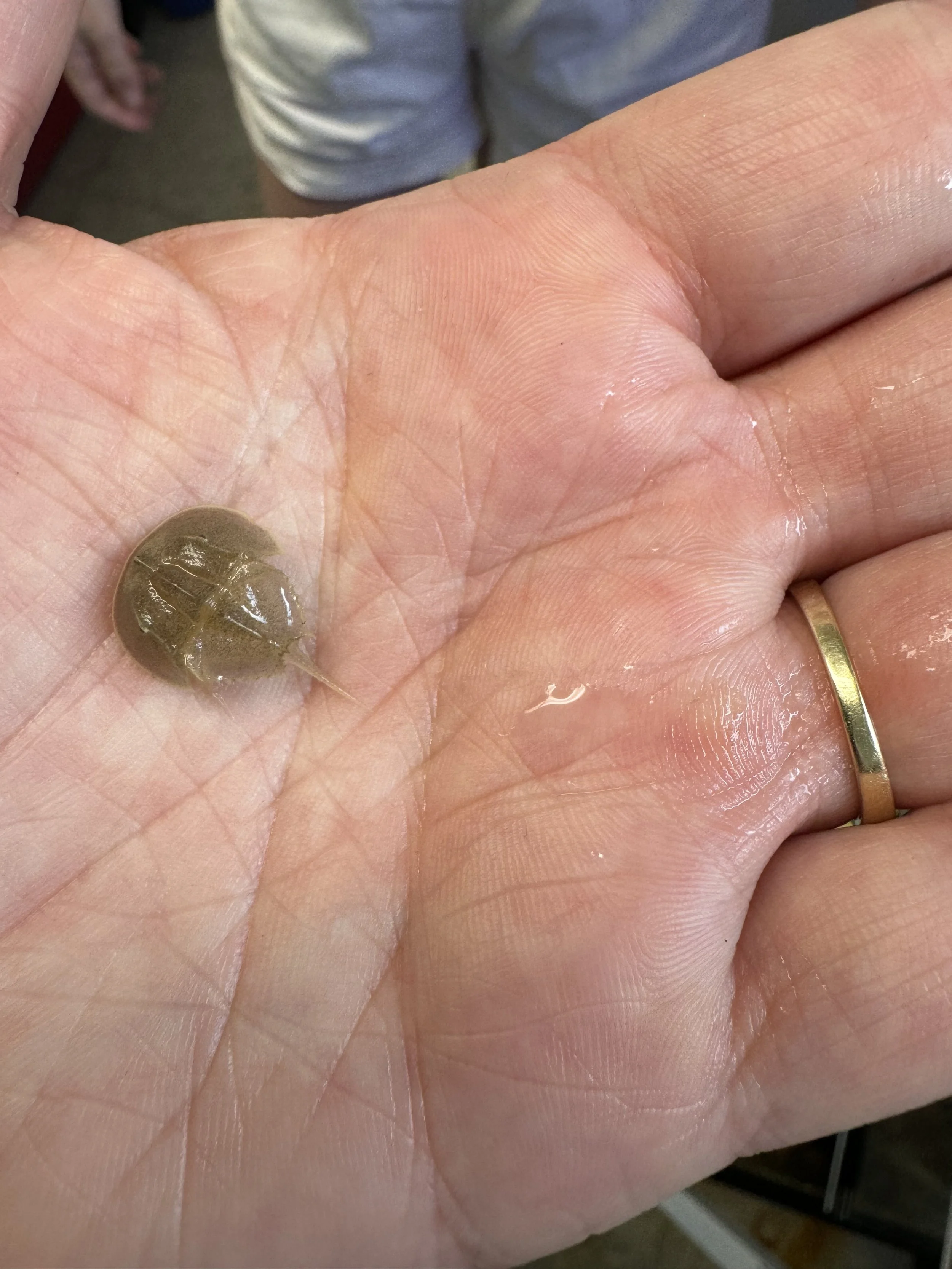
Live juvenile horseshoe crab found at Tiana Bayside
Believe it or not, this is the less likely path for a horseshoe crab egg. But, assuming the right conditions (oxygenation, gentle water flow, and no predation), after 14-30 days of incubation, teeny tiny horseshoe crab larvae emerge. They are still no larger than the pinhead-sized eggs that housed them, but they look just like miniature adults - no metamorphosis needed! Larvae crawl or swim, by flapping their book gills, and feed on small worms and mollusks in the sand. Like all Arthropods, as they grow, horseshoe crabs must “molt” or shed their external skeleton of chiton. Molting is frequent in the first months and years of life, and will occur about 16 or 17 times in total until sexual maturity. Males and females cannot be differentiated visually until the final molt, when males develop their special hook-like front appendages for clasping onto the female’s shell. And so, the cycle begins again – another generation – separated by a decade of time from their parents. As the summer goes on after the Spring mating season, beach combers can find a whole collection of molts of different sizes. Pick one up. If it doesn’t smell terrible, has a slightly translucent quality, and is perfectly opened on the underside right along the curved edge of the “horseshoe” it is probably a molt. That horseshoe crab isn’t dead, it may be out there somewhere living its (slightly larger) life.
2. Becoming a bird, huh?
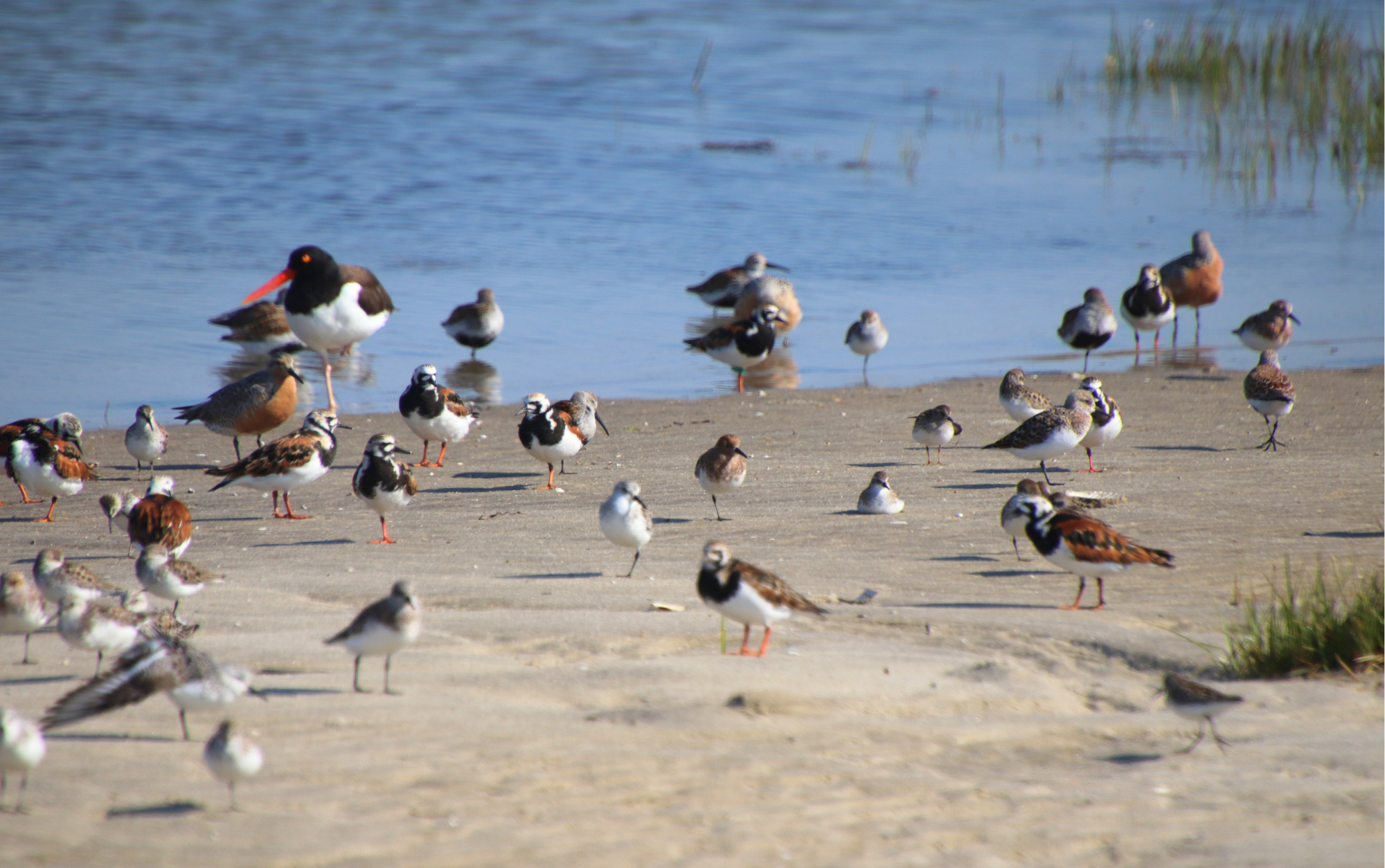
Shorebird diversity at Tiana Bayside - Photo credit: Carolyn Munaco
Yes, that’s right. The bigger, and naturally beautiful cycle of life is fueled by the ever-constant flow of energy among the diverse living things in an ecosystem, throughout the oceans, and across planet Earth. As it turns out, horseshoe crabs play an essential role in the coastal food web. So, if you start out life as a horseshoe crab egg, you might just wind up a bird – well a bit of a bird.
Take a slow, soft-footed stroll along a bay beach the morning after a full or new moon, and you’ll find yourself in the company of 100s or 1000s of shorebirds, pecking at the sand, gorging themselves on the nutrient-rich horseshoe crab eggs left the night before. Look a little closer and you’ll discover just how many different species of birds are enjoying this fast-food feast.
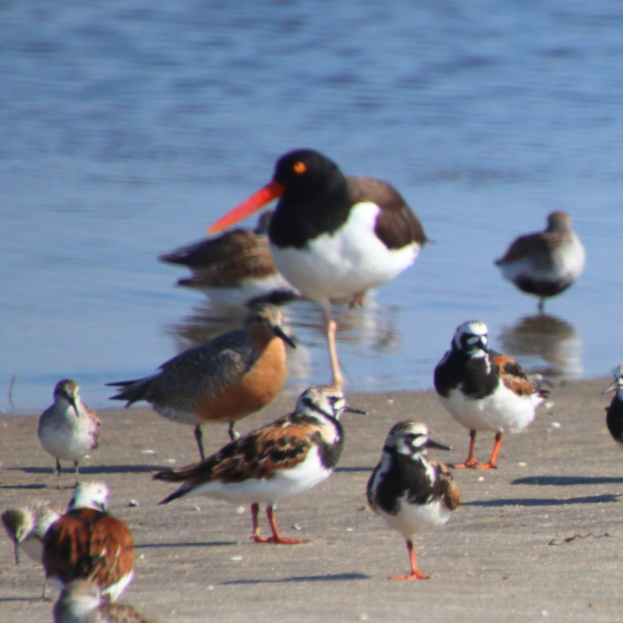
Close-up of the rosy-breasted Red Knot (Calidris canutus), just left of the larger orange-billed American Oystercatcher (Haematopus palliatus), w/ Ruddy Turnstones (Arenaria interpres) in foreground - Photo credit: Carolyn Munaco
For every size of developing egg or larval horseshoe crab, there might be a bird with a beak, sized just right, for snacking on it - from the most petite plovers and Sanderlings, to the chunkier Ruddy Turnstones and other sandpipers. Even the striking orange bills of American Oystercatchers are busy probing the sand for the hatched juvenile horseshoe crabs. And we cannot forget our avian ambassador for horseshoe crab protection, the threatened Red Knot, with an epic migration story that begins as far south as the tip of South America, and traveling 9,000 miles north to their high artic breeding grounds. Our temperate coastline provides one of the last vital feeding stops in this incredible journey, and this year we’ve got some photographic proof to share with you from our little Tiana Bayside sanctuary.
Back to the Bays’ ArtSea Director, Carolyn Munaco, gives us a first-hand account:
“It was right at the beginning of our horseshoe crab tagging season here. I was taking a typical walk along the Tiana Bayside salt marsh shore, gazing out at the sand and mudflats, getting inspired about the coming summer when these shores would be filled with young explorers at our summer camps. I took a closer look at the bounty of birds feasting on horseshoe crab eggs at low tide, and I thought, ‘That one’s different!’ Luckily I had my good camera to capture the magic. I’ll let the photos speak for themselves.”
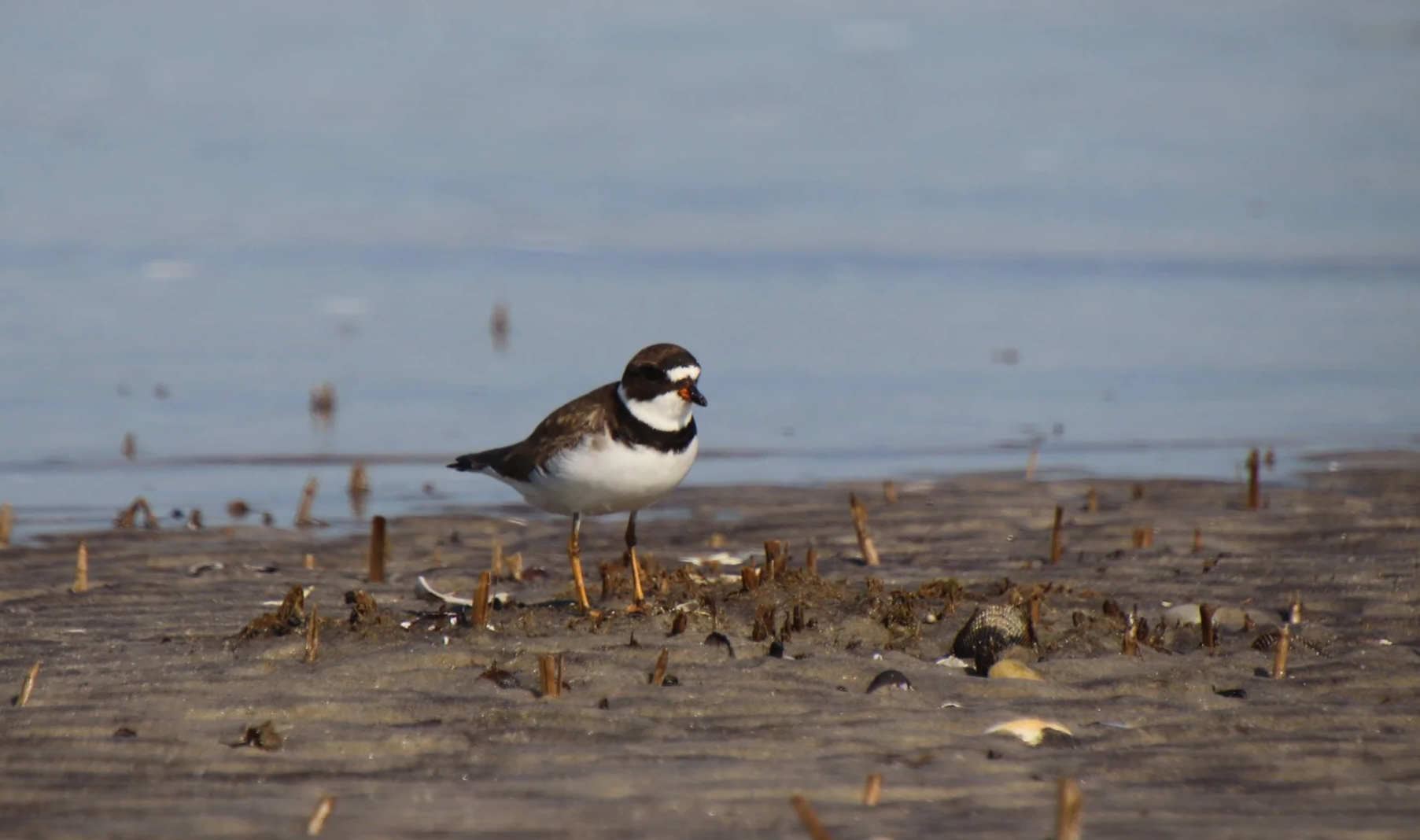
Semipalmated Plover (Charadrius semipalmatus), Tiana Bayside - Photo credit: Carolyn Munaco
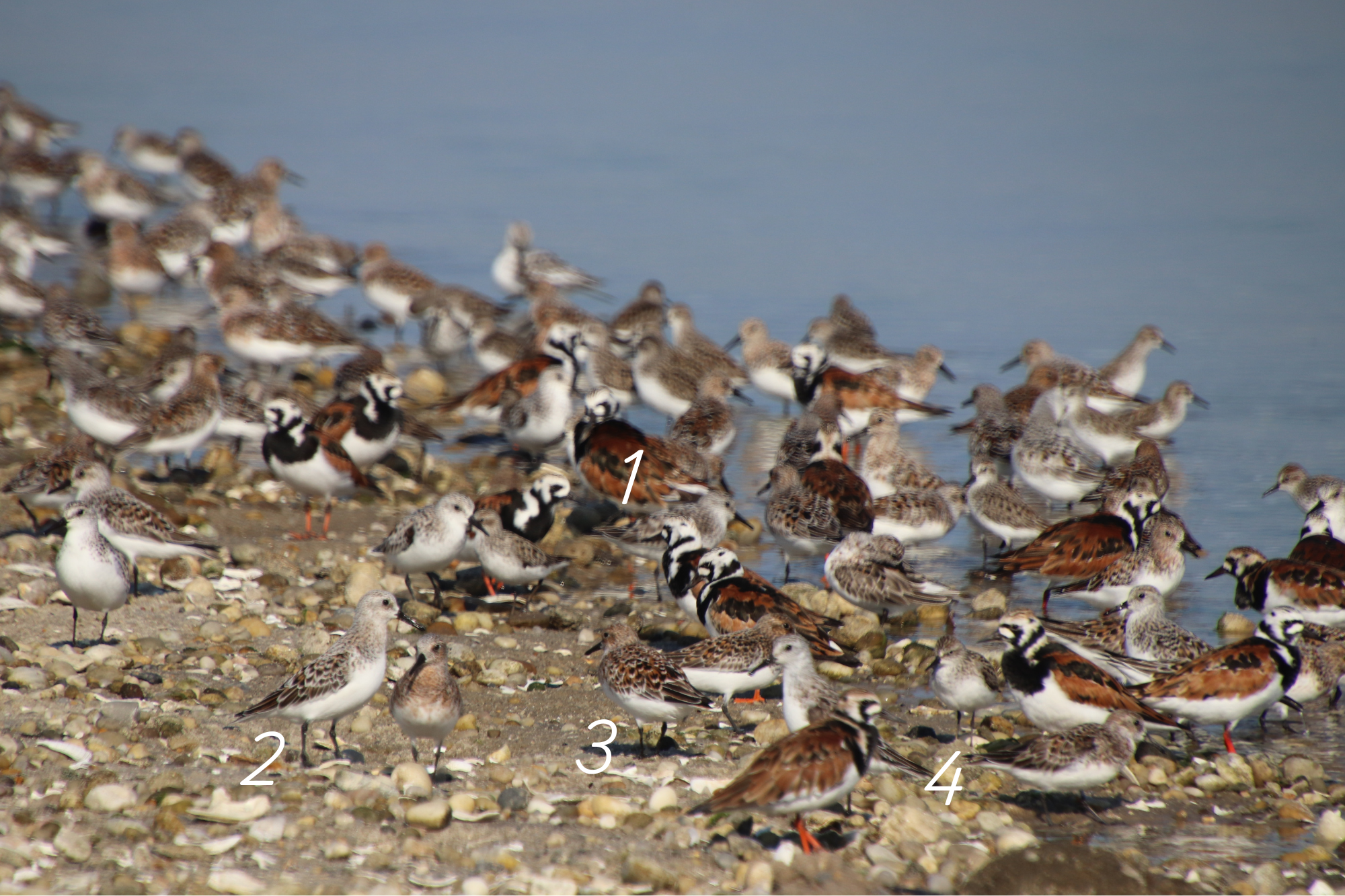
Mix of Ruddy Turnstones (1), Dunlin (2), Sanderlings (3), and Semipalmated Sandpipers (4)
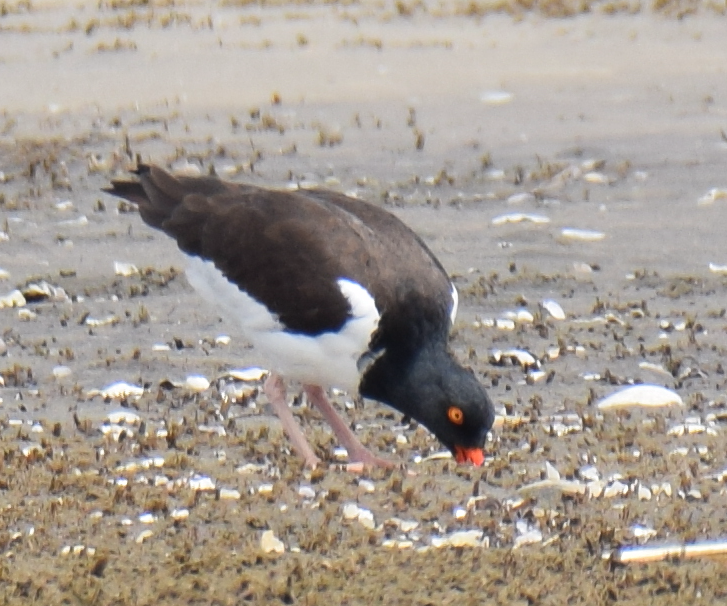
Oystercatcher using long orange beak to dig for food - Photo credit: Hazel Wodehouse
Science and Engagement Manager, Hazel Wodehouse, adds:
“Even as early as the beginning of April this year, I was seeing evidence of this interconnected food-web awakening from its winter slumber. I’m often looking down at my feet for the tinier shells and invertebrate surprises, and I kept seeing these pairs of deep holes in the sand flats. I thought, someone must have come out here with walking sticks. After I stumbled upon a mating pair of horseshoe crabs (the first of 3 or 4 that day), it clicked. I looked up slowly and sure enough, a mating pair of Oystercatchers, digging deep into the sand for worms and probably enjoying a few of these early crab eggs along the way. I sat for hours watching them - long enough to witness an attempted copulation. I was so excited to see that Carolyn has now stumbled upon those beautiful speckled eggs!”
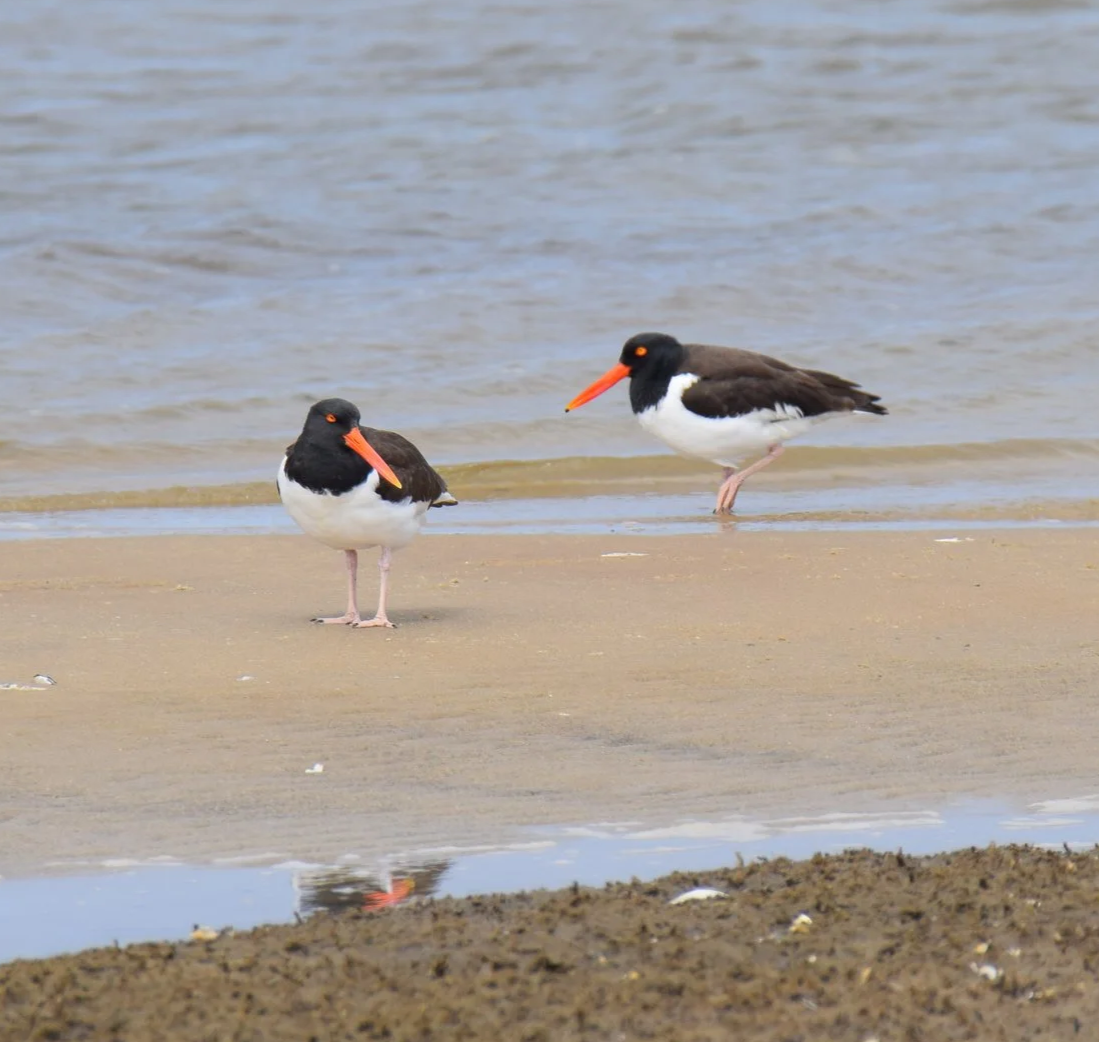
Oystercatcher mating pair - Photo credit: Hazel Wodehouse
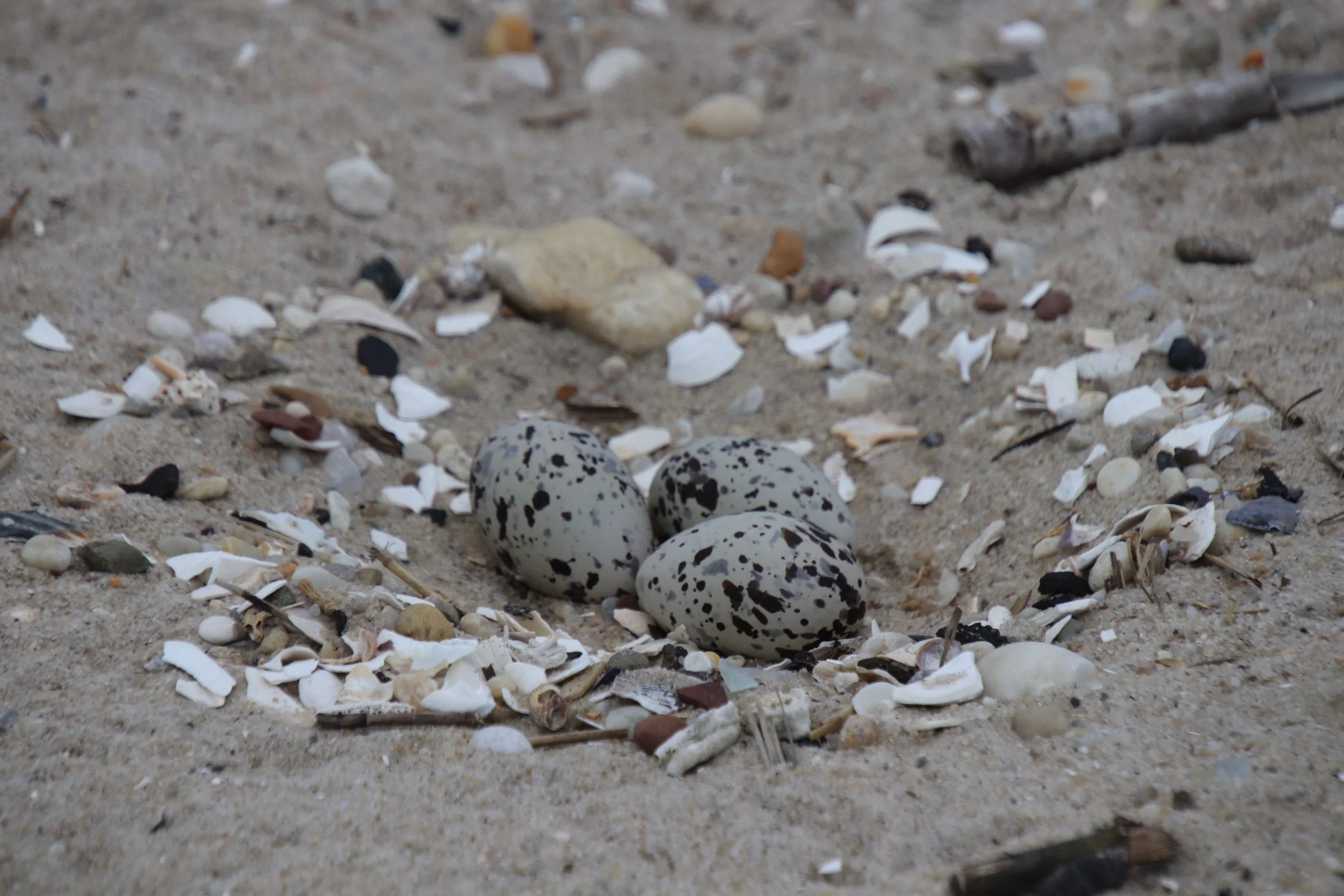
American Oystercatcher eggs, Tiana Bayside - Photo credit: Carolyn Munaco
Witness the seasonal excitement for yourself by taking a walk at Tiana Bayside, complete with educational signage.
Night owl? Experience the lunar magic by getting involved with our horseshoe crab monitoring program at Tiana Bayside.
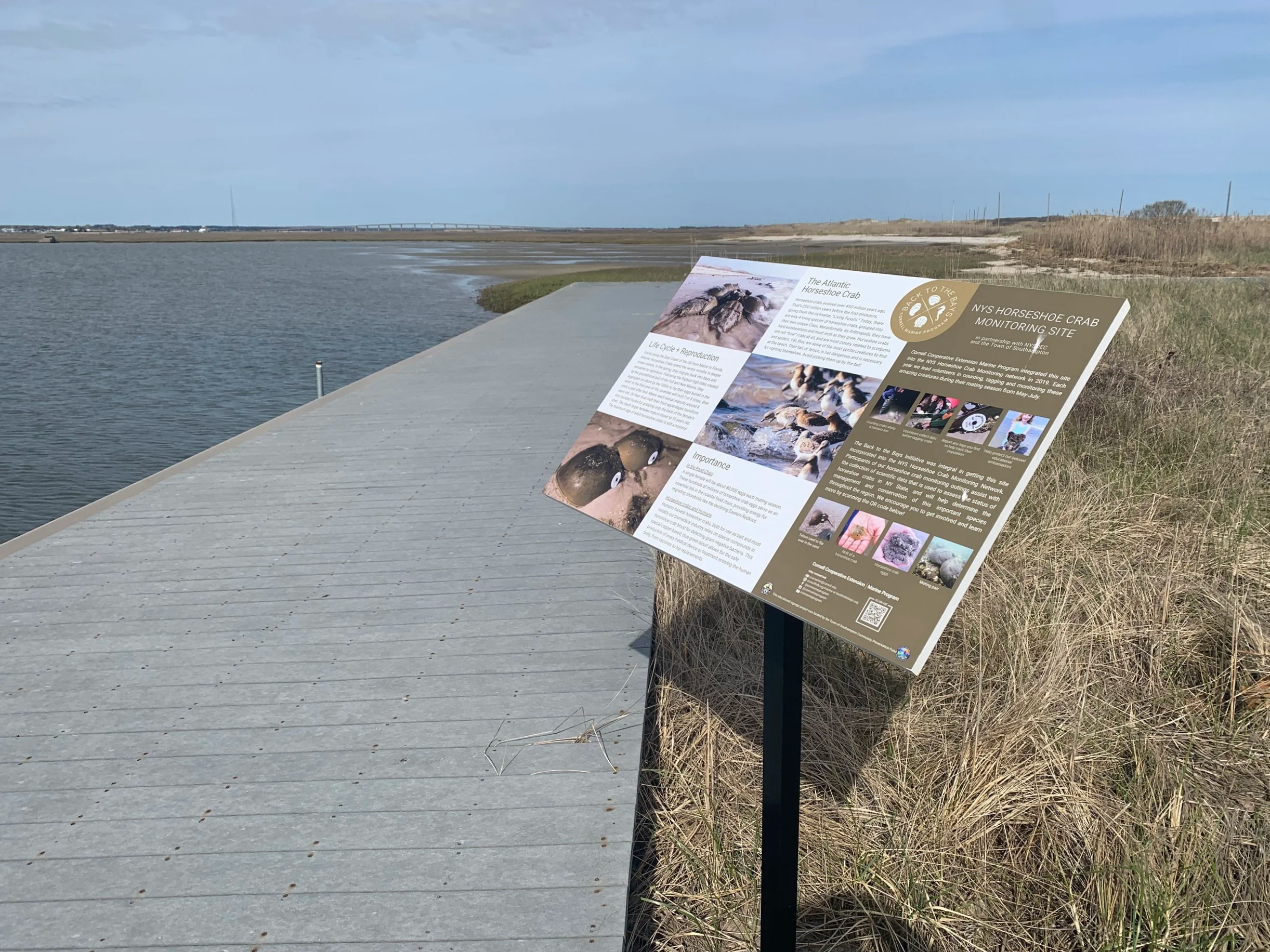
Educational horseshoe crab signage at Tiana Bayside, part of a self-guided tour