Summertime at the Seahorse Hotel
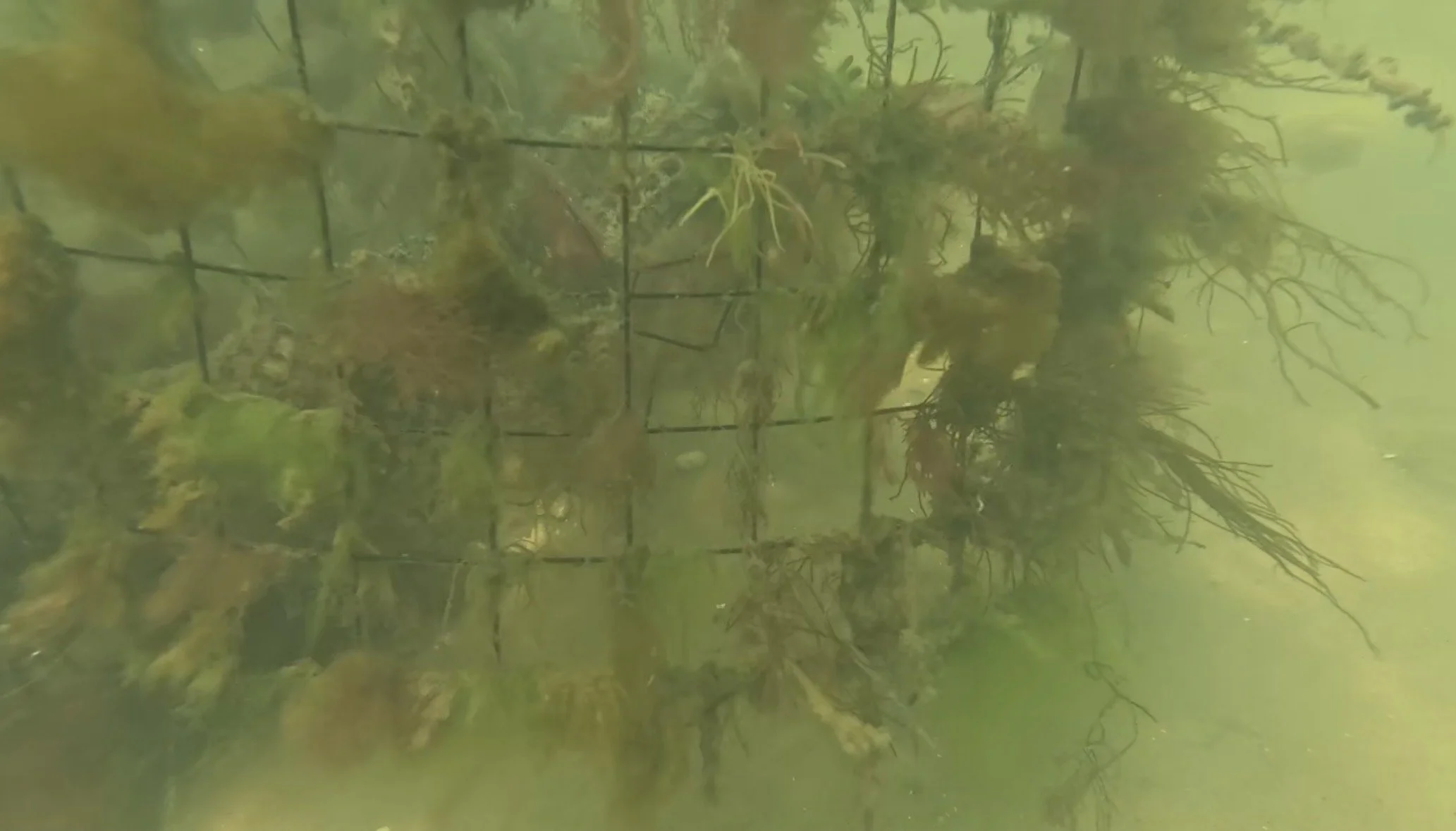
Underwater view of a seahorse hotel, indicating successful macroalgae growth that enhances the habitat structure and foraging grounds for local seahorses.
As many Back to the Bays followers know, the Northern-Lined Seahorse (Hippocampus erectus) is native to Long Island waters. In their natural habitat, these marine animals rely on native seagrasses like eelgrass (Zostera marina). Seahorses have a prehensile tail, which allows them to anchor themselves to grass blades to withstand ocean currents.
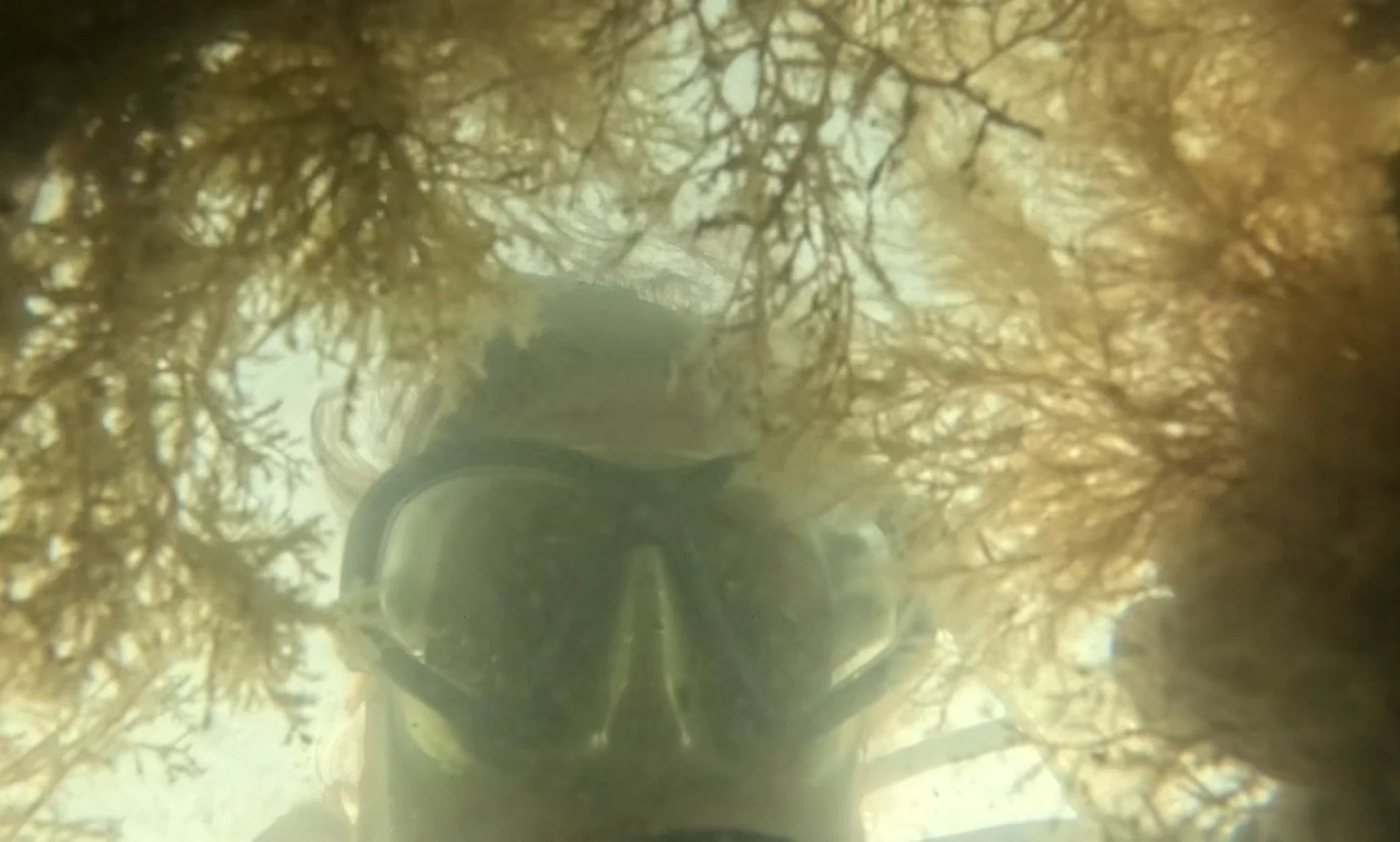
Kim Manzo, peering down into a seahorse hotel to see if anyone is home.
For years, Back to the Bays’ Seahorse and Habitat expert Kim Manzo has been educating the public about the importance of seagrass as habitat for these native species. Historically, native eelgrass has been degraded due to anthropogenic (human-made) stressors such as urbanization, runoff, and climate change. Kim created “Seahorse Hotels,” strategically placed artificial structures across the East End to combat the loss of habitat for the Northern-Lined Seahorse.
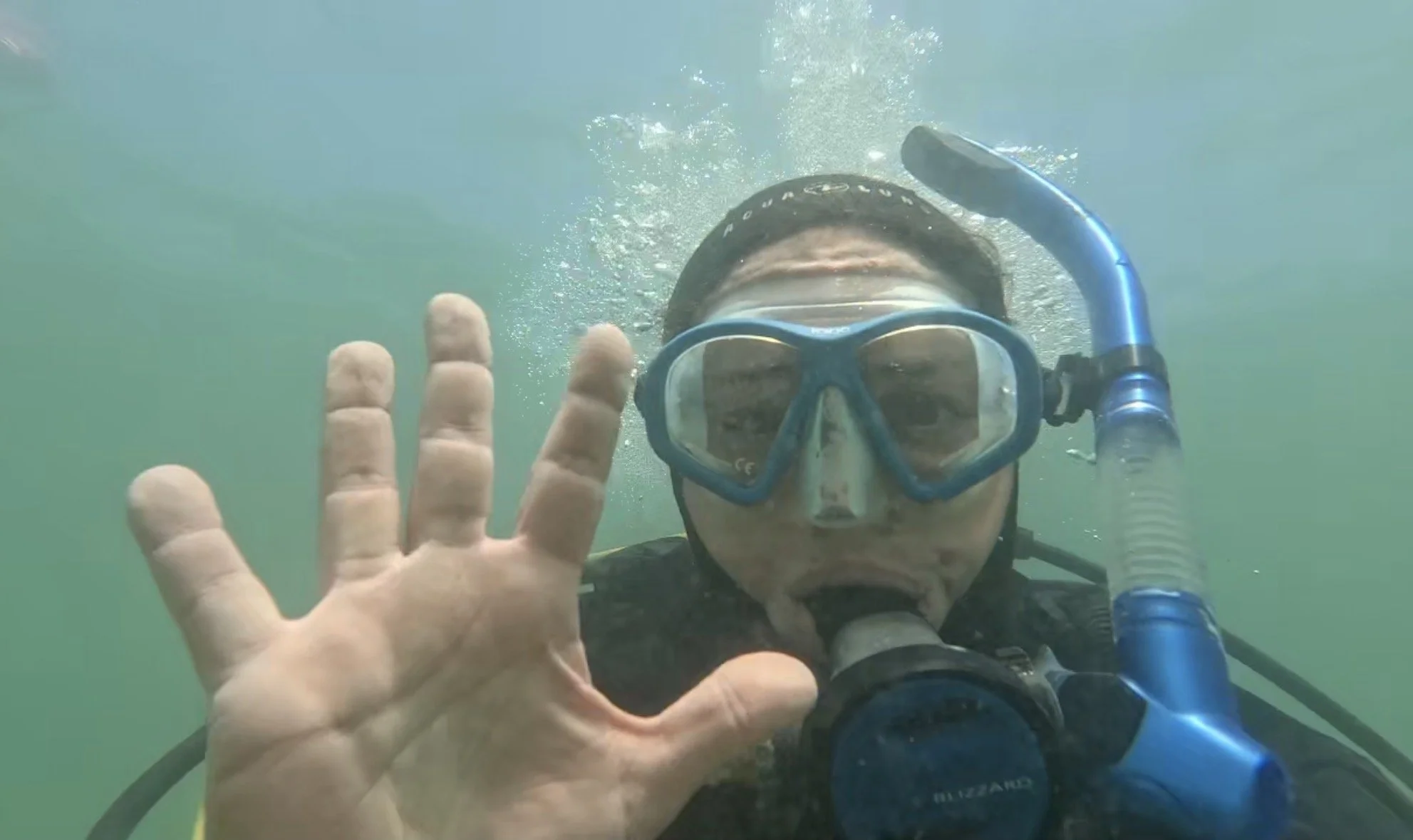
Over the summer, Seasonal Field and Outreach Assistant Katie Wetmore assisted Kim Manzo in the field by monitoring these structures. Scuba diving is an essential skill needed to observe Seahorse Hotels and their surrounding environment. Divers can observe marine life and different interactions that would otherwise remain hidden underwater.
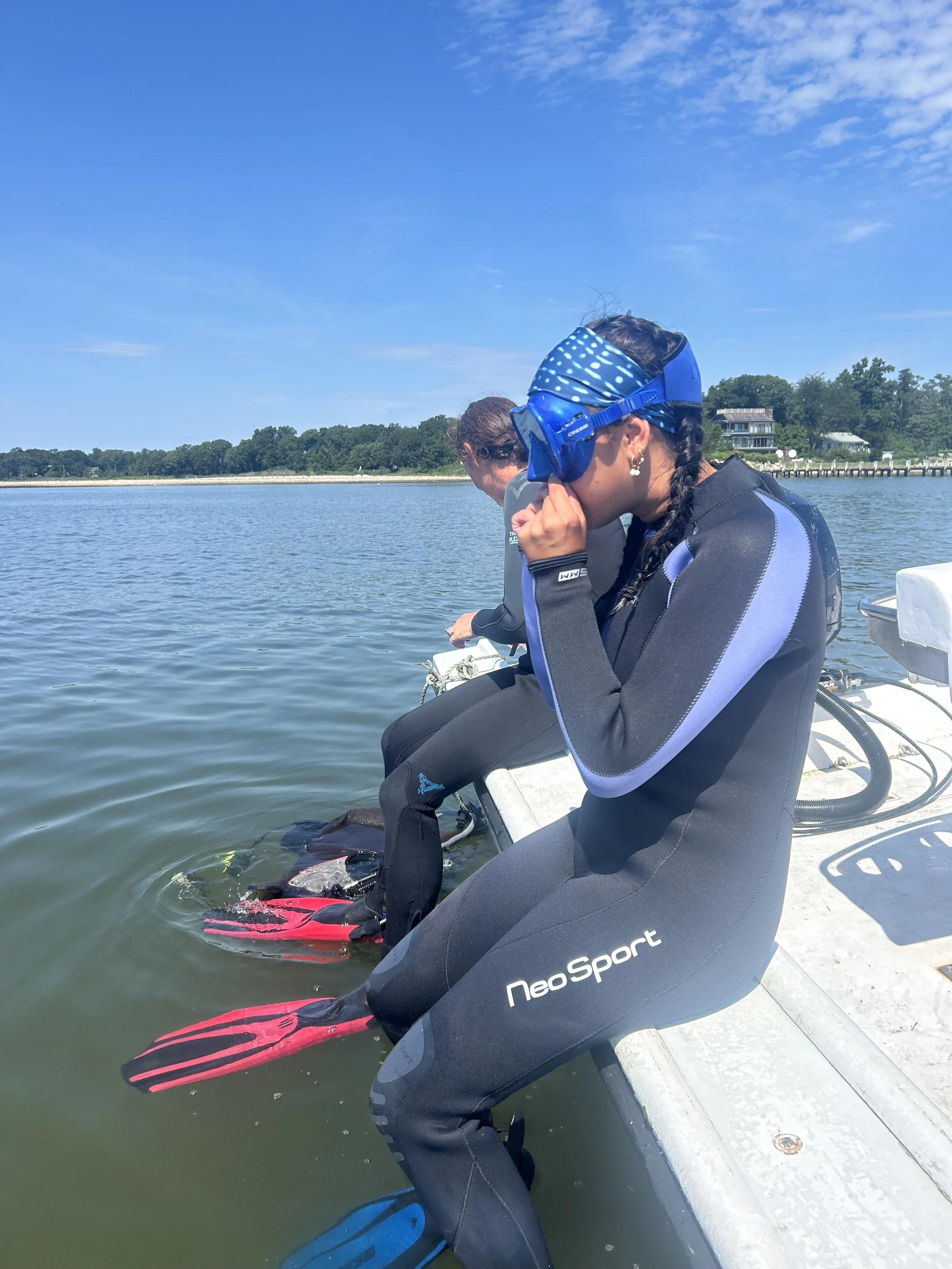
Katie and Kim suiting up for a dive to monitor our seahorse hotels
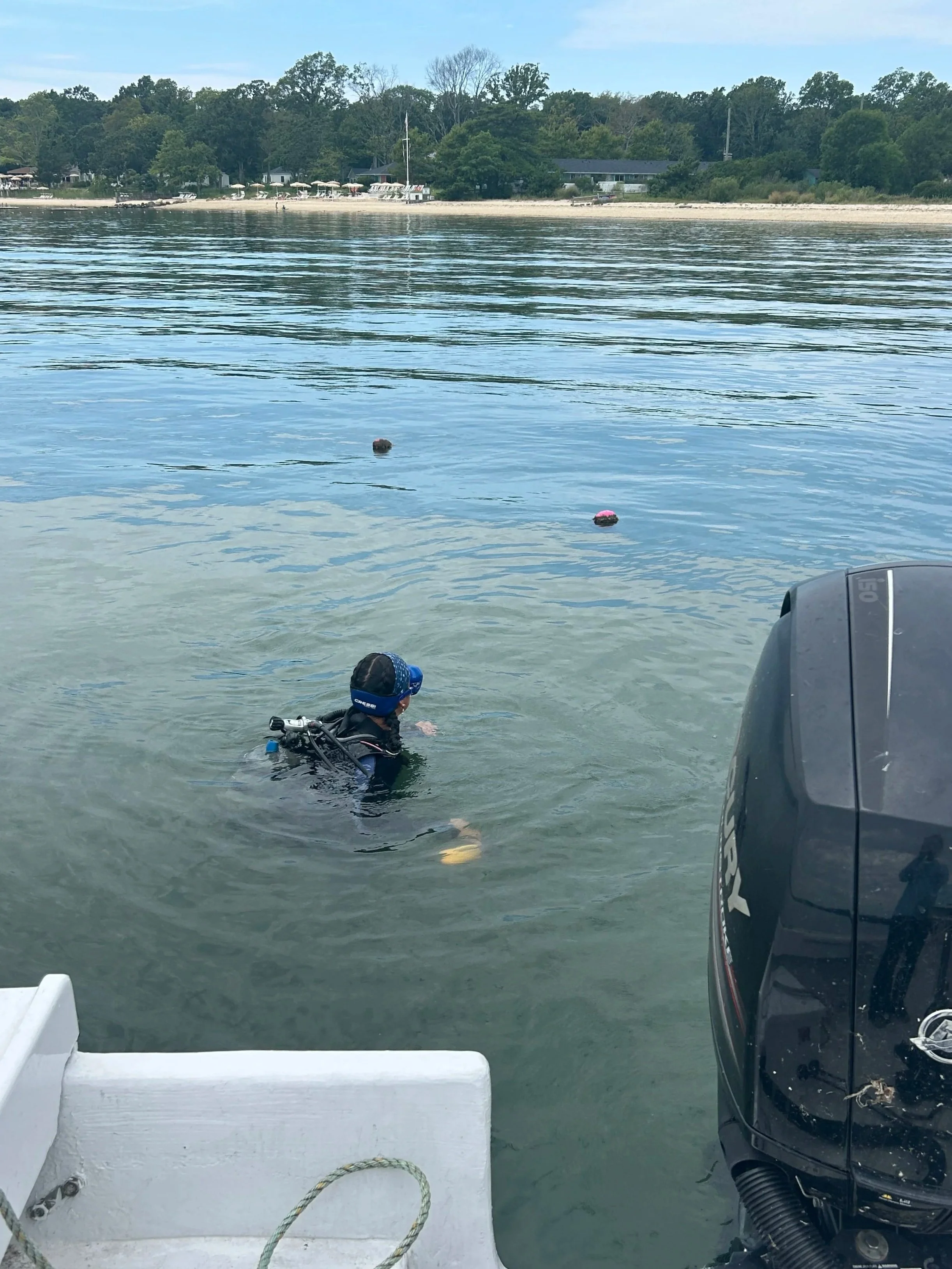
Katie getting ready to monitor some hotels!
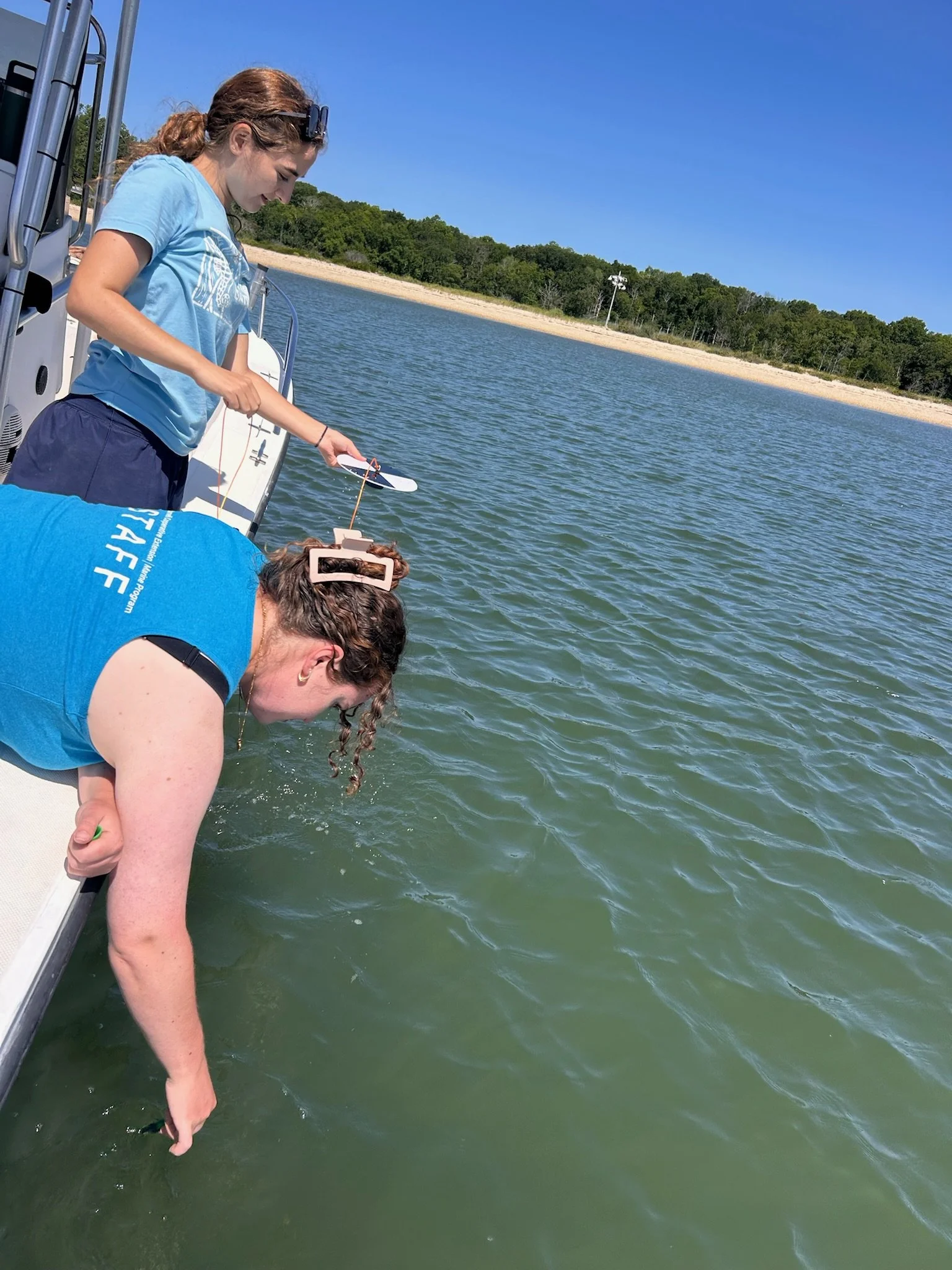
Field work days are for more than just diving! Rachel is measuring the water's turbidity with a Secchi disk and Ava is testing the salinity with a refractometer.
To give non-divers a better idea of the work being done beneath the surface, Katie shares her perspective as a new diver beginning her marine science career with Back to the Bays:
Scuba diving in Long Island is very dependent on a few unpredictable factors: weather, tide, water conditions, and underwater visibility. We began by setting up our equipment and safely entering the water. Kim briefed me on the dive plan at each site and we decided who would monitor each of the three hotels per location. After entering the water from our boat, we descended to the depth of the hotels and begin to closely observe the structures, capturing footage with via GoPro. A huge diversity of macroalgae species covered many of the hotels, enhancing the 3-dimensional habitat as intended, so we needed to move slowly and carefully inspect each surface.
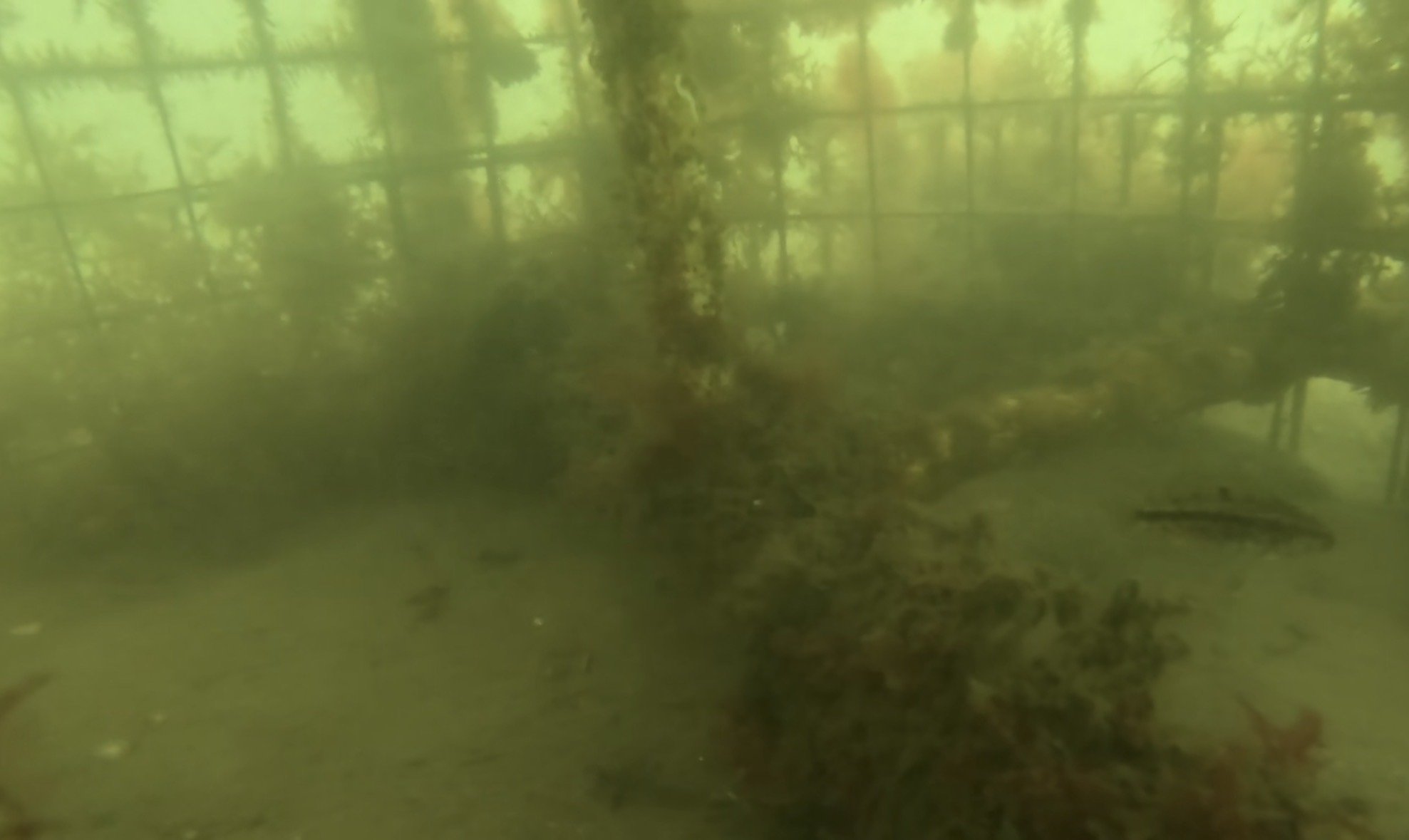
Juvenile black sea bass spotted utilizing this seahorse hotel, hiding among the diverse array of macroalgae that have colonized the structure
Ultimately, the main goal of each dive was to spot a seahorse using a hotel as habitat in the absence of native eelgrass, but the structures were found to act as mini ecosystems for a wide variety of marine life, including spider crabs, hermit crabs, mysid shrimp, bay scallops, blackfish (Tautog), juvenile black sea bass, and pipefish.
Although seahorses were not spotted during this diving season, crucial insights were still uncovered. The Northern Pipefish (Syngnathus fuscus) was found residing in all hotel locations. This is an important piece of information because pipefish are closely related to seahorses and even share similar anatomy. Pipefish also mimic seagrass and use their tail to wrap around it, and eat the same prey as seahorses (small shrimp-like crustaceans). Seahorses may not have been found, but it is a very good sign that their close relative was! This may be an indication that our elusive seahorses visited the hotels and that they are providing a suitable habitat!
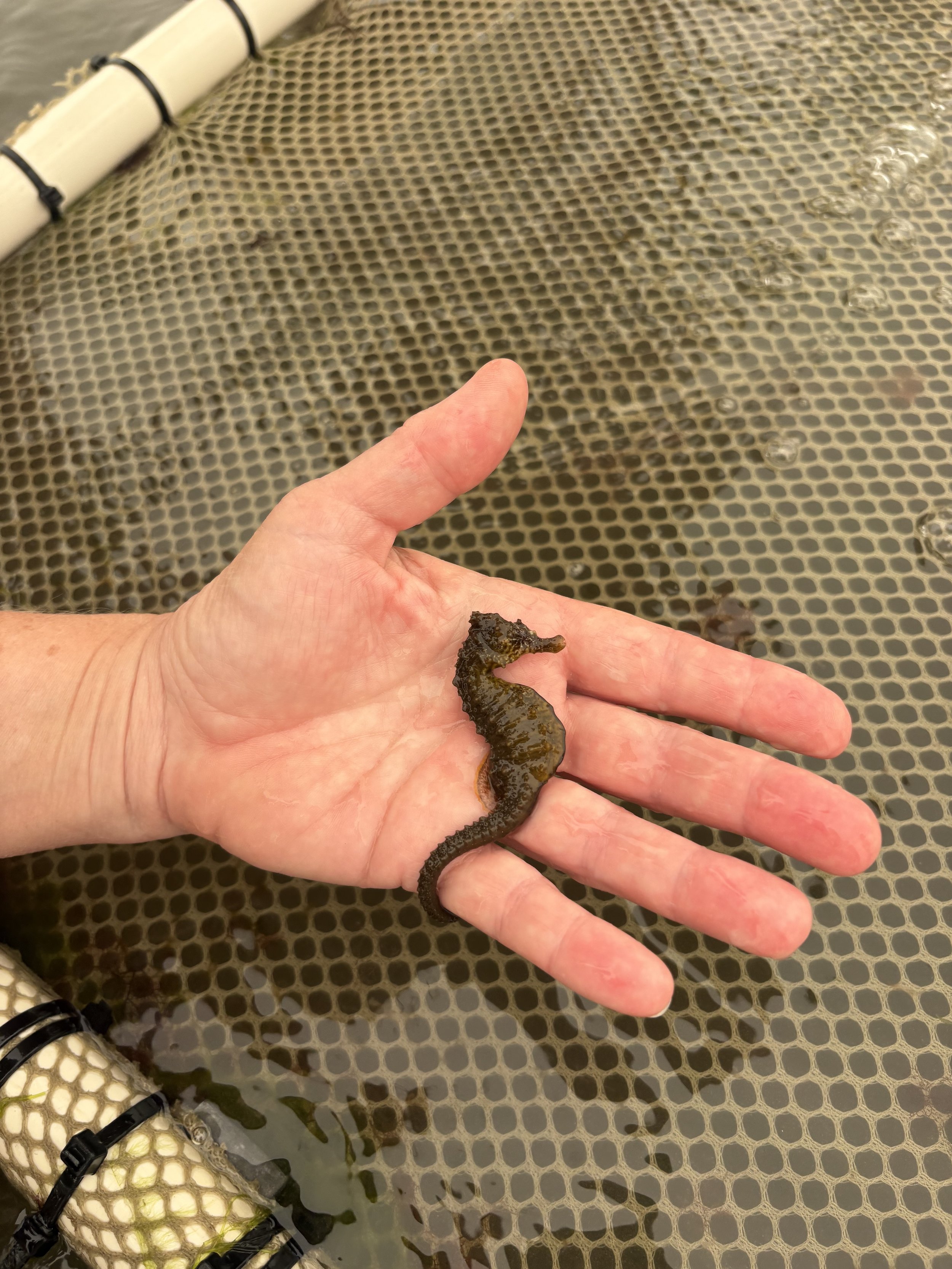
Guest of honor: The Northern-Lined Seahorse (caught during a Seahorse Seining event this summer)
Seahorses are in town!
In addition to the Seahorse Hotel project, we continued engaging the public this summer with multiple seahorse seining events, and I feel so lucky that we found some this year, and I got to hold them and practice collecting population data.
Looking ahead to the future, key insights found this summer will directly help with plans and designs of potential Seahorse Hotels or other projects. Cornell Cooperative Extension's Back to the Bays Initiative is working towards a brighter and more resilient future of native Long Island marine species!
~ Katie Wetmore (Back to the Bays Field and Outreach Assistant)
We appreciate all of the contributions to our Seahorse Conservation Fund and support from Silver Sands Motel, enabling our seahorse hotel network to be deployed and monitored this summer. If you’d like to support our 2027 efforts please consider a donation here, or contact Kim Manzo at kp92@cornell.edu for more ways to help save our local seahorses!
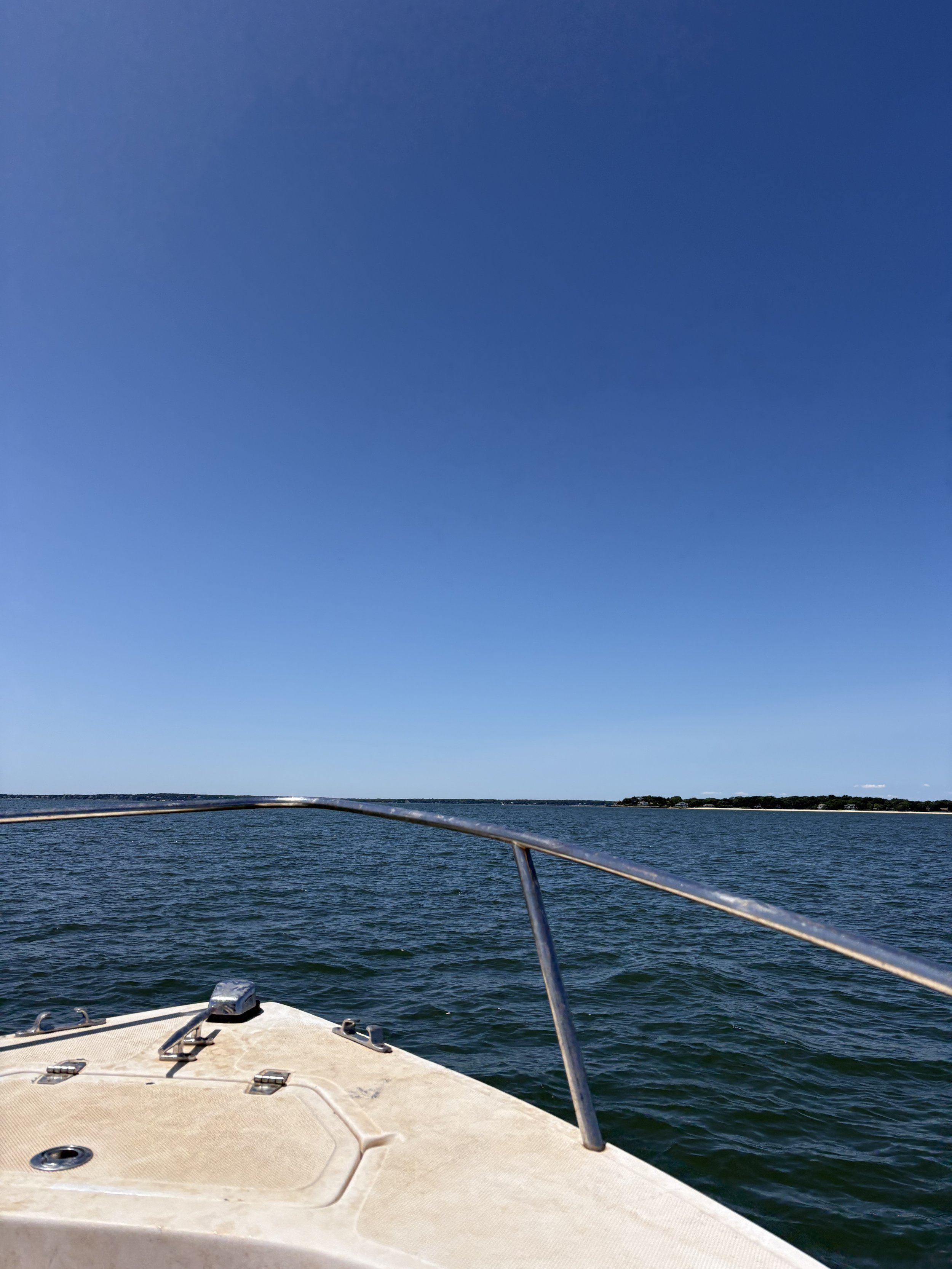
Summer field days on The Parker with Kim Manzo and Kate Rossi-Snook