
Shellfish Nursery at Sag Harbor’s Redwood Facility
This work has been funded in part through our Town of Southampton Community Preservation Fund Water Quality Improvement grant, and through the generous support provided to our Sag Harbor Stewardship Site Fund.
When our baby oysters and clams outgrow the hatchery, it’s time for them to move into a shellfish nursery system.
The nursery stage can take many forms. In the late spring or early summer, the juvenile shellfish may start in upwellers and raceways - land-based tanks with seawater pumped through them. Come summertime, though, they grow the best out in our bays and creeks held in all types of gear - FLUPSYs, restoration rafts, baskets, or cages. This stage is important because the shellfish remain in these more protected systems as they get big enough to evade predation more effectively after they are planted at our restoration sites.
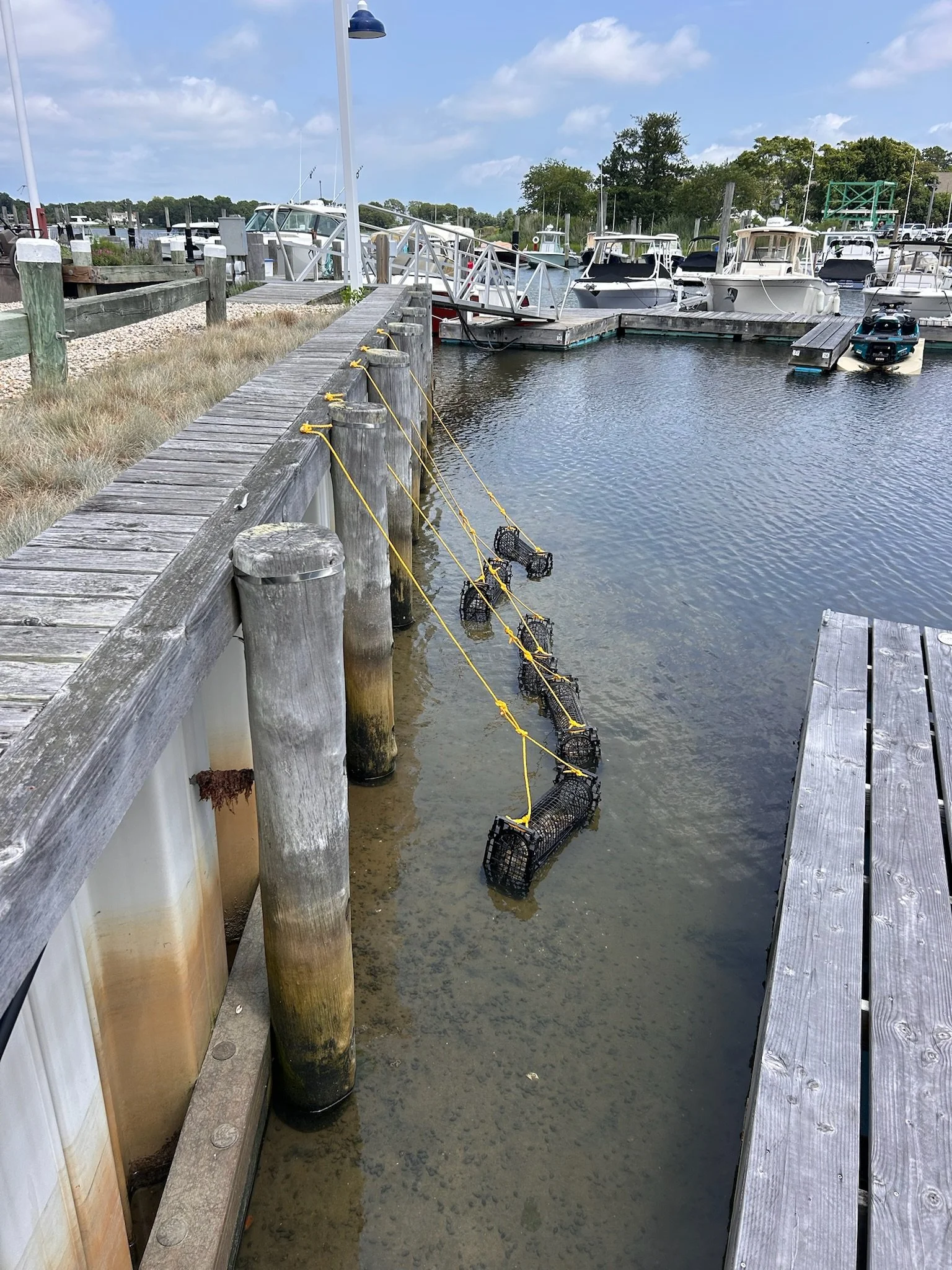
Hanging spat-on-shell baskets on the docks at our new Redwood Facility in Sag Harbor
CCE Marine’s Production Hatchery team supplies massive amounts of spat-on-shell (SOS) to projects across Suffolk County - nearly 800 cubic feet annually(!) - including for some of our Back to the Bays Stewardship Sites. Sometimes we need to remove our SOS oysters from their setting tanks before we are ready to add them to our reefs, so this summer we developed and installed hanging SOS nursery cages at our Sag Harbor Stewardship Site.
The existing infrastructure at the Redwood facility is perfect for these hanging cages. Affixed to the bulkhead on small cleats, the oysters grow really well suspended in the water column where there is lots of food, plus they are ideal for educational programming - whether we are taking SOS into a classroom for a hands-on lecture or showing in-person examples of the array of marine animals that utilize SOS oysters as habitat.
In fact, earlier this month as part of our Reef Raisers + Meadow Makers in-school curriculum, the entire 6th grade at Hampton Bays Middle School had the opportunity to dig through these oysters and look for the mud crabs hiding among the shells (always a favorite). Next, some will be brought to East Quogue for their 5th grade classes to learn about, and we are really excited to start working with the science classes at Sag Harbor’s Pierson High School to discuss the importance of oysters for the East End’s ecology and economy and maybe have the students experiment with taking care of the SOS in a classroom tank.
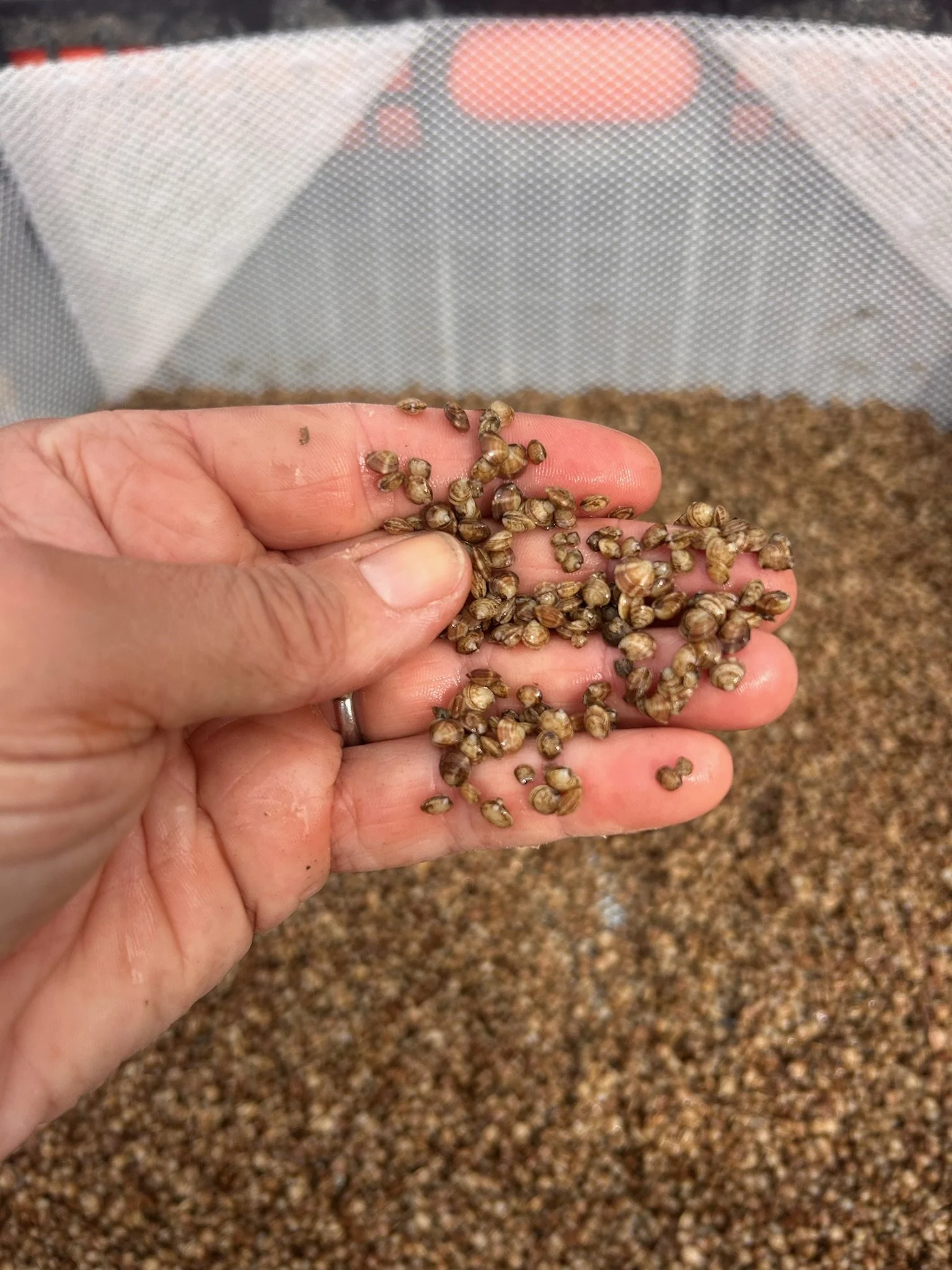
Juvenile clams growing in our new floating aquaculture gear at Redwood Facility
Oysters grow quickly - the SOS in the hanging cages are already big enough to survive many predators - but clams are much slower and require a little extra love and growing time. Mike and Hannah, who run CCE Marine’s Research Hatchery, produce all the clams used for genetic research projects, the Town Seed Enhancement program, and Back to the Bays restoration work. Their team operates a series of Floating Upweller Systems (FLUPSYs) in Mattituck Creek for their shellfish growout. This is a standard and effective way to get the fastest growing clams up to a good size, but the slower growing “runts” are often outcompeted and need to get culled out to make room for the others.
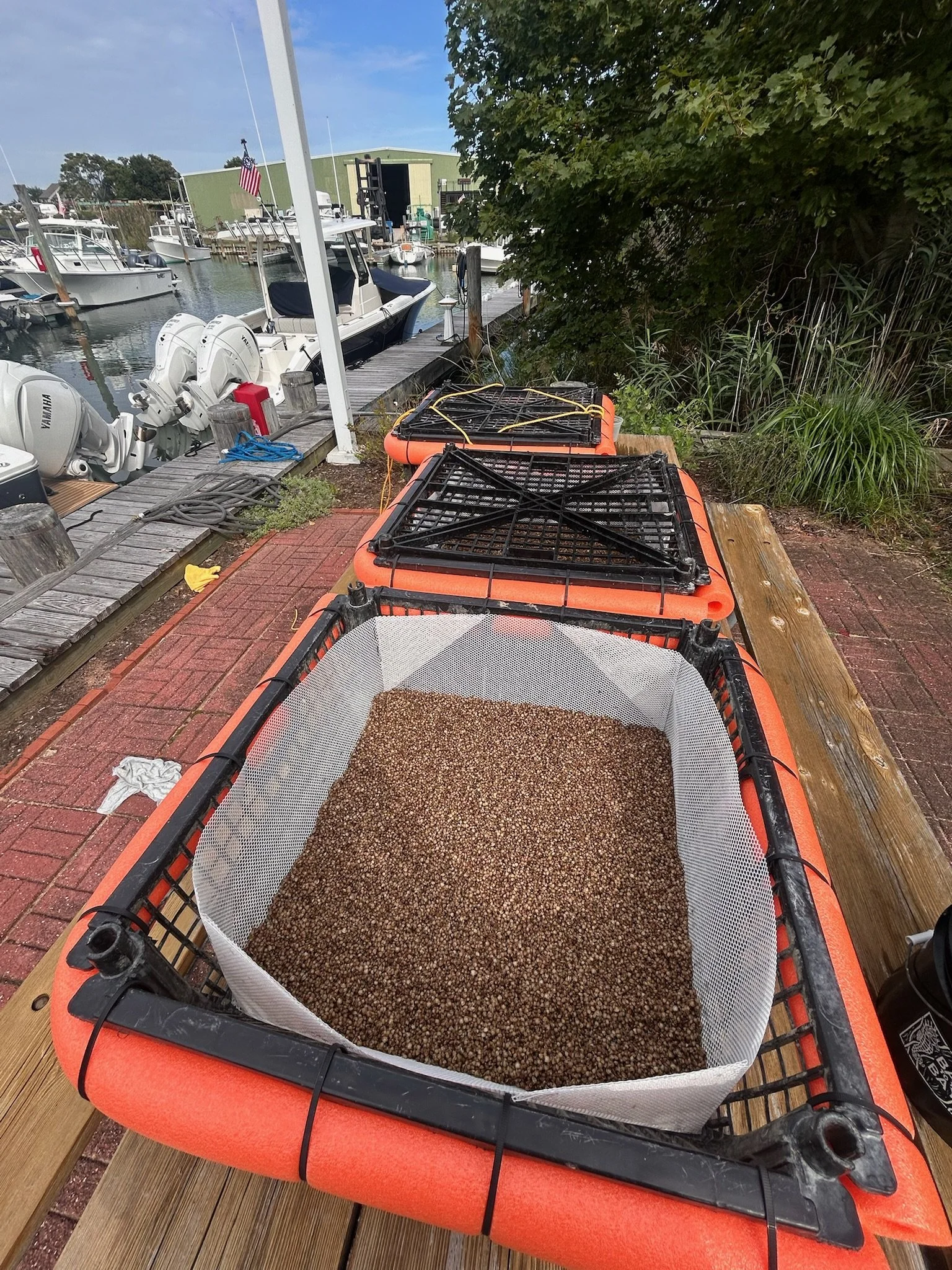
Fine mesh is used to make sure small clams don’t fall through, but can still get circulation from natural water to filter-feed on algae.
This year, we received approximately 150,000 runt clams to add to our Sag Harbor shellfish nursery and experiment with giving them an extra chance to grow. While we were initially thinking of installing a FLUPSY at our facility, we took note of the naturally high current flow through the Redwood culvert that connects the two sections of Sag Harbor Cove and decided to pivot. Instead, we had a lot of fun designing, building, and installing new floating clam baskets with mesh liners to hold the small clams. Not only does the water constantly move through this area at Redwood, it is also incredibly protected (even from the multiple nor’easters we’ve experienced this fall), making it the perfect nursery site.
In September, these runt clams were an average of 5mm. We are really looking forward to pulling them out of the water next month to check their growth and survival, which will help us determine if this new clam nursery system design is viable for expansion at additional Stewardship Sites.
Join us on Saturday, November 7th at Redwood for a Clam Overwintering Stewardship Session. You will help count and measure the juvenile clams and then place them back in the baskets mixed with sediment in preparation for an overwintering trial to see just how big we can grow these clams!
Stay up to date with future events at this new location by checking our Redwood Facility and Sag Harbor Stewardship pages, and master Calendar.
Hope to see you soon!