
Reef Raisers + Meadow Makers at Hampton Bays Middle School
On October 7th, Cornell Cooperative Extension’s Back to the Bays Team visited Hampton Bays Middle School, reaching the entire 6th grade (130 students) with a full day of Reef Raisers + Meadow Makers programming. Students cycled through hands-on learning stations where they interacted with living marine species; helped restore eelgrass habitat; learned the ecological importance of oyster reefs; and took part in a seahorse conservation lecture and art project. This program was made possible through the support of a Town of Southampton Community Preservation Funds WQIP grant which is enabling CCE to conduct clam, scallop and oyster restoration activities, and enhance populations of coastal and marine habitat-right here in the waters off of Hampton Bays!
Oyster Reefs + Aquaculture
At our Reef Raisers station, Aquaculture Coordinator, Kate Rossi-Snook, delivered a presentation on the ecological importance of Oyster Reef habitats in our local bays, the ecosystem services they provide, and what CCE Marine is doing to help restore them. Then students got hands-on with live spat-on-shell oysters, learning to measure shell height and perform population counts, just like our staff do in the field. They even found some hitch-hiking critters sheltering among the shell clusters, which are grownout in natural coastal waters, providing temporary habitat and water filtration as they develop.
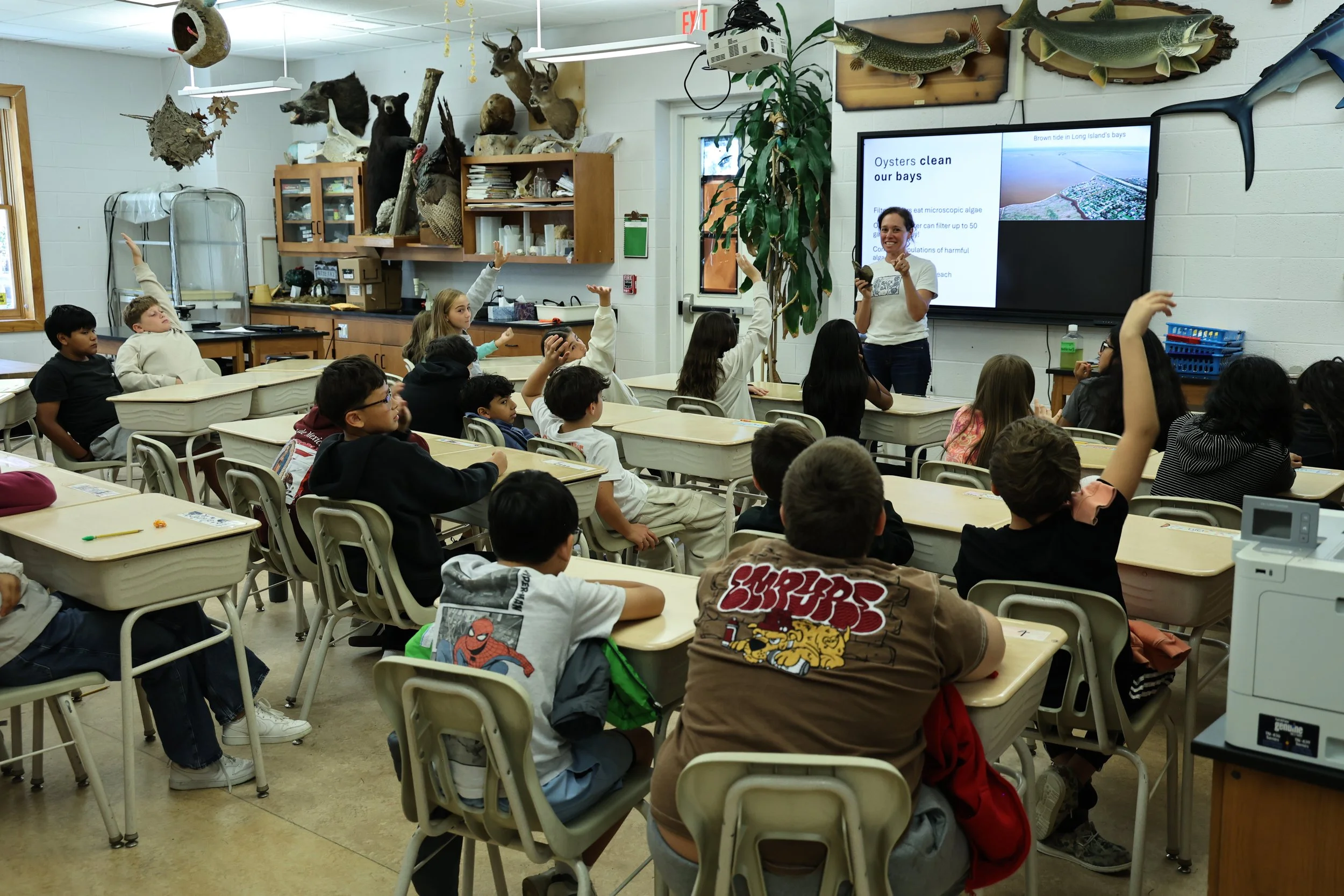
Students learning from Kate about the ecosystem services provided by oyster reef habitats, including water filtration and erosion prevention.
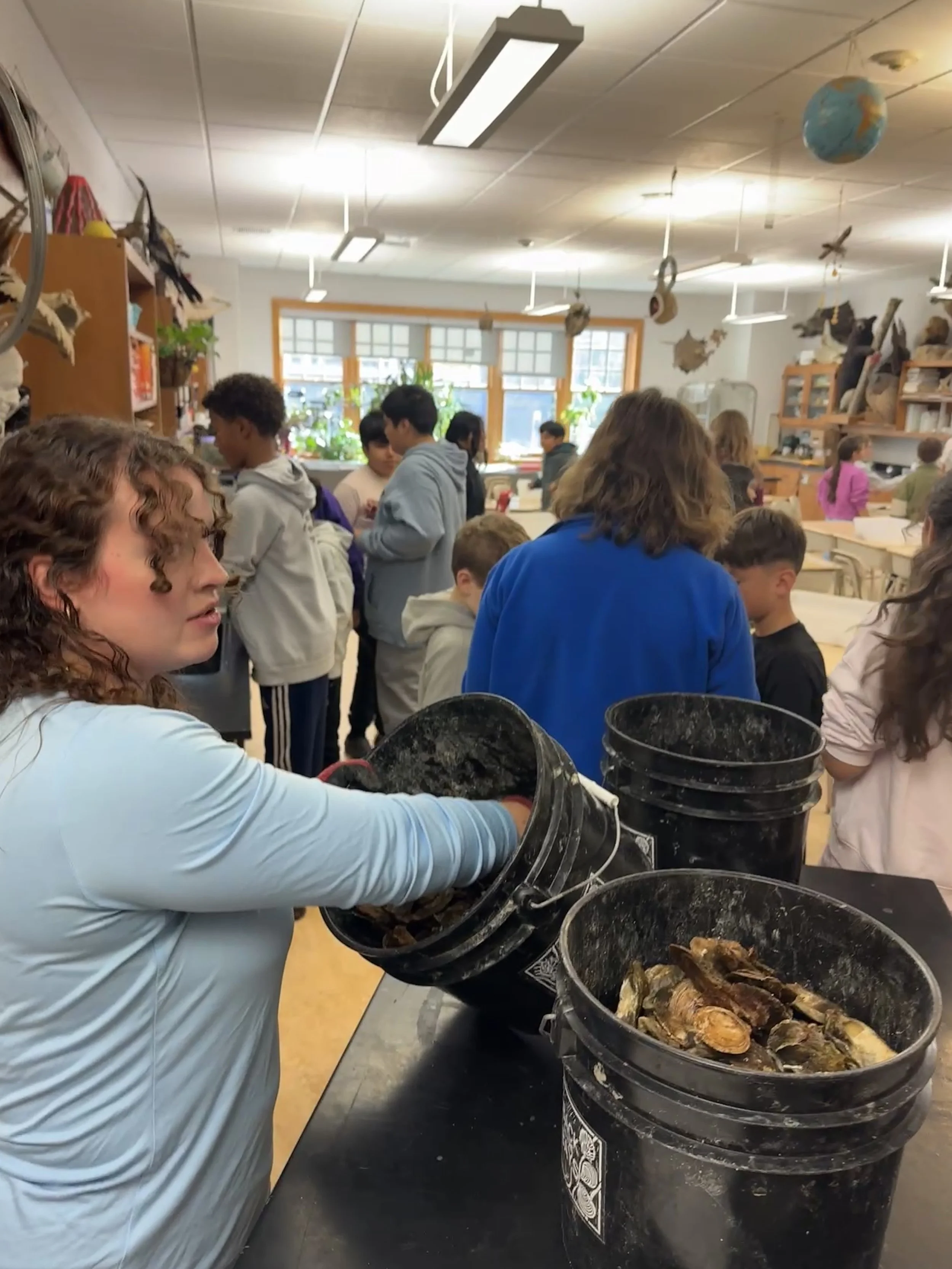
Field and Outreach Assistant, Ava Sheldon, helps students learn to measure and count, live spat-on-shell oysters, passing on her summer training with Back to the Bays.
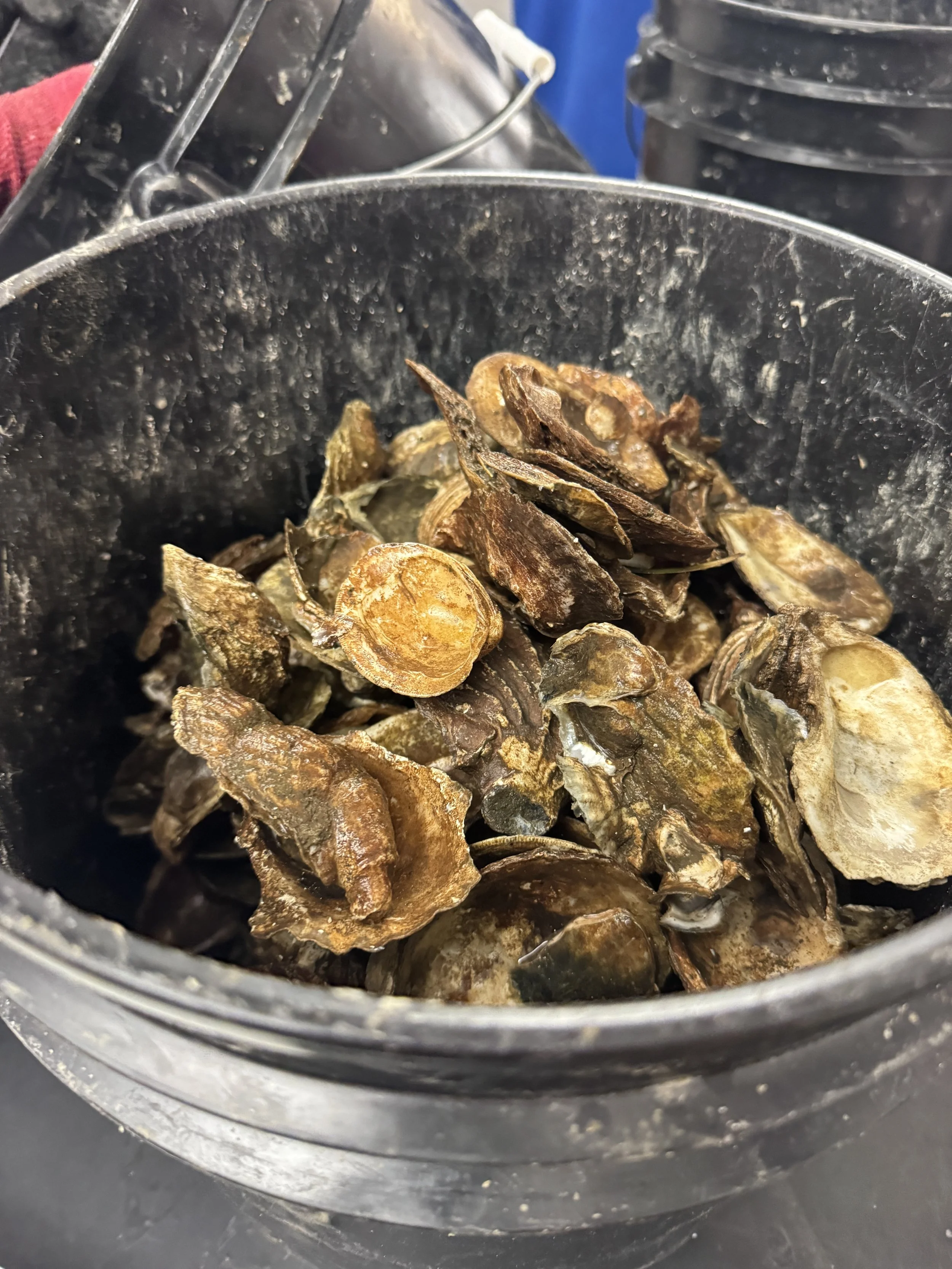
Oysters naturally cluster together as they grow, forming 3D reef structures, providing hiding places for small crabs and fish.
Seahorses + Eelgrass (Art + Science)
At this station Habitat and Seahorse Conservation Specialist, Kim Manzo, introduced students to the importance of eelgrass meadows and the many species that depend on them for habitat, including the Northern Lined Seahorse. Seahorses serve as ambassadors for eelgrass restoration, as they evolved prehensile tails to cling to structures like seagrass blades. After learning what CCE Marine is doing to monitor and protect local seahorse populations, students collaborated on a seahorse art project, guided by ArtSea Director and professional artist, Carolyn Munaco.
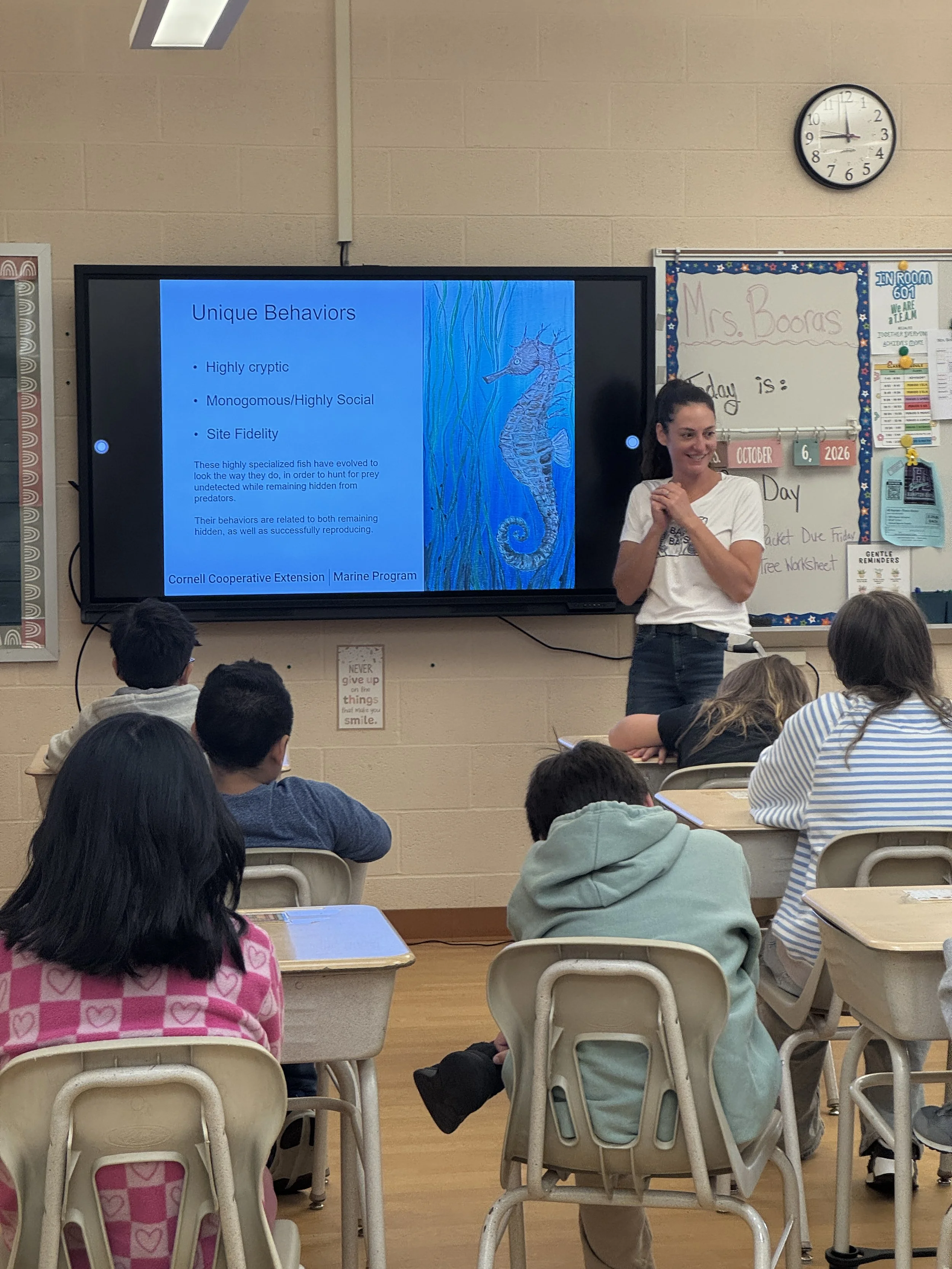
Kim Manzo introducing students to our elusive Northern Lined Seahorse (Hippocampus erectus)
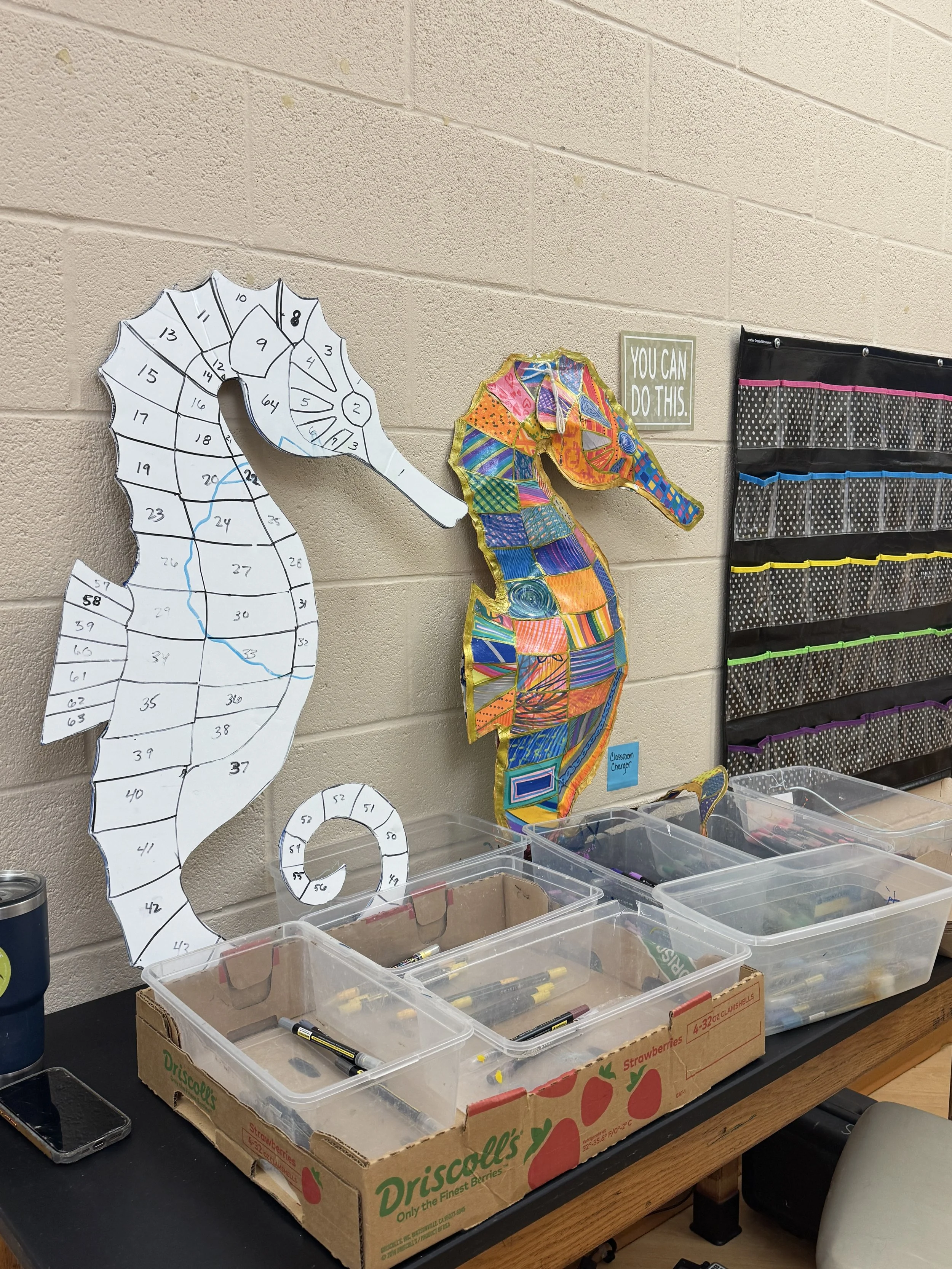
Students get creative contributing their own block to the collective seahorse art project.
Marine Meadows Eelgrass Restoration
At our Meadow Makers Station, students, teachers, and staff braved the cold to actively participate in restoring our underwater eelgrass meadows. Habitat Restoration Specialist, Steve Schott, guided students through the process of weaving live eelgrass shoots into burlap planting discs (assembled at previous volunteer workshops). These “tortillas,” as we call them, allow our dive team to plant 10 shoots at at time, increasing the efficiency of our restoration methods.
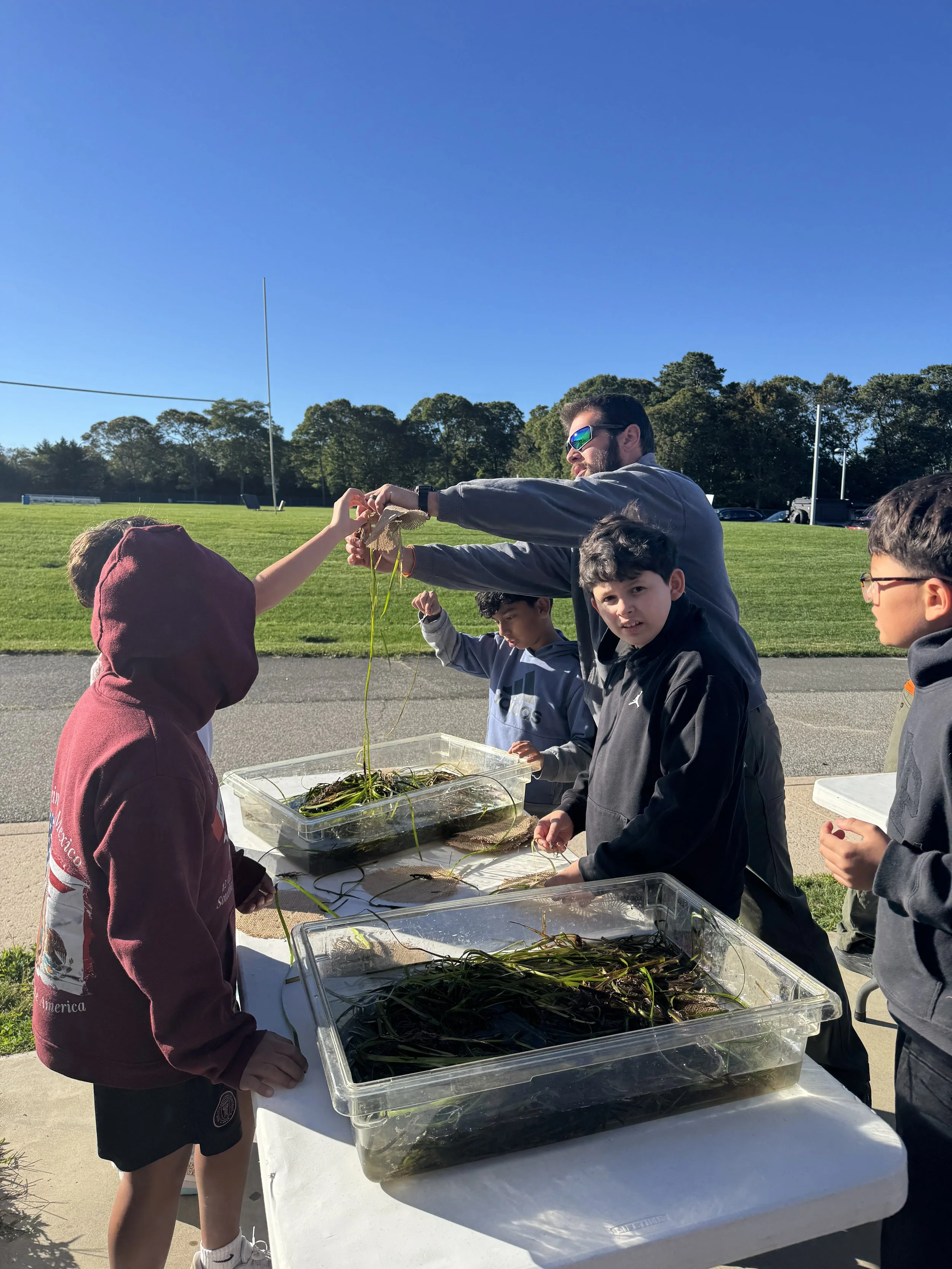
Marine Habitat Restoration Technician, Jason Havelin, helps students learn to recognize and correct mistakes as they learn a new skill.
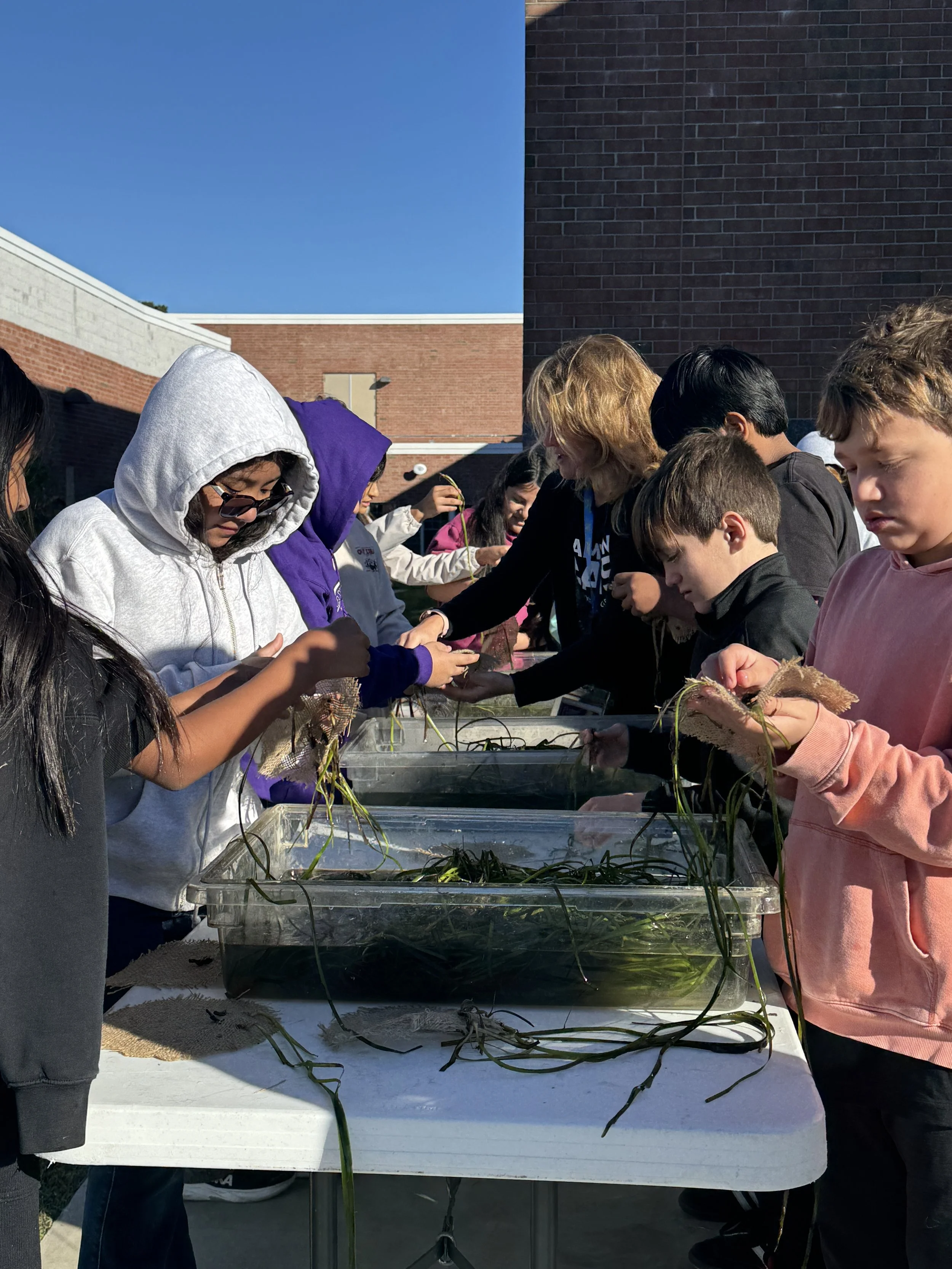
Throughout the day, the students collectively wove 1700 eelgrass shoots into 170 tortillas, which have already been planted at 3 restoration sites in Shinnecock Bay.
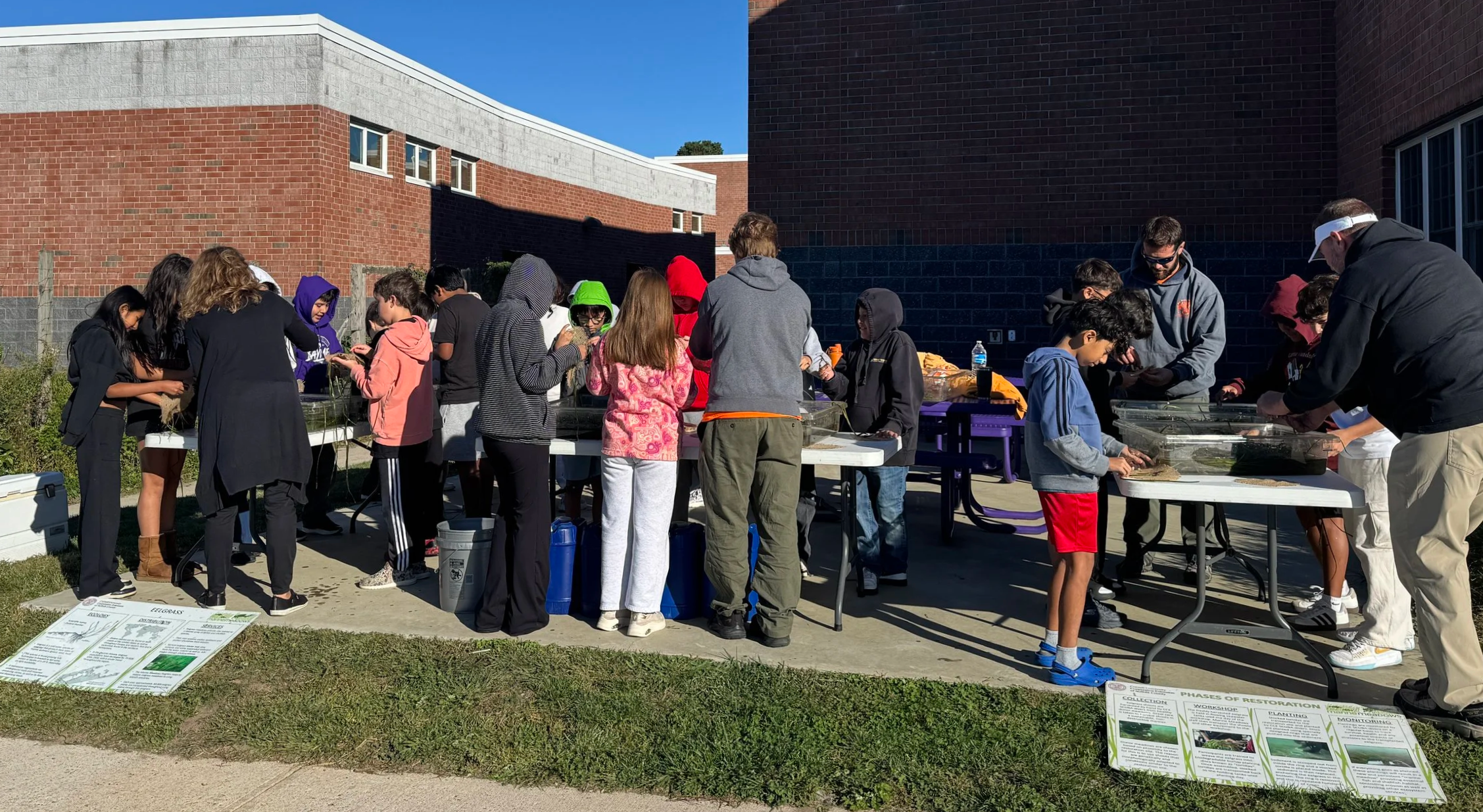
The entire HB 6th grade can take pride in the volunteer service they have contributed in restoring local seagrass meadow habitats!
Traveling Touch Tank + Species Identification
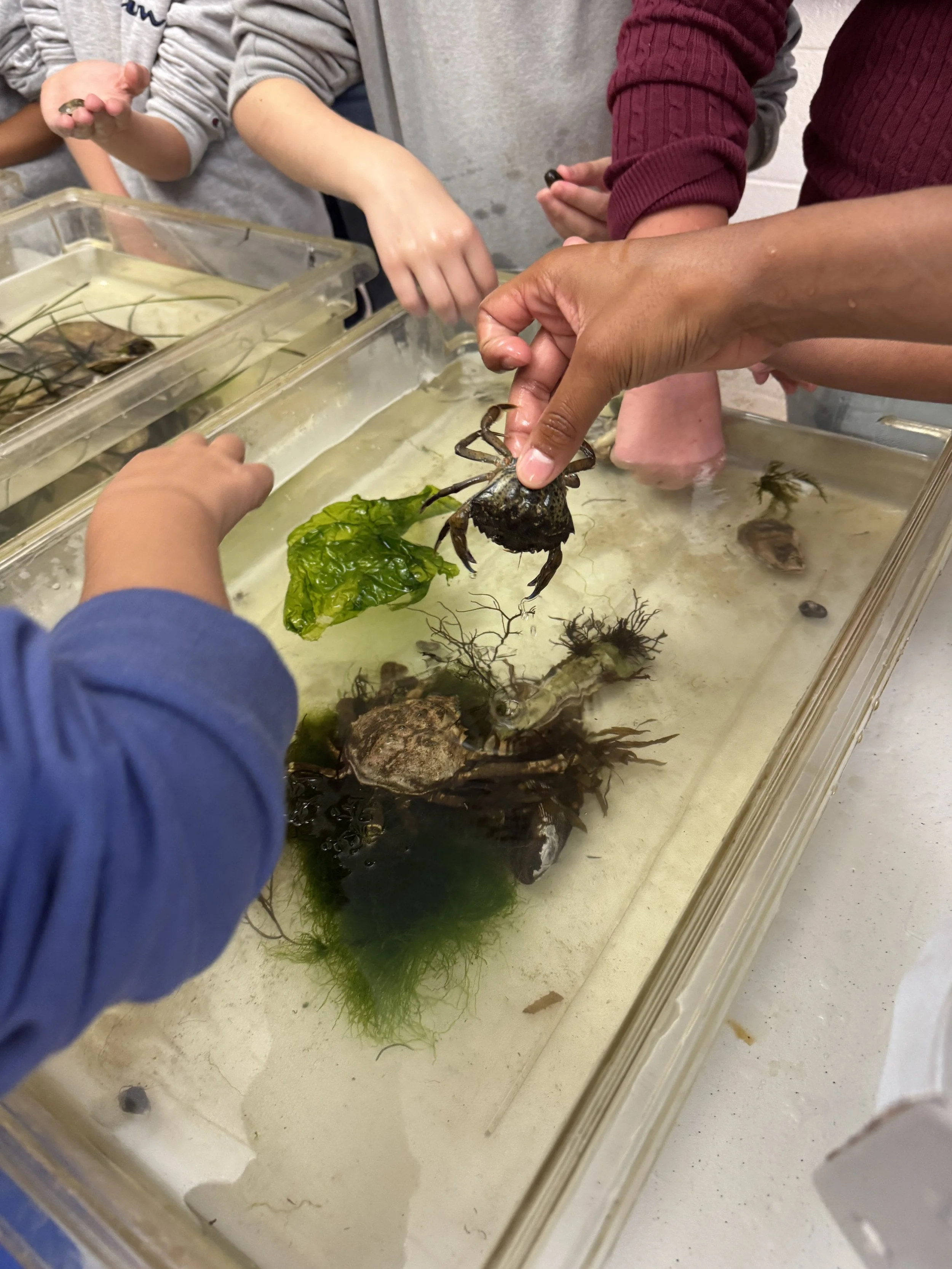
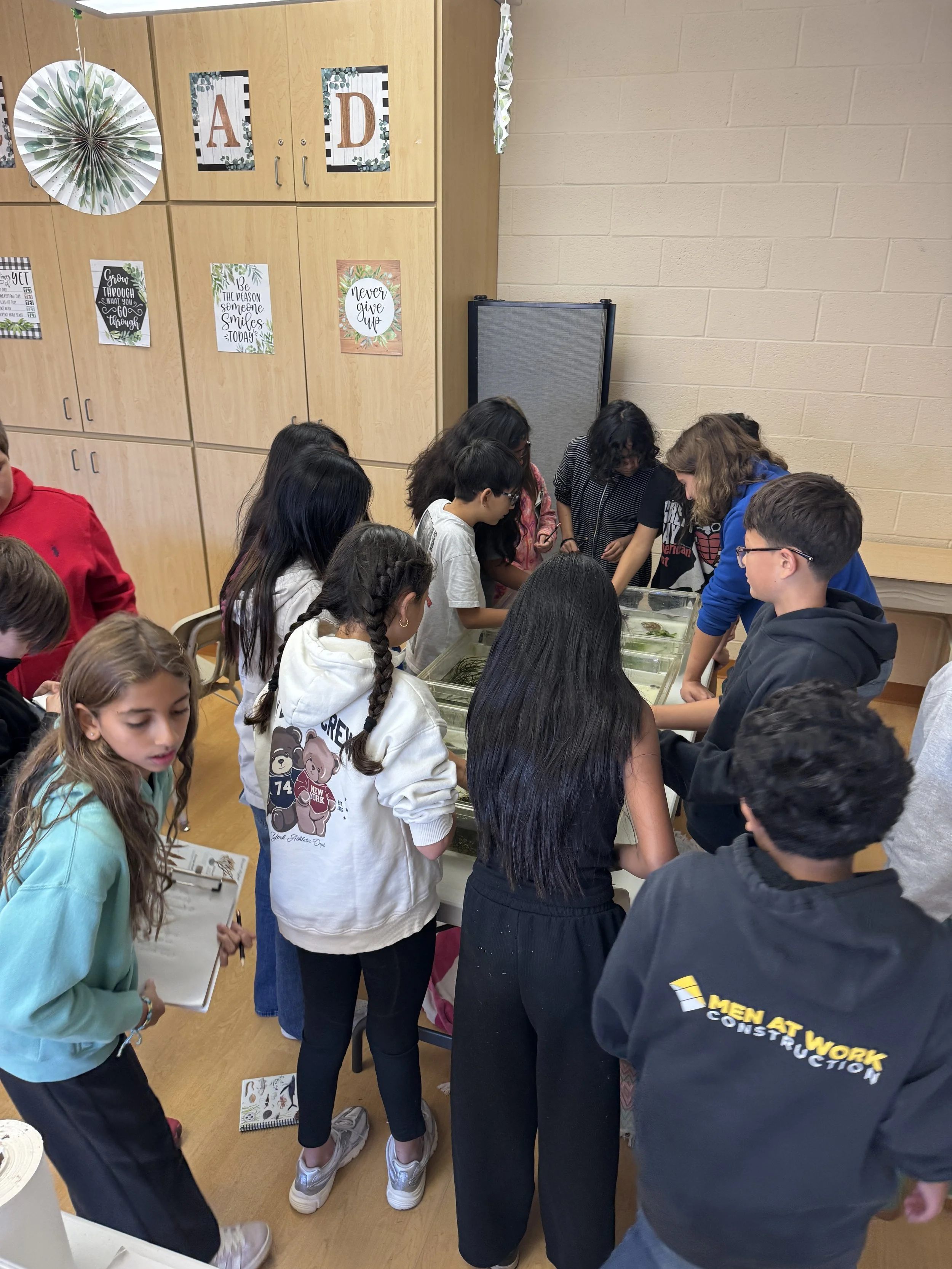
To bring the entire curriculum together, students got to meet a diverse array of the local species that reside in our coastal habitats, including fish, crabs, snails, macroalgae, and coastal plants. Using our CCE-published, waterproof Long Island Marine & Coastal Field Guide, they learned to identify the live species, shells, and specimens throughout the classroom. This station was led by Science and Engagement Coordinator, Hazel Wodehouse, who authored our field guide along with artist Carolyn Munaco. Students who participated in this education day receive a discount code to purchase their very old field guide from our shop!
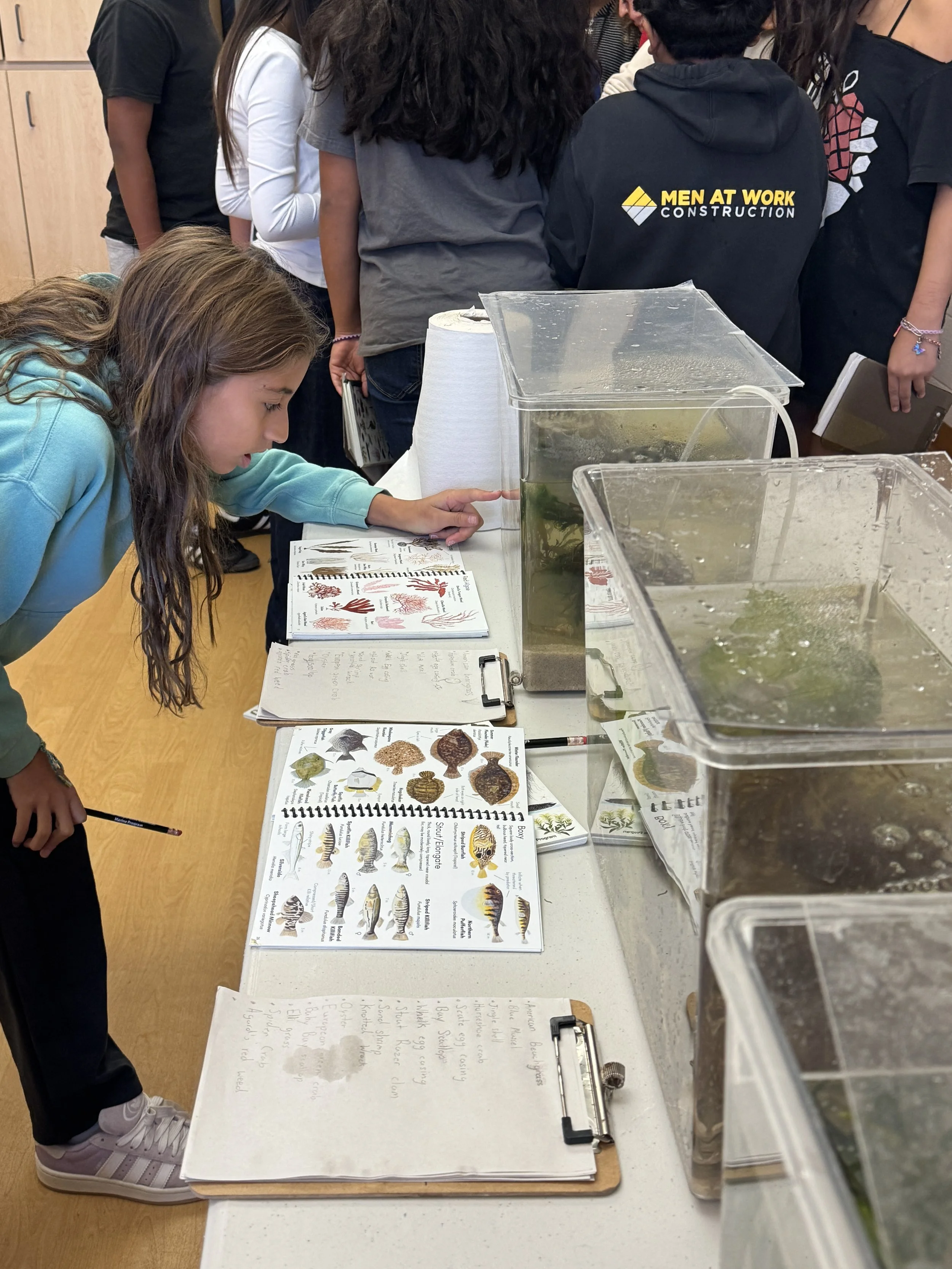
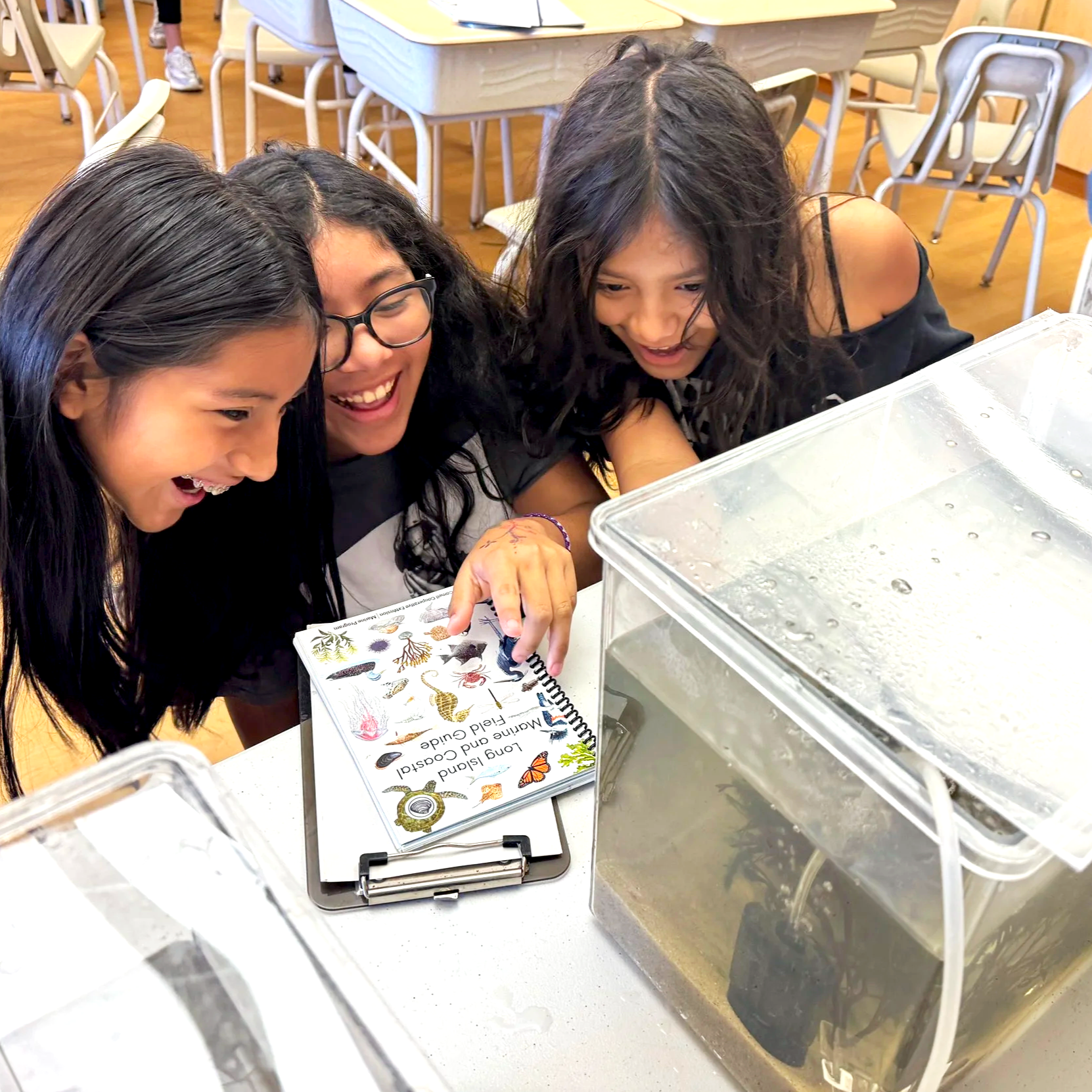
Students using CCE Marine’s Long Island Marine and Coastal Field Guide to identify local fish and invertebrates in our demo oyster reef + eelgrass tanks
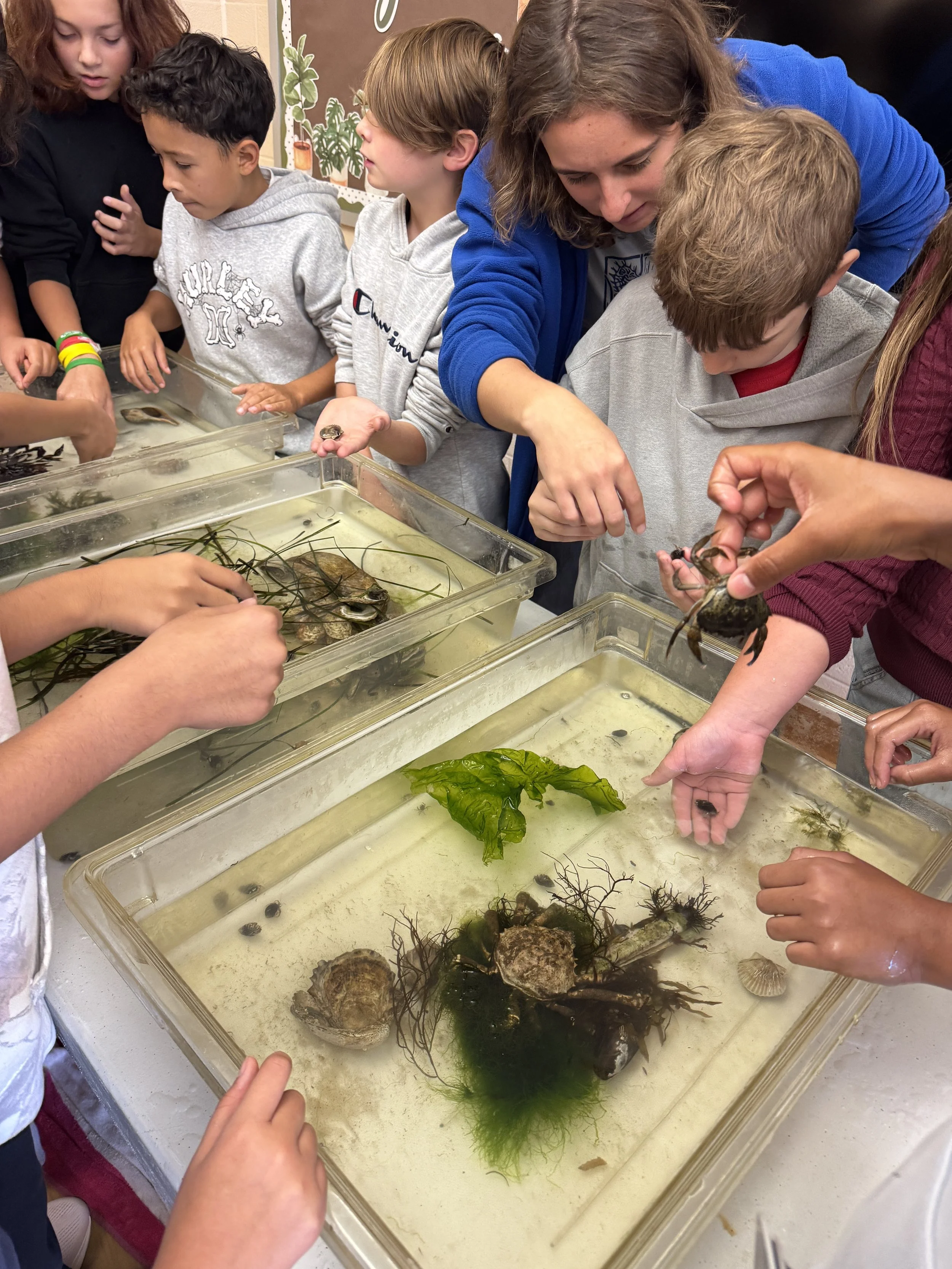
Marine Education Assistant, Sophia Springer, helping students learn to conquer fears and safely handling live marine animals in our Traveling Touch Tank
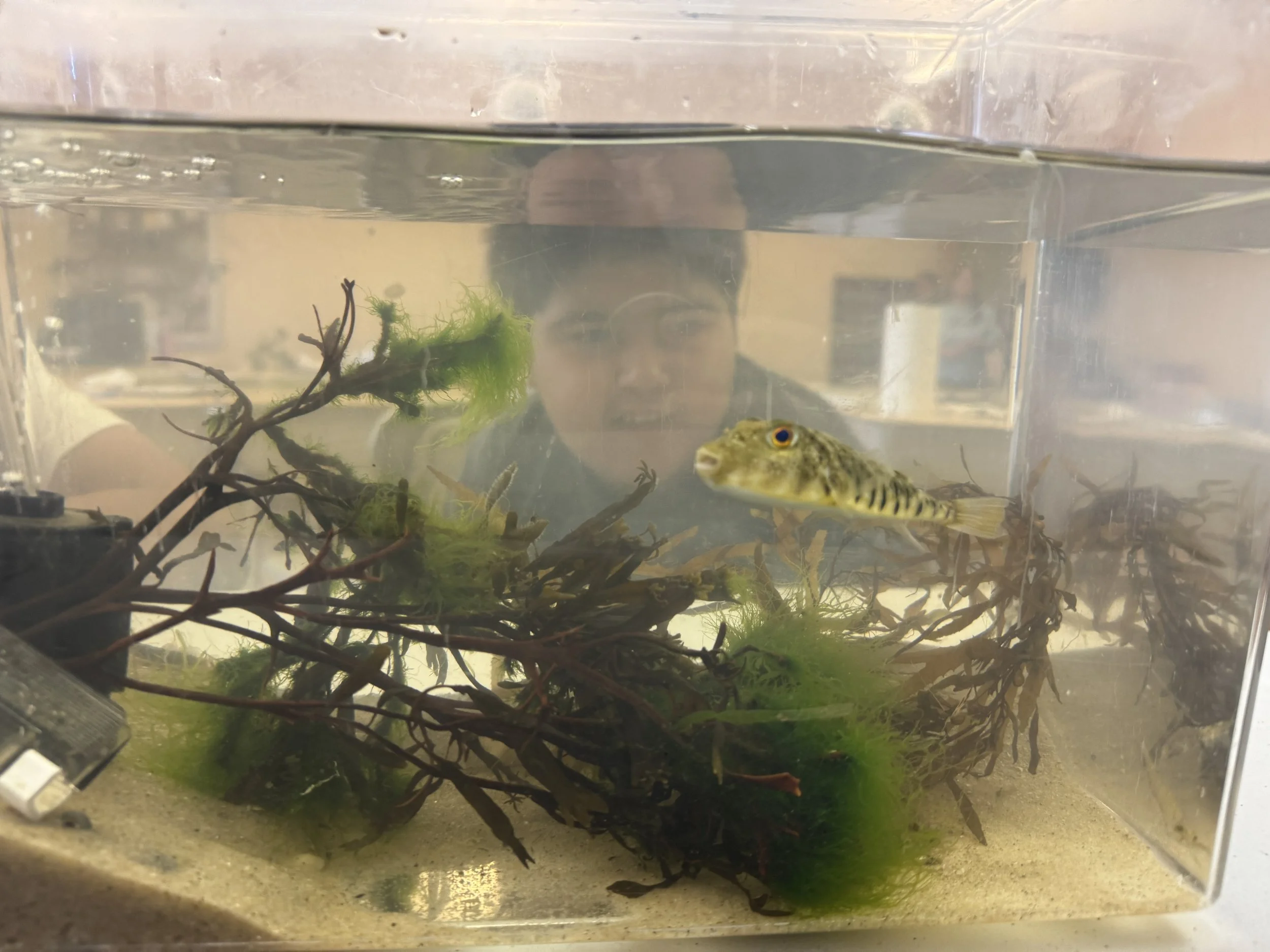
Student closely observing the behavior of a local Northern Pufferfish
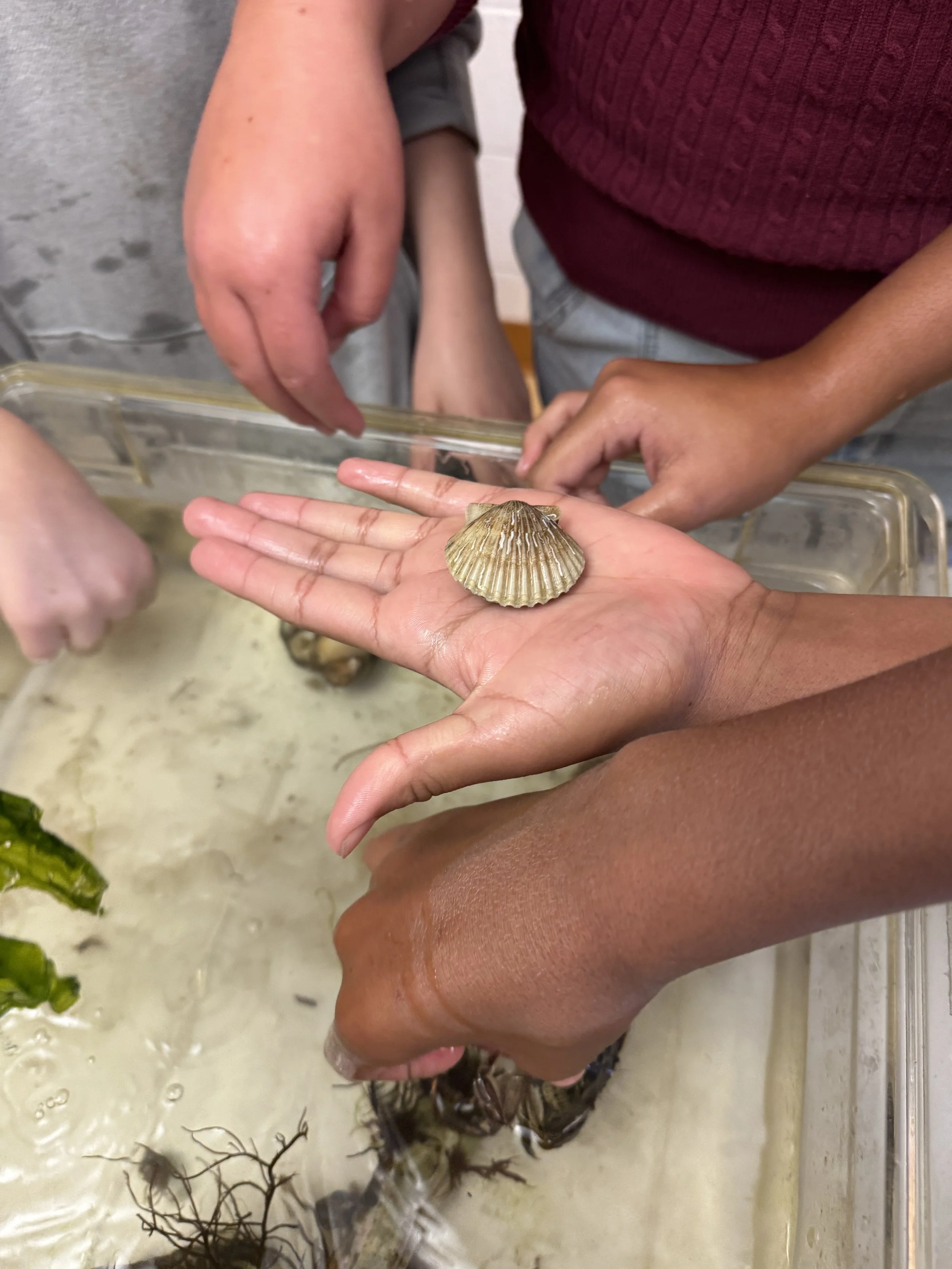
Students take turns patiently holding a bay scallop, waiting for a glimpse of those 18 pairs of blue eyes!
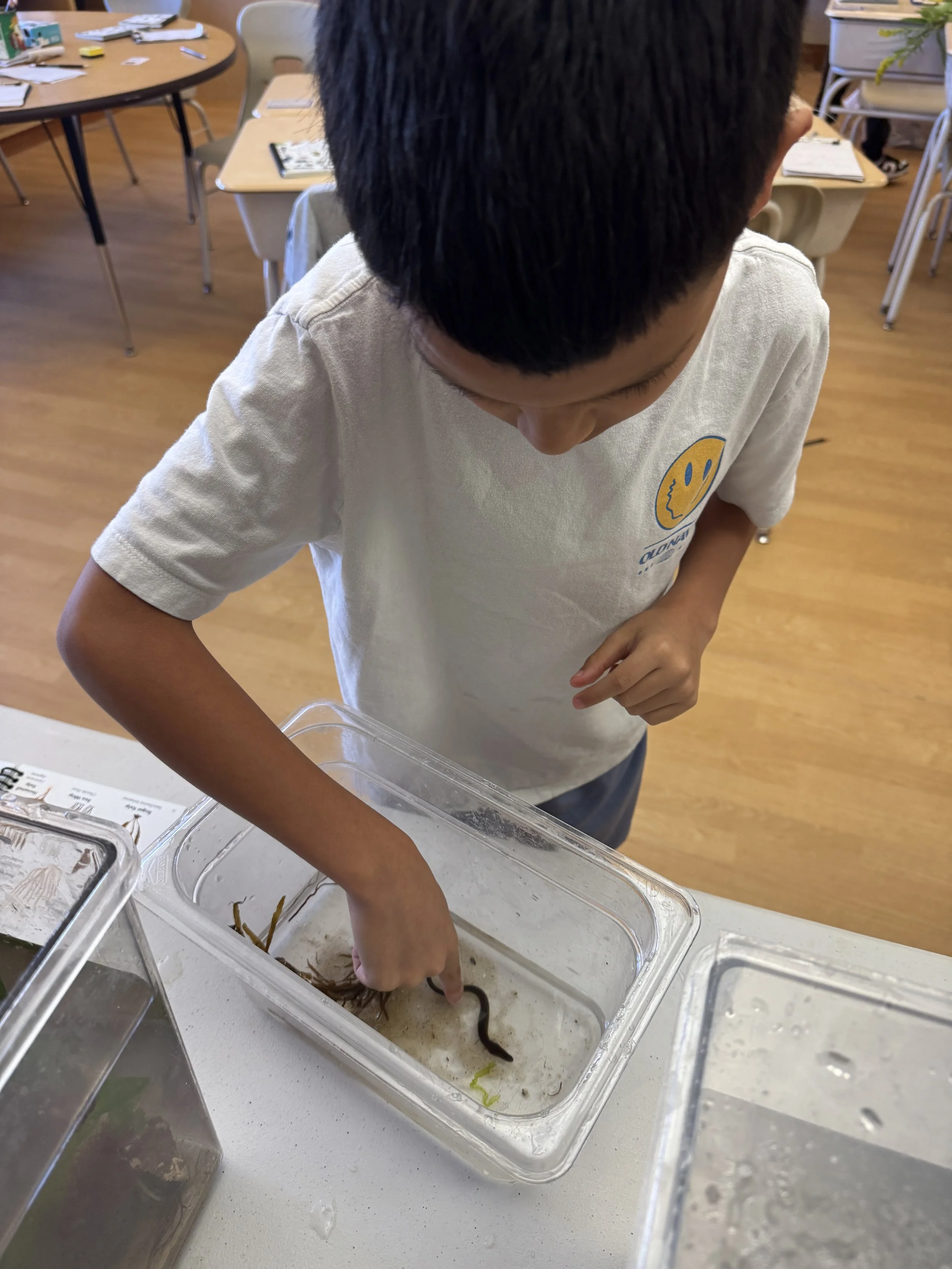
Student learning to carefully feel how slippery an American Eel is, since they have no scales. We find juveniles lurking in our hanging spat-on-shell oyster cages frequently!
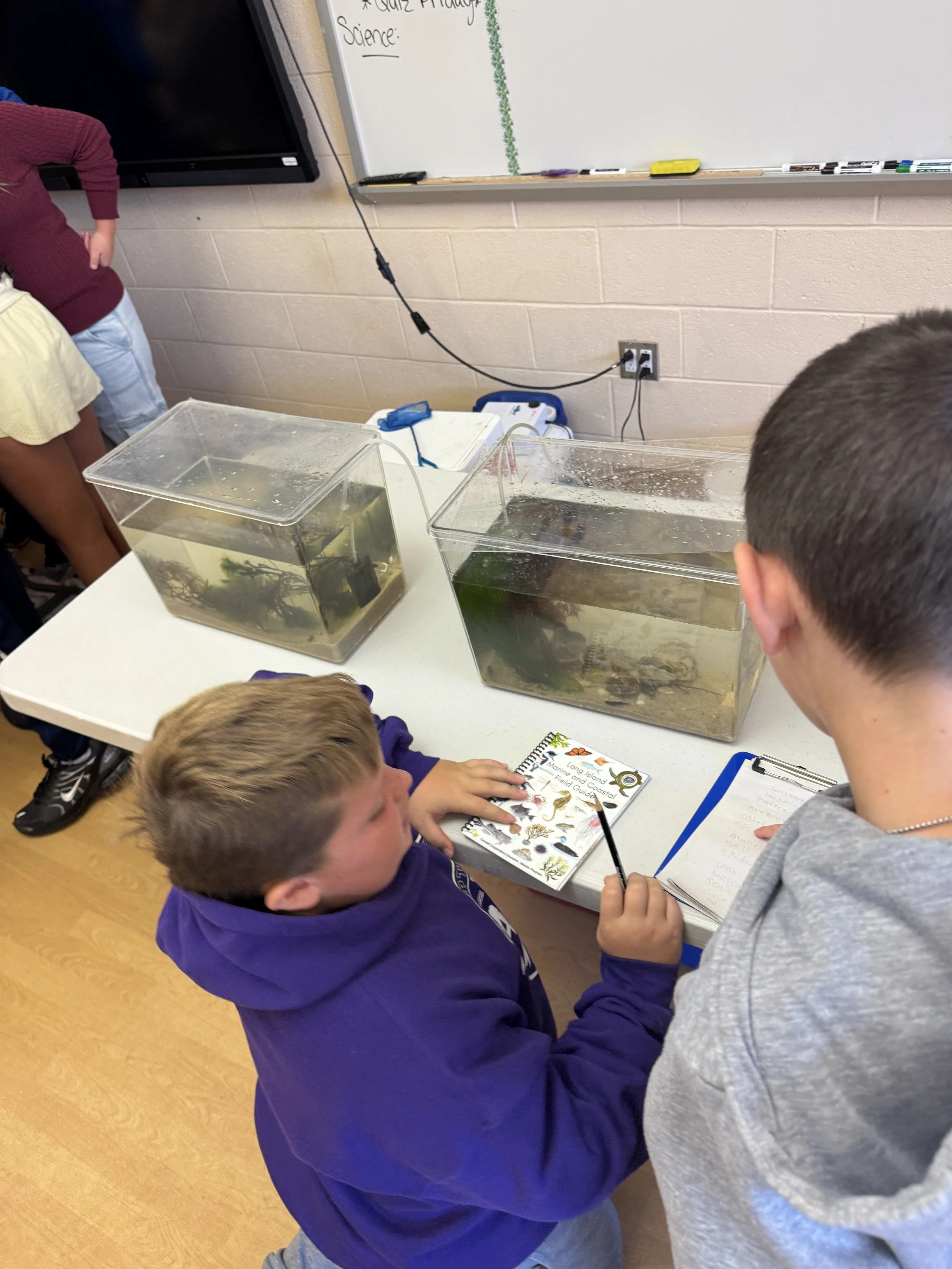
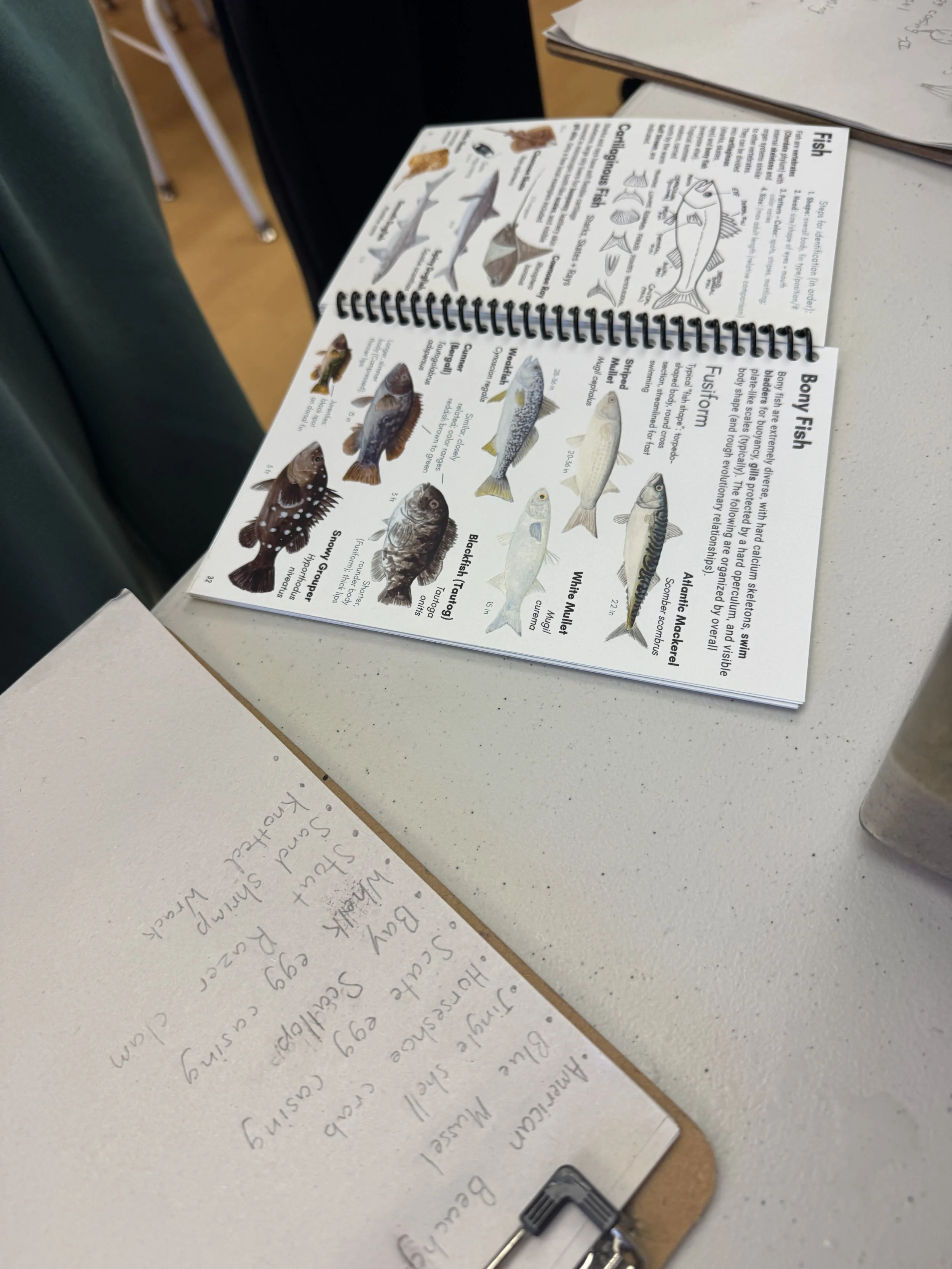
What a fun day of inspiring the next generation of Reef Raisers, Meadow Makers, scientists, conservationists, artists, and ocean enthusiasts!