
Bivalve Blog: Welcoming the Spring (Hatchery) Season
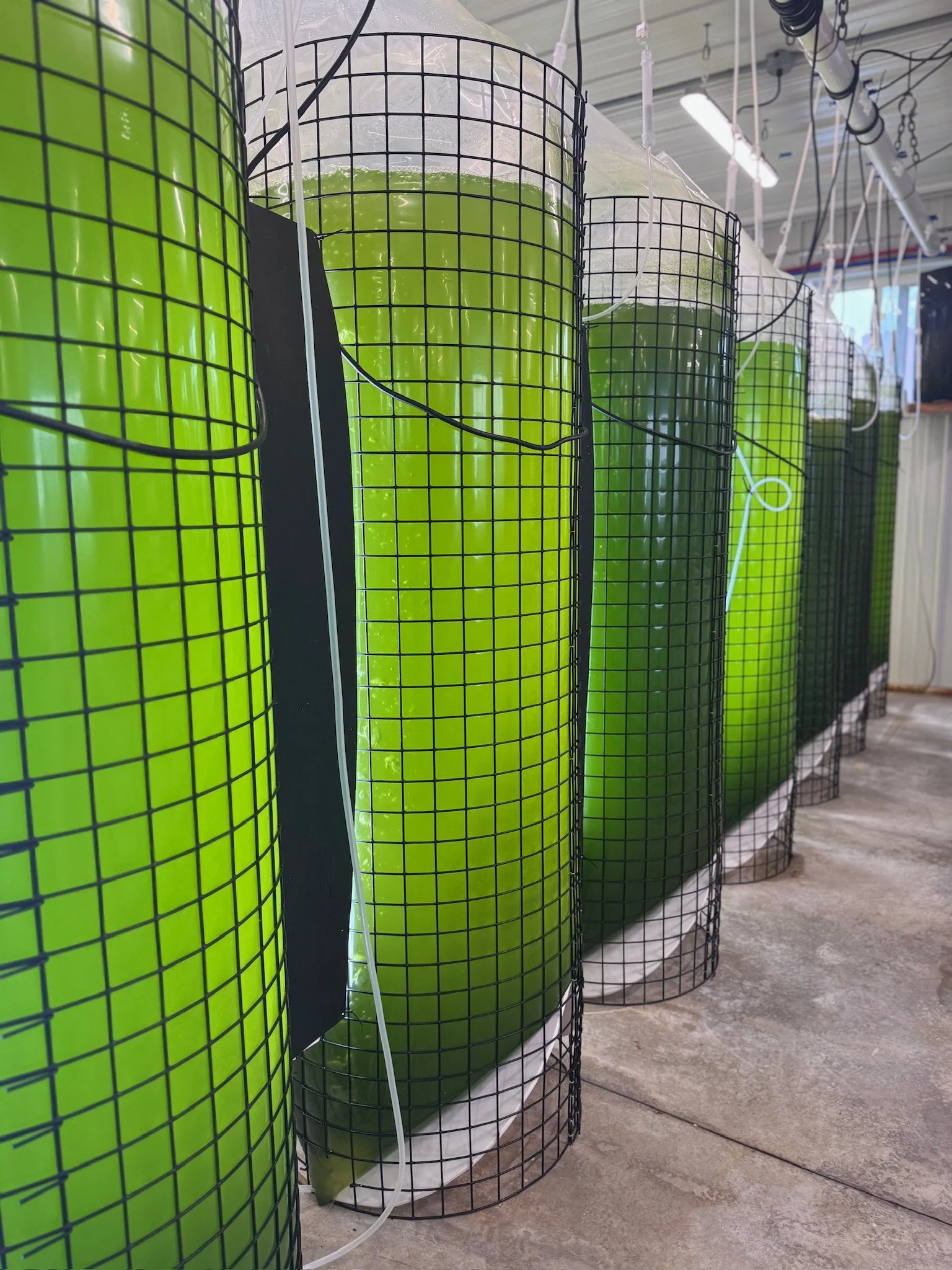
Cultured phytoplankton waiting to be fed to oysters
Early Spring marks the start of a new cycle, with signs of awakening life: snowdrops and crocus start to bloom, the birds change their song, peepers announce warmer evenings…..and shellfish babies fill our hatcheries! This past month, CCE Marine’s facility at Cedar Beach, Southold has been abuzz with our shellfish hatchery staff conducting scallop, oyster, and clam spawns, and tending to the resulting swimming larvae. But their hard work preparing for spring actually begins long before winter’s end is in sight….
Bivalves are filter feeders, and their preferred diet is phytoplankton or single-celled algae. The first step in readying a shellfish hatchery for spring spawning season is to start increasing volumes of various cultured phytoplankton species that will eventually be fed to the adults, larvae, and post-set juveniles.
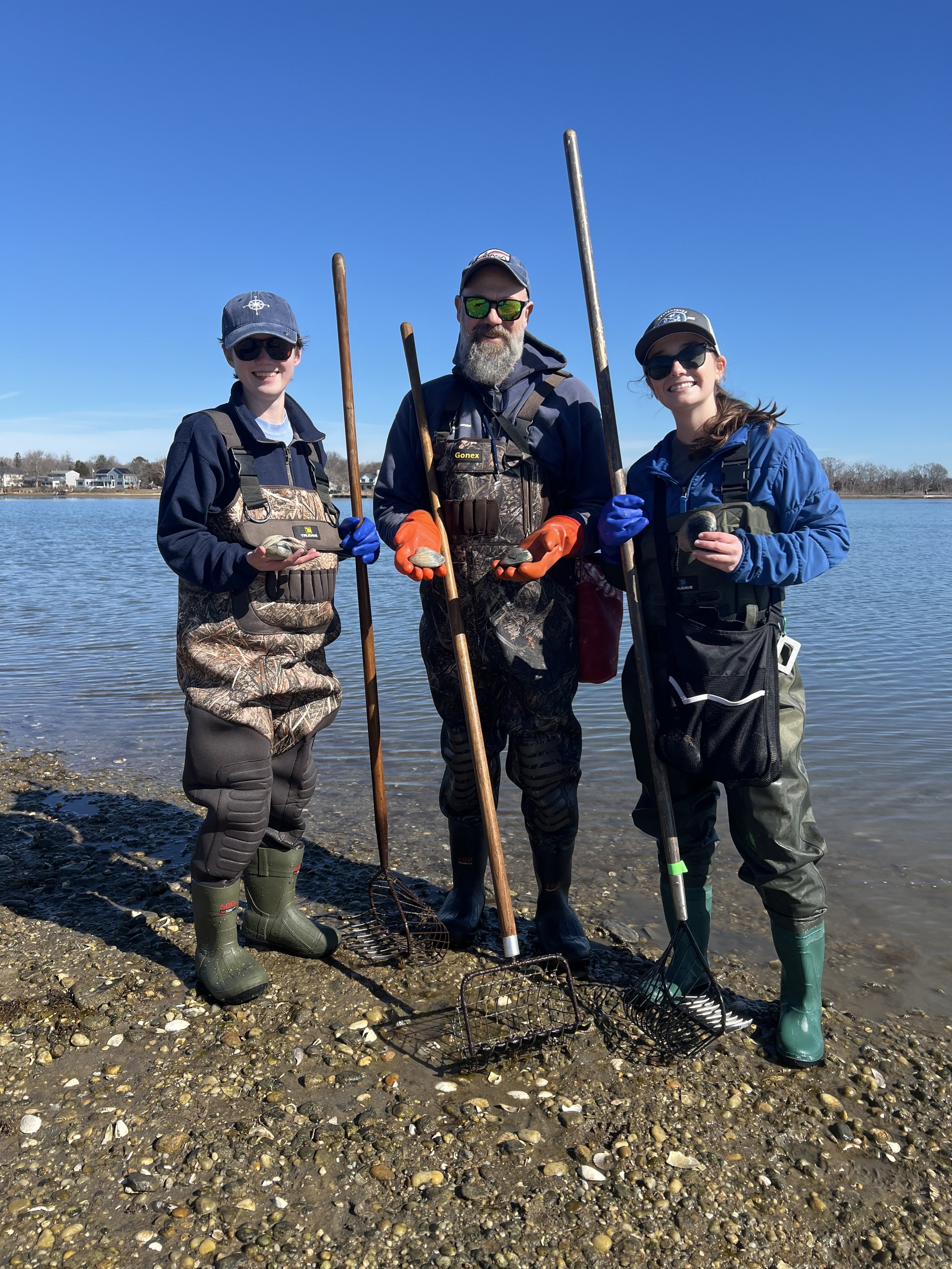
Aquaculture staff collecting clam broodstock. Photo: Clamity Janes
Next is to gather our adult shellfish - ideally on a beautiful, sunny winter day. To help strengthen genetic variation in the shellfish we produce and seed, each year we try to take adults from healthy populations in different local creeks and embayments to be our broodstock. This year, for example, our friends The Clamity Janes accompanied Hannah (Hatchery Technician), Mike (Aquaculture Manager) and Brooke (Bay Scallop Program Assistant) on a successful hard clam hunting mission at Hashamomuck Pond, Southold.
The adults are taken back to the hatchery, cleaned, and then undergo conditioning for 6-8 weeks. During this time, they are held in a tank under conditions similar to late-spring — they get fed every day, and their water is changed every other day, gradually increasing the temperature.
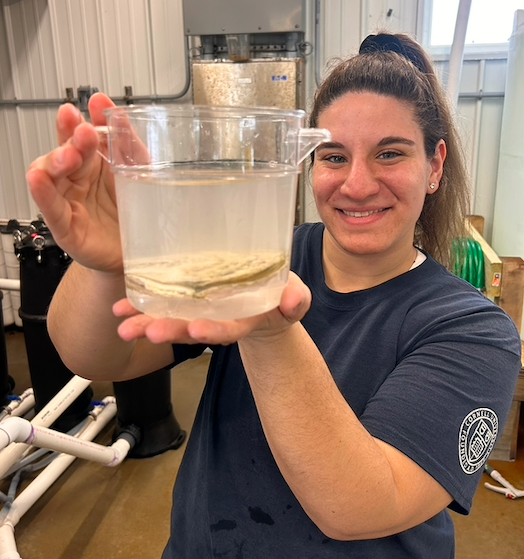
Danielle (Hatchery Manager) displaying a female oyster releasing its eggs
Finally it is time to spawn! At the spawning table, the adults are submerged in even warmer water (around 80 degrees Fahrenheit!) to send the message that it is time. Bivalves are broadcast spawners which means they release their gametes (eggs + sperm) into the water column for fertilization. Once one adult is triggered to release, it sends chemical cues to trigger the rest. The spawn is typically complete after a couple hours, and before the end of the day, we have cell division! The fertilized eggs are collected into a bucket and divvied up into large conical tanks.
By the next morning, the eggs have become free-swimming larvae. They will continue to swim and grow for approximately 10-14 days, of course being diligently cared for by the hatchery team every day until they are ready undergo metamorphoses and lose their ability to swim and become post-set juveniles.
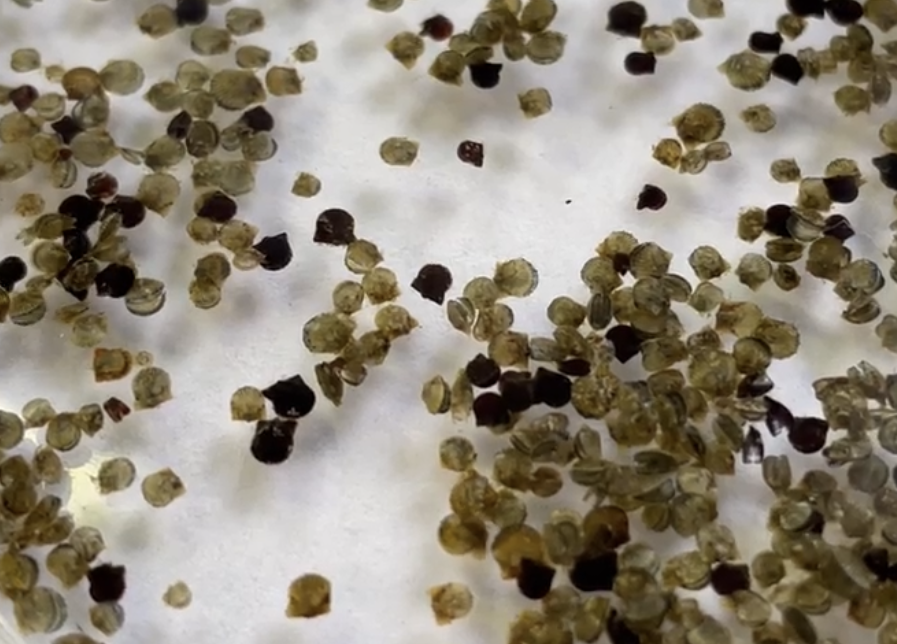
Last year’s cohort of juvenile scallops waiting to be moved to the nursery
Once the real weather outside catches up to the manufactured conditions inside the hatchery, it is time to move the shellfish out into our nursery and field settings — but that is going to have to wait until the next update.
Check back later in June for another Bivalve Blog!